Concacaf whistleblower Mel Brennan: ‘Fifa survived Blatter and Warner. It will survive Infantino too’
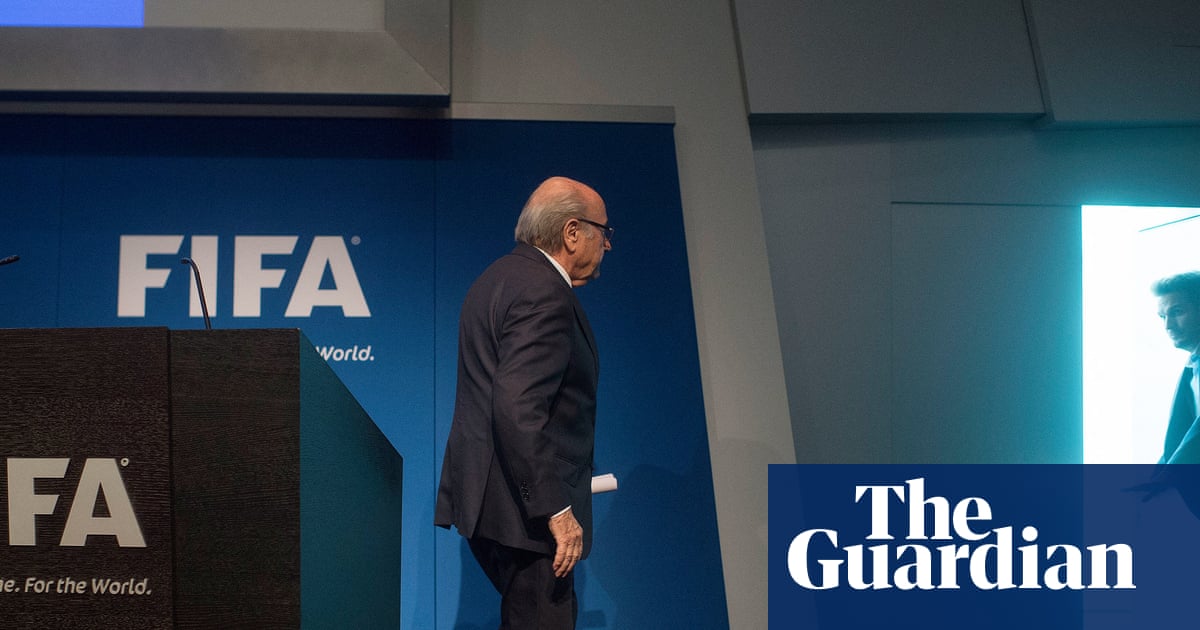
Mel Brennan has seen every level of world football. “I know what the World Cup looks like from the 17th floor of Trump Tower … I know what it looks like from a grass-strewn field in Trinidad where children cannot play because money that was supposed to maintain it went somewhere else entirely,” he says.Brennan worked as an executive at Concacaf during the corrupt reign of its infamous former president Jack Warner and the late general secretary Chuck Blazer, who once helped run the organization from Trump Tower.Brennan was also a confidential source for investigative journalists and law enforcement as they looked into the corruption that was rife within the organization for decades. Brennan’s book about his time at Concacaf, Fixing Football is out now.“Football survived Sepp Blatter,” he writes, optimistically, in the book. “It survived Jack Warner. It survived Chuck Blazer. And it will survive Gianni Infantino.”The Guardian sat down with Brennan to talk about Fifa, Concacaf and the future of the game.Were you surprised when law enforcement raided a Zurich hotel and Concacaf headquarters in Miami in 2015 to indict so many Fifa and Concacaf officials?No. The FBI had stopped and started dialog with me about what was going on at Concacaf. On two separate occasions I was on my way to New York to [meet] with investigators and they said “Wait – we’re not quite ready”. I literally turned my car around. So I knew something was percolating. On the other hand I never really thought there would be comeuppance with this group.Why did you think there would be no accountability for Concacaf bosses after everything you saw while working there?When I was with Concacaf the office was on the 17th floor of Trump Tower. Chuck Blazer lived on the 49th floor. Before that, Chuck and Jack Warner shared an apartment on the 10th floor across from Donald Trump and Marla Maples. They were all so intertwined and so much a part of the interlocking elite that accountability was a distant dream. I would imagine that Chuck, Jack, and others would do anything to stay out of jail. These were not gangsters. These were opportunistic cockroaches. They were not tough guys. They would run with any real sustained sunlight. [Chuck Blazer became an undercover informant for FBI and IRS investigators in 2011.]Were you surprised Concacaf featured so prominently in the 2015 scandals?No. I felt like Concacaf was among the least competent of the continental actors. You had other confederations with people who were European glitterati or ran legitimate businesses but you didn’t really have that in Concacaf. Jack was a former history teacher but he knew that the Caribbean was a sleeping giant that could subvert the Guatemalan-Mexican football power structure at the time. And you had Chuck who was an extractor but you couldn’t really point to a lot that he had built. They were not sophisticated corporate guys. They were not sophisticated business guys. They were born opportunists. That the mistakes were so easily revealed to law enforcement was not a surprise.Blazer and Warner had tight control over Concacaf but there are usually always enablers in these environments. Was that the case at Concacaf?In a larger sense, all of us were enablers but I think that the Concacaf executive committee and the Concacaf member associations would have made a different choice with different political pressure at the time. From 1990 to about 2015 they were operating within a North American context where the world’s sport was sixth or seventh on the media table. It was arguable that wrestling had more media attention. So the media landscape also has to take its fair share of the blame. Often folks would want to maintain access and instead of doing investigative journalism that requires document review and truth-telling, and speaking truth to power, it was more reporting and more like Pravda rather than “the institution said this now lets’s really dig in to see if this is true or not and if it is not true why didn’t they tell us the truth?” There was not a lot of that in the LA Times or the New York Times. Everybody played a role in enabling this.So Blazer and Warner lined their pockets with cash from deals they made. Why do we care how they made money?The cost was that people didn’t gain access to sporting opportunities [they were entitled to through]. The football bubble and the rise in the dollars available for them should have created access. If you are a girl and you play sport, you only have a small chance to go pro but if you play sport and you stay in sport you are more likely to lead an organization as an adult. But these types of opportunities were lost for so many because Jack and Chuck were too busy acting like they were building fields and programming but Chuck and Jack were actually on a game show called “Who is Stealing Money?”. And they were on it every week.Where was the US, Canada, and Mexico – all big players in Concacaf during this?People like [former US Soccer president ] Sunil Gulati were fully present when I was there. The role that Sunil played under [his predecessor] and then as US Soccer president himself felt more like him being a World Bank guy – which is the world he comes from. Admiring this economic engine that Chuck and Jack had built from a distance rather than deploying the power of US Soccer to shine a light on this stuff and make a difference.In your book Fixing Football you recall an amazing scene at a Concacaf conference in Miami where women, who were not delegates, left the hotel en masse at 5am.There were more than 15 and less than 30 [women]. All from the same floor. And you see how they are dressed and you see the time and see what is going on. You feel like you want to call somebody because maybe you are crazy. Everyone else who was there and had been [at Concacaf events previously] was, like, “Well, yeah, let’s get them in the car and get them off …”Has anything changed at Fifa since your era?Transparency International laid out a framework that would have [made things less opaque at Fifa]. Fifa could have meetings of the Fifa Council that are broadcast live and minutes that are in real time. We could see the bank accounts in real time if they wanted us to see it. Some cockroaches have scattered and other cockroaches came in but the overall smell remains the same.Was Victor Montagliani the right person to lead Concacaf after the 2015 crisis?Victor Montagliani had an opportunity to demonstrate he was the right person to lead. There was a moment where Concacaf could have gone in a different direction: democratic, transparent, inclusive, diverse. Instead, what Concacaf did was rely on the fact that [Montagliani] was not Jack and Chuck to say that this meant change. In the end, we still cannot see and it is not clear how Concacaf doles out its dollars. The question is, will Montagliani and other leaders step back just a moment to build something that would matter beyond themselves? That would matter for more people. I was naive to think that Montagliani could be this radical change when most of the status quo is still in place.Should Concacaf be making sponsorship deals with Saudi Arabia and accepting investment in the region from the kingdom’s Public Investment Fund?Any nation state that is murdering journalists has to be marginalized. I would not want to see Concacaf engaging with Saudi Arabia without some sort of weight to the decision-making process of sponsorships and partnerships that included human rights records and human rights abuses. How Saudi Arabia treats women and the most vulnerable matters. If Concacaf is considering a partnership with them then they should have a mechanism that is going to evaluate some of [the issues]. They might not get a deal at all but to not have those considerations in the conversation as to whether you are going to partner somebody is an abandonment of the spirit that makes sport matter at all.Does the USA, Mexico, and Canada hosting this year’s World Cup make this tournament a success for the sport in the region?It is an opportunity. [But] who gets left behind? In my local town in Maryland, all [organized] youth soccer is white kids. But a 10-minute walk from my house a park is reserved by Latino communities but these two communities don’t meet. One community is going to the Dallas Cup and the Florida youth soccer tournaments and the other one is not. There is something wrong here and there is an opportunity for us to reshape how this looks or to call for and get better answers from our leaders as to why it looks the way it looks.


Most Popular