Australian Open 2026: Can Carlos Alcaraz become the youngest man to win the career Grand Slam?
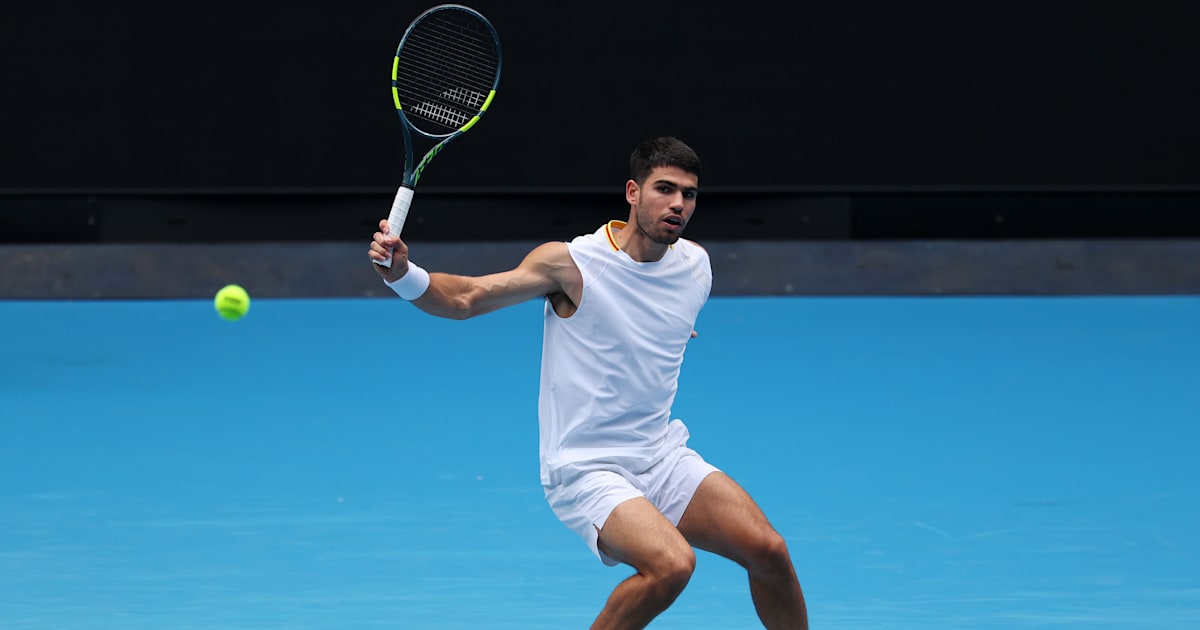
There is not much Carlos Alcaraz has left to achieve in tennis at the age of 22.A six-time Grand Slam champion, an Olympic silver medallist and world No. 1, the Spaniard possesses a résumé worthy of being established as one of the game’s greats.Those six majors are spread out evenly across Roland-Garros, Wimbledon and the U.S. Open, with two triumphs at each tournament. Of course, that leaves one gap at the first Slam of the season: the Australian Open.Alcaraz’s best result at Melbourne Park is the quarter-final, where he has fallen in the last two years to Olympic champions Alexander Zverev in 2024 and Novak Djokovic in 2025.As if he needed any extra motivation, victory in Australia would see Alcaraz complete the career Grand Slam. An achievement in its own, made even more remarkable that he would become the youngest male player to do so.The top seed will be 22 years and 272 days old on the day of the final, that is for certain. What remains to be seen is whether 1 February 2026 will be a crowning day in the Murcian man’s trajectory.Carlos Alcaraz in numbers: All titles, stats and records of the Spanish tennis superstarRoger Federer beams over Carlos Alcaraz-Jannik Sinner rivalry: “There’s obviously more to come”Australian Open 2026 – Carlos Alcaraz targets the next chapter of historyIt is almost juxtapositional to say that Alcaraz has come so close, yet so far to Australian Open glory. He has never made the championship match on Rod Laver Arena, though both quarter-final ties lasted four sets before eventual defeat.The Spaniard comes into the 2026 tournament for the first time as the No. 1 seed, after seizing the year-end trophy last season along with eight ATP titles. Quite simply, Alcaraz was in the form of his life and has set himself up perfectly for the new year.A fellow Spanish star holds the current record of the youngest career Grand Slam winner in the Open Era; Rafael Nadal was 24 years and 101 days old when he completed the set at the 2010 U.S. Open, the eighth of his 22 major titles.Nadal is comfortably ahead of his ‘Big Three’ rivals in achieving the feat. Roger Federer completed the set at Roland-Garros 2009 aged 27 years and 303 days, while at the same tournament seven years later, Djokovic was 29 years and 14 days old.Should Alcaraz prevail at this year’s Australian Open, he would surpass tennis’ trinity as the youngest to win all four Grand Slams. In fact, the 22-year-old would become the youngest of all time, besting the Amateur Era record of Don Budge, who did it aged 22 years and 363 days.Asked about Alcaraz going for the record, Federer said at a pre-tournament press conference: “Those things are tough… It's true, in order to complete the career Grand Slam already now would be crazy. I hope he does because for the game, again, that would be an unbelievable, special moment.”Australian Open 2026 – Alcaraz embarks on a new era without long-time coachThe career Grand Slam conversations will dominate Alcaraz’s narrative going into the Australian Open, yet it will also be his first tournament without coach Juan Carlos Ferrero.Alcaraz and Ferrero parted ways at the end of last season, the current and former world No. 1s having worked together since the former turned professional in 2018.The inevitable adjustment was facilitated by assistant coach Samuel ‘Samu’ López stepping up to take charge, someone who had travelled to a handful of events last season in place of Ferrero.Nonetheless, this is a new era for Alcaraz. Changing from the coach who guided the world No. 1 to the summit of the sport and all six of his majors, the 2026 season will have a different feel regardless of results on court.The challenge is to stay at the top and improve on a stunning year, in which he won Roland-Garros and the US Open in the 2025 campaign. Endurance could be a key factor in the Australian summer; Alcaraz has lost his only five-set encounter at the ‘Happy Slam’ against Matteo Berrettini in 2022.With an 11-4 record in Melbourne and in fine form, it is in the top seed’s hands to write the next chapter in his already storied career.


Most Popular