
Aditya Birla calls RCB sale ‘once-in-a-decade’ chance; sees Netflix, Amazon in media rights play
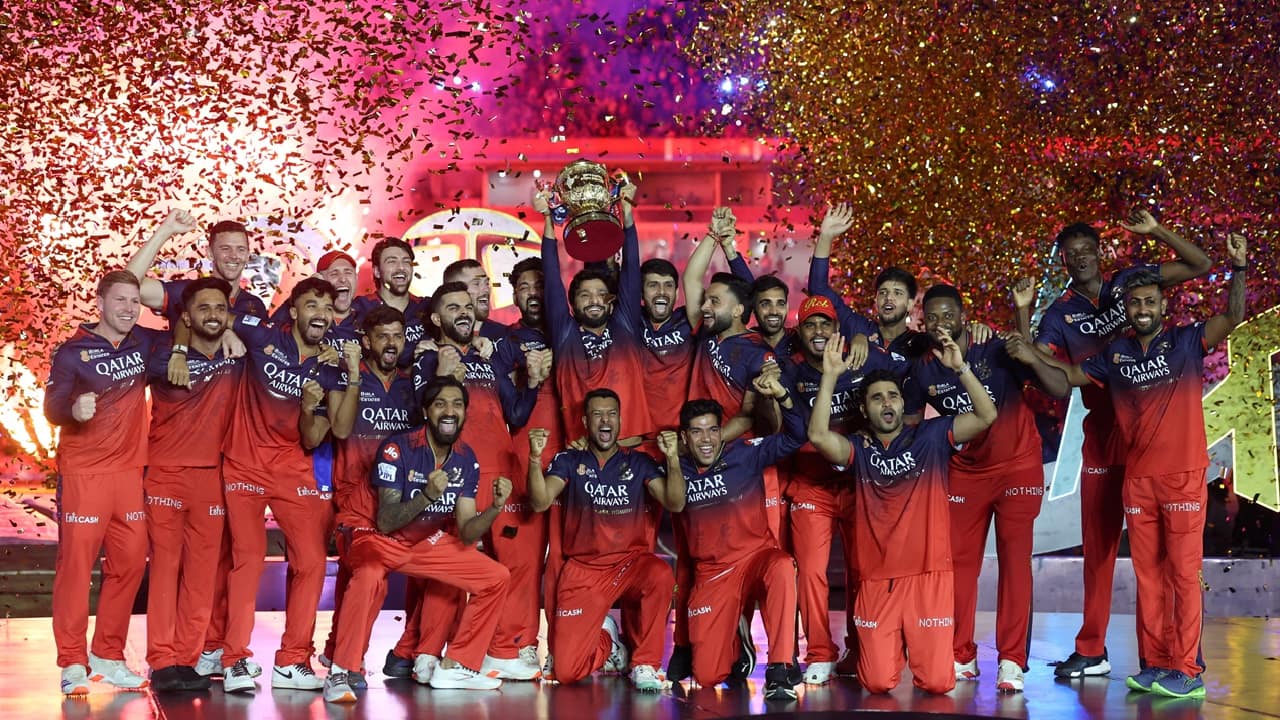
The new owners of Royal Challengers Bengaluru (RCB) are not worried about consolidation in India’s media industry hurting the future value of the Indian Premier League (IPL), arguing that global streaming and media giants are likely to intensify competition for cricket rights in the years ahead.“There may be some short-term bumps in terms of how media rights play out, but the long-term cycle we are extremely confident about,” said Sandeep Agarwal, head of group corporate finance at Aditya Birla Group, which is part of the consortium that acquired RCB. “Somebody like Netflix has barely 15 million paying subscribers in India. At some point in time, maybe not immediately, they would be super keen. Amazon Prime as well.”Agarwal said the consortium views the IPL as a long-term structural growth story despite concerns around broadcaster consolidation following the merger of major media entities in India. “We don’t know how the next media cycle will look, but long-term interest in India and sports will only grow,” he said at the RCB Innovation Lab Indian Sports Summit.The consortium led by Aditya Birla Group acquired RCB at an enterprise valuation of around Rs 16,600 crore ($1.78 billion), in what turned into one of the most closely watched sports deals in India. Along with the Aditya Birla Group the consortium includes David Blitzer-backed investment platform, Blackstone private equity strategy, BXPE, The Times of India Group, and Bolt Ventures.For Aditya Birla Group, the acquisition was not an impulsive decision. Agarwal said the group had spent nearly a year and a half studying sports investments, including six to seven months understanding the IPL ecosystem, fan engagement and revenue drivers.“I was one of the skeptics initially who felt IPL perhaps looked overvalued from the outside,” he said. “But after doing the work around what drives revenues, fan engagement and future levers, our perspective evolved.”The group had evaluated opportunities involving both RCB and Rajasthan Royals but believed RCB stood apart due to the depth of fan engagement.“RCB’s fan engagement is simply at a different level,” Agarwal said. “These opportunities come once in a decade.”A key factor behind the investment thesis was the expectation that IPL media revenues — which account for roughly 70–75% of franchise earnings — would continue growing over time. Agarwal noted that media rights revenues have expanded at around 18–20% annually over the past decade.The consortium also benchmarked IPL against global sports leagues, particularly the NFL.“The NFL (National Football League) has average viewership of around 18 million and teams valued between $7.5 billion and $10 billion. IPL teams are still valued at $1.5–2 billion, despite significantly larger audiences,” he said, adding that cricket commands nearly 90% of India’s sports market.Beyond media rights, the consortium also sees opportunities in fan engagement, gaming, merchandise, artificial intelligence-led player development and stadium monetisation.“The IPL is still in its infancy compared to leagues that have existed for 50 or 100 years,” Agarwal said. “There are many revenue levers that are still to be built.”The deal itself, however, was anything but straightforward.Rahul Saraf, managing director of investment banking at Citi India, which advised on the transaction, described the sale process as one of the most dynamic deals of his career.“There was a lot of emotion involved, both from the seller and potential buyers,” Saraf said.Citi reached out to over 100 parties and signed more than 50 non-disclosure agreements — the highest number Saraf said he had seen in any auction process.Every bidder wanted a piece of the IPL, but RCB’s scarcity value made the competition especially intense.“It was like selling Buckingham Palace,” Saraf said. “The rental yield of Buckingham Palace doesn’t matter. What matters is that it is scarce.”The deal was further complicated by the simultaneous sale process for Rajasthan Royals, creating what Saraf described as constant “game theory” among bidders and consortiums.“People were joining consortiums and leaving consortiums at the last minute,” he said. “Until two hours before the board meeting, nobody knew who was going to win. Even I didn’t know.”Two sets of execution-ready documents had been prepared, depending on which bidder emerged victorious, he said.The emotional stakes also ran high within Aditya Birla Group itself. Agarwal said the excitement generated internally eclipsed every other merger or acquisition he had worked on.“I have been associated with 20–25 M&A (merger and acquisition) deals and I have never seen this amount of excitement for any other deal,” he said. “Everybody said, ‘Wow, we now own RCB.’”Global investors, too, were unusually aggressive. According to Saraf, more than 65–70% of the consortium capital came from overseas investors, many of whom were willing to overlook short-term valuation concerns.“Many investors were almost price agnostic because they see the potential for this to multiply over the next 10–15 years,” he said.Agarwal also highlighted another often-overlooked component of the RCB acquisition — the women’s franchise.“The Women’s Premier League has seen incredible growth,” he said, noting that women’s sports viewership globally has climbed sharply in recent years. “The women’s team was a very important component of the investment thesis.”The consortium includes Aditya Birla Group, David Blitzer-backed investment platform, Blackstone and Times Group — now plans to focus on turning RCB into a “best-in-class global franchise”, while also exploring broader opportunities in India’s growing sports ecosystem.“We are extremely excited to own this franchise,” Agarwal said. “It is already a great franchise. We want to take it to world-class standards.”

Most Popular



Wimbledon is hawk's pigeon-scaring playground
12 hours ago