Scored 101 vs Botham-Willis but Test career lasted 38 balls; his broken finger paved the way for Tendulkar’s India debut
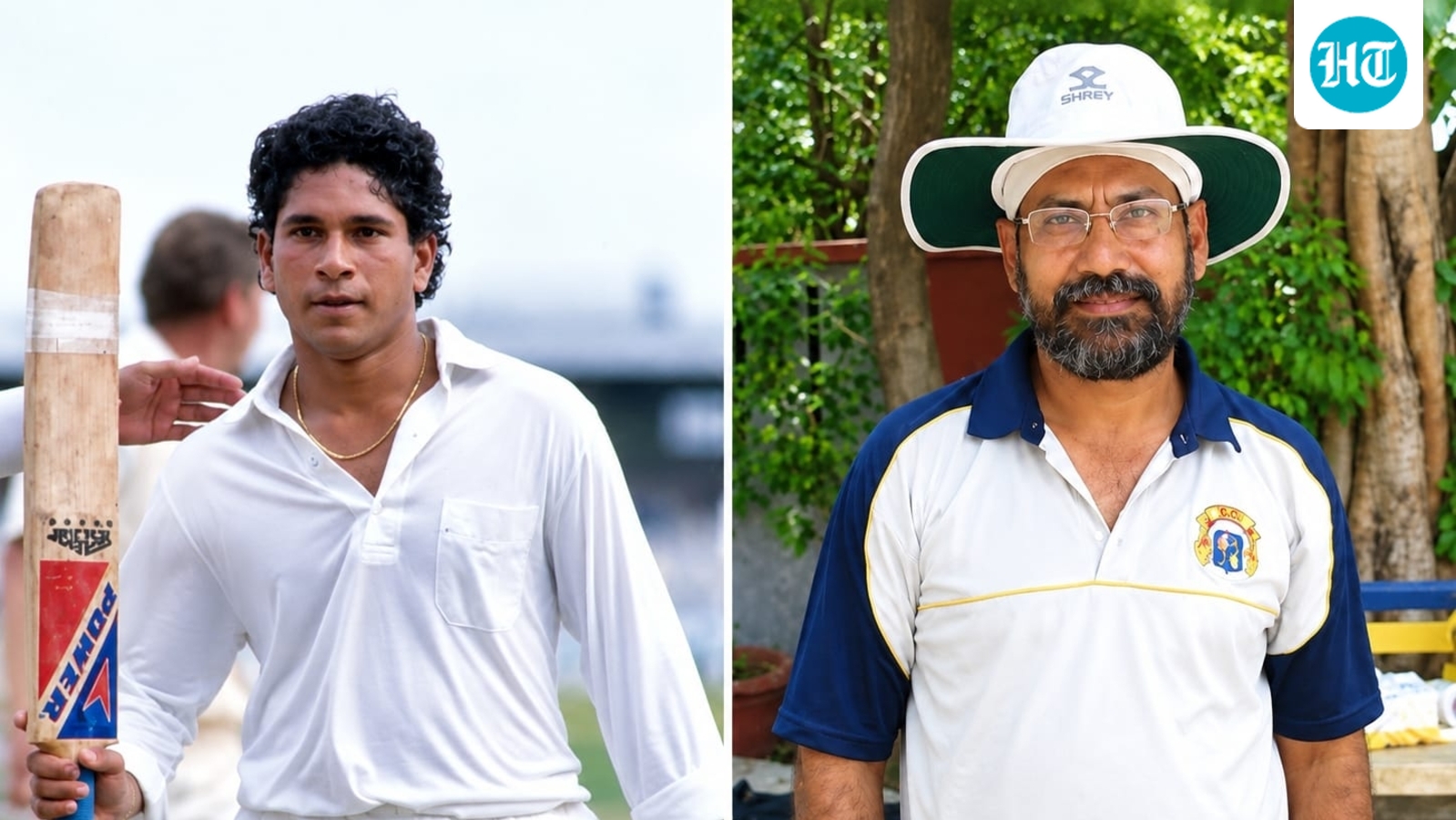
Clive Lloyd was the first. Then came Viv Richards, Jeff Dujon and Malcolm Marshall. Four West Indian batsmen, four catches, all taken by the same young Indian during the Ahmedabad Test of November 1983. Yet his name was nowhere in India's playing XI. He was only a substitute fielder, replacing Roger Binny, and by the end of the match had become the first substitute to take four catches in a Test.The strange part was that this was not some unknown youngster accidentally finding himself on an international field. Two years earlier, aged 18, he had made 101 not out on his first-class debut against a touring England side whose attack included Bob Willis, Ian Botham, Graham Dilley and John Emburey. A few months later, he scored another 101 in the Ranji Trophy final as Delhi replied to Karnataka's 705 with 707 for eight to take the title on first-innings lead.By 1983, Indian cricket had already seen enough to know the name. But seeing him and selecting him turned out to be two very different things.The player was Gursharan Singh, and his career became one of the stranger selection stories in Indian domestic cricket: a debut hundred against England, a Ranji final hundred, a 298 not out, a role in one of Sachin Tendulkar's most important teenage innings and, eventually, the captaincy of Punjab's only Ranji Trophy-winning side. His reward at the highest level was one Test and one ODI.Gursharan refused to disappear with the innings. He and Krishna Mohan, who made 112, added 320 for the sixth wicket. Punjab eventually reached 551, just 43 short of Bengal. Gursharan was still there on 298 not out, stranded two runs short of a triple century and eliminated despite one of the great knockout innings in Ranji history.Later that year came the episode that links his forgotten career to India's most famous one. In the 1989 Irani Trophy, Gursharan had retired hurt with a fractured finger while a 16-year-old Tendulkar was closing in on a hundred. Tendulkar has since recalled that the match was effectively a trial before India's Pakistan tour. With the innings down to its final wicket, chief selector Raj Singh Dungarpur asked the injured Gursharan to go back out and support the teenager. He did. Tendulkar finished 103 not out and was soon selected for India. The teenager Gursharan helped would go on to play 200 Tests. Gursharan himself was still waiting for his first.Sachin Tendulkar himself talked about the knock from him, “That was my trial match for the Indian team. Gursharan wasn’t supposed to bat, but he listened to Raj Singh and came out to bat, and eventually helped me get my 100. And I got selected to play for India after that. Later, Gursharan also became a part of the Indian cricket team. I thanked him profusely there, because it was a big thing for him to come out with his broken hand. His intent, his attitude mattered the most to me. That touched my heart.”Also Read: Failed Yo-Yo test, still won Man of the Match: India batter sought answers from Kohli, was later ignored for World CupIn Auckland, Gursharan finally received his Test cap. India made 482, and he batted at No. 7, scoring 18 from 38 balls before being caught and bowled by Shane Thomson. He also took two catches. The match was drawn, and because India did not lose a wicket in their second innings, Gursharan never got another chance to bat.Those 38 balls became his entire Test batting career. He played one ODI against Australia soon after, scored four, and was never picked for India again. There is no clean dramatic explanation for the disappearance: no career-ending injury or major controversy. He was nearly 27, India had a crowded batting field, and the selection window simply shut.Gursharan kept making his case domestically. In 1992-93, he scored 548 Ranji runs at 46.08 and took 17 catches, then a record for a single Ranji season. More importantly, as captain, he led Punjab past Maharashtra by 120 runs in the final at Ludhiana. More than three decades later, it remains Punjab's first and only Ranji Trophy title.He retired after the 1994-95 season with 5,719 first-class runs at 43.32, including 14 centuries and 30 fifties. Those numbers are substantial, but they do not quite capture the oddity of the career. Gursharan Singh had scored a hundred against Botham and Willis at 18, made 298 not out in a Ranji knockout, helped Tendulkar towards India selection and captained his state to history. For India, he got 38 balls in Test cricket.


Most Popular