Real Madrid, Man Utd and a World Cup: Football’s wild coaching landscape and hiring dilemmas

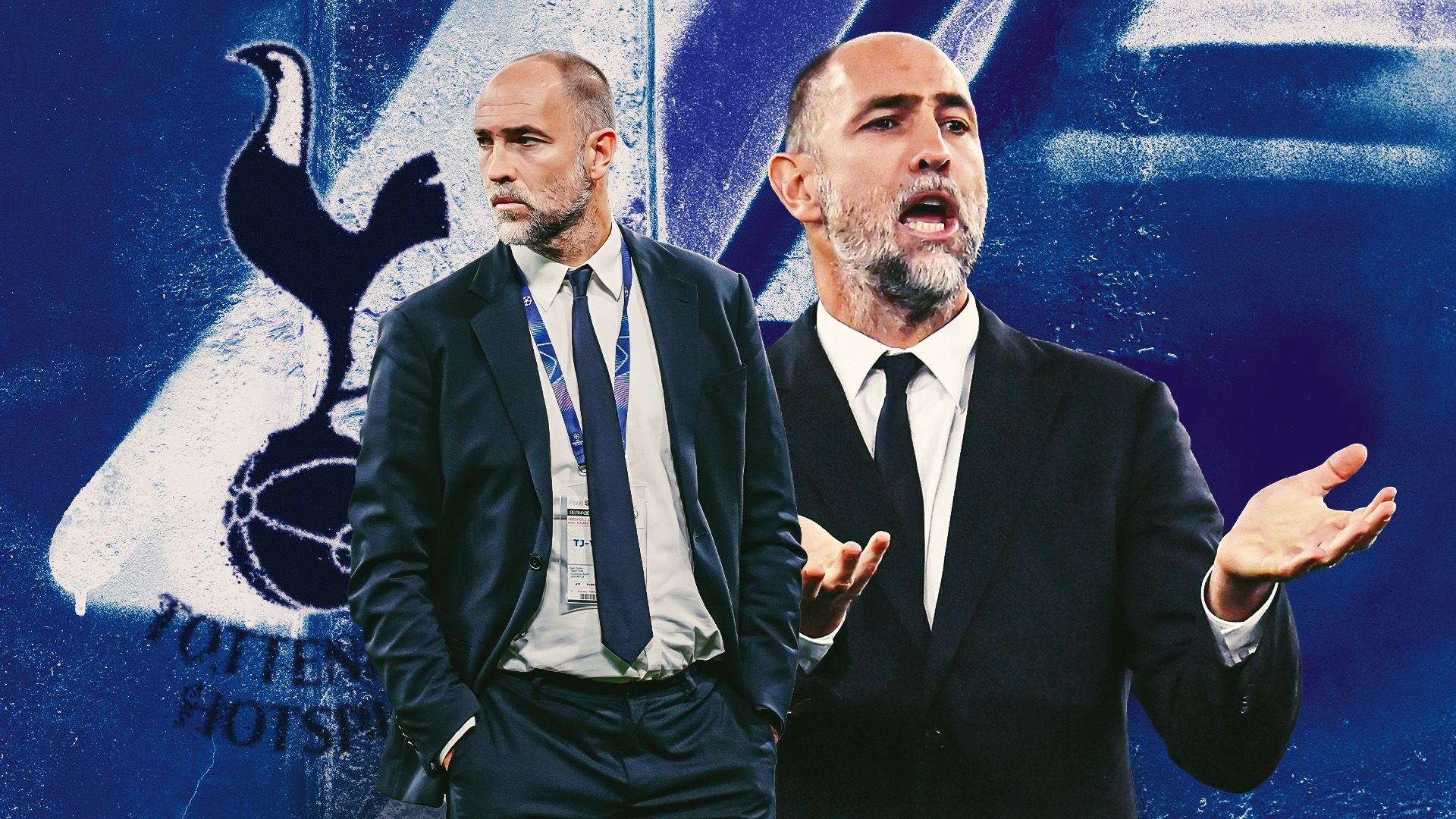
Maybe it shouldn’t have come as too much of a surprise that Thomas Tuchel committed to England until 2028. He has only had the role for a year and, as the English Football Association chief executive Mark Bullingham put it, “he’s really enjoying the job”.So much so that Tuchel is willing to pass up the chance to return to the club game after the World Cup this summer. While Bullingham didn’t deny the existence of a break clause in his contract, the news of an extension signalled that Tuchel is ruling himself out of contention for prospective openings in Manchester and Madrid.It continues an intriguing trend of elite coaches working in international football earlier in their careers and for longer. You get more time to think, watch and learn. You can visit clubs, get a feel for them through greater access. You’re also able to select a squad without an owner or a sporting director constraining you due to profitability and sustainability rules and upcoming contract renewals. Choice is limited to the talent a nation produces but the choice is at least yours. That’s not the case in the club game, where a manager’s role is increasingly restricted to the whiteboard, the training ground and the 90 minutes your team play every three days.Judging by some of the jaded comments from Pep Guardiola and Arne Slot, winning leagues and cups these days is far too quickly forgotten. Lifting a World Cup is not — and this summer’s edition, as the biggest and most-covered of all time, has captured the imagination of the elite. It is perhaps why, for instance, Julian Nagelsmann stayed on as Germany coach after the 2024 European Championship in his home country. But Tuchel committing beyond the World Cup, until Euro 2028, is interesting, and it coincides with news that Carlo Ancelotti is set to carry on as Brazil coach through to 2030.Ancelotti is older and perhaps even more fulfilled than Tuchel — who, lest we forget, has won league titles in Germany and France and a Champions League in England — but the 66-year-old Italian is still the perfect Real Madrid coach at a time when Real Madrid need a coach.It raises a couple of questions: is international football reasserting itself as the pinnacle? And where do these superclubs in need of supercoaches now turn? This summer would be the end of an era if Guardiola leaves Manchester City after 10 years. One imagines that if he does, he would go on another sabbatical (or… take a national team job).Zinedine Zidane has patiently sat out the past six years, waiting for Didier Deschamps to relinquish his post as France coach, which he finally will after the World Cup. More and more big beasts are exiting the club stage. Despite the expectations of many observers, Jurgen Klopp didn’t take the Germany job from Nagelsmann after Euro 2024. Instead, he appears to be enjoying the role he started with Red Bull last year as their head of global soccer. When Madrid fired Xabi Alonso last month, Klopp told Servus TV that the news and speculation linking him with the job “triggered nothing in me either”.Alonso was an exception to president Florentino Perez’s fondness for bringing back successful managers, such as Ancelotti and Zidane, for second spells. It’s one of the reasons Jose Mourinho is still believed to have another shot at the Bernabeu, regardless of his career trajectory. Few people, for instance, thought Ancelotti would win another two Champions League titles with Madrid when he was at Napoli and Everton, and the same is true of Mourinho now.After helping Rui Costa win re-election as president of Benfica by agreeing to become their coach last September, Mourinho has a break clause in his contract that allows him to leave 10 days after their final game of the season. If Madrid don’t come calling, would it be a surprise if the Portuguese Football Federation asked him to replace Roberto Martinez after the World Cup?To indulge in a last bit of speculation, Alonso’s name continues to be associated with a still-occupied Liverpool bench, but projection does not always manifest into reality. That was the case in 2024 when Alonso decided to stay at Bayer Leverkusen and, who knows, if the World Cup goes badly for Luis de la Fuente, perhaps Alonso would entertain becoming Spain coach. After all, that’s what Luis Enrique did in 2018 while still in his forties.Coaches are often impulsive and unpredictable. They can unexpectedly stay put or get restless in fear of being left on the shelf.Roberto Mancini wanted back into the Premier League this season. The West Ham United job came up, then the Nottingham Forest one. After holding talks with Forest, he thought twice about it and he’s now in charge of Qatari side Al Sadd. If he had held out, maybe he would have appealed to Manchester United and Tottenham Hotspur following the dismissals of Ruben Amorim and Thomas Frank, maybe more conversations would have taken place with Forest after Sean Dyche’s sacking.Instead, Spurs have turned to Igor Tudor, at least until the end of the season. If Mancini, who won the Euros as Italy coach in 2021, can be viewed as yesterday’s man, what about Roberto De Zerbi? His decision to join Marseille — where he showed a contract offer from Manchester United to his players after a defeat to Auxerre to demonstrate he had put his passion for football before money, the passion his players lacked — took some people by surprise in 2024.It feels like clubs who will be looking for coaches this summer have fewer established targets and, to complicate matters further, these targets are constantly moving too.A vacuum is emerging.Who is going to credibly succeed Guardiola, Klopp, Ancelotti and Mourinho as truly transcendent figures in the way they succeeded the titanic Marcello Lippi, Fabio Capello, Sir Alex Ferguson, Arsene Wenger, Vicente del Bosque and Ottmar Hitzfeld? In the epoch of Guardiola, his principal rivals have been Mourinho and Klopp. His latest is one of his own making: Mikel Arteta.Six years into Arteta’s tenure at Arsenal, he hasn’t, for all the progress, won the Premier League, even when it was there for the taking last season. Instead, Liverpool seized the moment. Thursday’s 1-1 draw at Brentford meant Arsenal’s lead at the top was reduced to four points with 12 games to go. Another former member of Guardiola’s coaching staff, Enzo Maresca, was sacked by Chelsea barely six months after winning the UEFA Conference League and Club World Cup. Xavi hasn’t worked since Barcelona got rid of him coming up to two years ago, with his 2022-23 league title, the first of their post-Lionel Messi era, almost taken for granted, normalised, forgotten about.Coaches who seem to be the future very quickly look like the past.Some would argue Slot is the latest example. Mauricio Pochettino has not enjoyed the career some expected after he led Tottenham to a Champions League final. Maurizio Sarri won trophies at Chelsea and Juventus, but he has not found a group of players who can replicate the football his Napoli team expressed. Andre Villas-Boas switched roles in 2024, becoming president of Porto. Erik ten Hag is the technical director at Twente.Amorim won Sporting CP’s first league title in almost two decades, but as with Ten Hag, he’ll be remembered for not restoring Manchester United to greatness. Does that make him a bad coach? No. And yet the noise United generate echoes louder than the work that got him the job in the first place and it is hard, in the short-term, to envision him getting another one in the Premier League.The troubles Frank and others have experienced in making the step-up within the same league also make you wonder if Bournemouth’s Andoni Iraola — who, like Crystal Palace’s Oliver Glasner, is set to be out of contract in the summer — would be an automatic success at a ‘bigger’ club. The requirements are different. The scrutiny you’re exposed to is ever greater. Press conferences attended by only a few journalists all of a sudden take place in auditoriums with international as well as local media present.Memes of Amorim with a tactics board as United lost at fourth-division Grimsby Town, face-swaps featuring Graham Potter, and Arsenal-branded coffee cups unwittingly in the hands of a Tottenham manager can undermine someone in the time it takes to refresh a timeline. Playing in Europe stresses methodologies that worked well in teams used to only domestic competitions. This is why hiring a coach is the hardest decision a club have to make.They can look at whether a candidate outperformed a metric such as expected points or his previous team’s wage bill and net spend relative to other teams in the league when evaluating a coach. This still isn’t enough. Who a club’s success is chalked up to is often murky. At Brentford, for instance, was it Frank, as Tottenham seemed to believe, or was it the support structure put in place by an extraordinarily well-run club? Under his replacement Keith Andrews, who had never managed any team before this season, they are seventh in the Premier League and four points off the Champions League places.At Brighton & Hove Albion, what’s more responsible for their consolidation as a Premier League side? Are Chris Hughton, Potter, De Zerbi and Fabian Hurzeler the principal reasons, or is it the analytics and recruitment that even survived the departures of executives such as Dan Ashworth, Paul Winstanley, Sam Jewell and David Weir? Sevilla were, for a time, a highly successful version of this on the continent. Unai Emery won the Europa League three times before having a less successful spell at Arsenal, but it is harder to judge Juande Ramos and Jose Luis Mendilibar outside Seville (even if Ramos was the last Spurs coach to lift a trophy before Ange Postecoglou did it in May).Take one of these coaches and put them in a more pressurised environment without an equivalent structure or culture and it’s hard to expect results. On the flip side, that’s also why when a coach is onto a good thing, the grass isn’t always greener on the other side. At another club, you might not wield the same power and influence that Diego Simeone has accrued at Atletico Madrid or Arteta with Arsenal.That some coaches think this way and elect to stick rather than twist only exacerbates the sense that there are fewer and fewer top coaches on the market.Clubs are also becoming pickier. They want a style at a time when football is in flux and not being beholden to a style is probably for the better. They want coaches to stay in their lane and focus on training sessions, match preparation and player development. They don’t want to be challenged, provoked and pushed. They don’t want to concede some of the power and influence over recruitment. This serves to make the coaching pool appear even smaller.Vocal winners such as Antonio Conte, a title-winning coach in two different countries with four different clubs, are ruled out as too much hassle, too short-term, when statistics show the life-cycle of most in the profession is short anyway. De Zerbi has, in the past, brought a scout with him, Salvatore Monaco, to guide on his recruitment likes and dislikes. Cesc Fabregas has an ownership stake in Como and, as such, a say in a range of matters at the club he is coach of. While he wouldn’t necessarily expect the same clout elsewhere, he has played under managers — namely, Guardiola and Wenger — who have built clubs in their image.The biases to work through are many. If you look at the coaches who have recently won the Conference League or Europa League, how many of them — Emery, David Moyes, Mourinho, Gian Piero Gasperini — had been written off or scoffed at? There may be no second acts in American life, as F Scott Fitzgerald wrote, but there are in football. These coaches have aged, but their ideas and approaches are still relevant, no matter the zeitgeist. And yet they are still largely thought of as yesterday’s men when tomorrow offers less certainty.Alonso and Thiago Motta (who lasted nine months at Juventus) struggled in their first big jobs. Cristian Chivu (Inter) and Vincent Kompany (Bayern Munich) haven’t — but in Kompany’s case, how do you judge his Bundesliga title when Bayern have been German champions in 12 of the past 13 years? Why is he a more compelling candidate for another top job, let’s say, than the most recent Italians, Massimiliano Allegri and Simone Inzaghi, to lead Italian teams with fewer resources to two Champions League finals? Would Allegri have wider acclaim if he had accepted the chance to replace Zidane at Madrid instead of returning for a second spell at Juventus? Might Inzaghi’s name still be on everyone’s lips if his idea of a new challenge abroad was in the Premier League, not the Saudi Pro League with Al Hilal?Manchester United, Madrid, Tottenham and others will all have to reckon with these dilemmas in the coming months — the perceived scarcity, artificial or not, experience versus potential, the right coach at the wrong time conundrum because of structural issues within the club or the squad. Can they adapt? Should we adapt?These are tough questions the English FA, for now, don’t have to ask.“There is a possibility that I will be tempted to go back to club football,” Tuchel told reporters. “But not in the next two and a half years.”

Most Popular


England beat Italy to enter Super 8
9 hours ago