
Has Lionel Messi ended GOAT debate? Why have star coaches been outshone? Day 35 recap

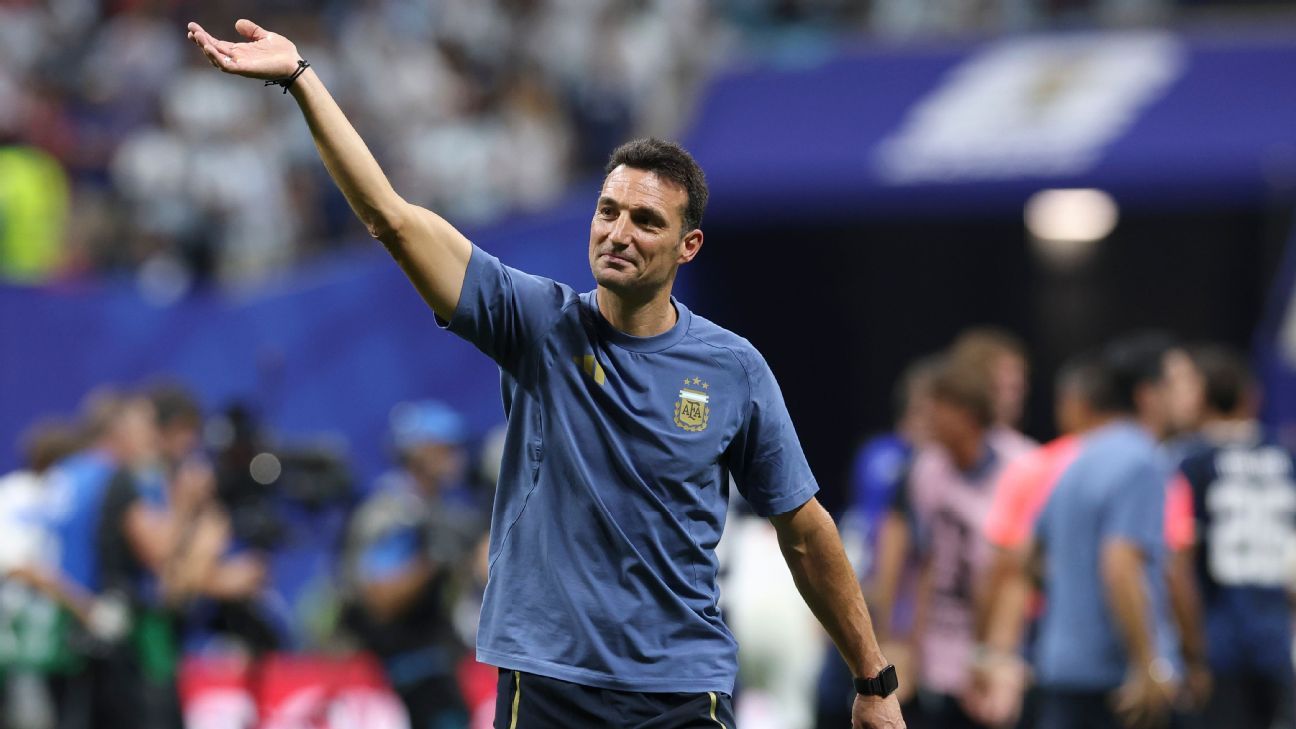
Get free access to the most comprehensive World Cup coverage in The Athletic appArgentina are through to their second World Cup final in a row, after beating England 2-1 in Atlanta. Lionel Messi inspired them during a sensational comeback, with Thomas Tuchel’s tactics after England went 1-0 ahead failing to pay off.Emotionally and physically, Argentina will have to regroup in double-quick time: they travel to New York to face Spain in the final on Sunday, knowing they have the chance to be the first team to retain the World Cup since Brazil in 1962.As for England, it was an enhanced version of previous failures, immediately sitting back and telling Argentina to attack them for the last half hour of the game — which they duly did, and won thanks to strikes from Enzo Fernandez and Lautaro Martinez.Has Messi already ended the GOAT debate?If you still don’t think Messi is the greatest player of all time, what on earth will persuade you?Perhaps a second World Cup? If he leads Argentina to be the first team to win back-to-back titles in 64 years? What about if he scores in the final? Scores two, then? A hat-trick? Will that do it?Argentina’s win against England gave more proof that you can’t stop Messi. You can try, and occasionally he will go a game without scoring; very occasionally that will be because you have managed to contain him.But more often than not, he will find a way. Play how you like, he’ll find a way to kill you somehow. Admittedly, England played into his hands by giving him plenty of space outside the box, but even if you can blame them for their tactics after going a goal up, maybe you can’t really blame them for being beaten by Messi.There was much talk in the early days of this tournament about the biggest stars really turning it on. And it was great to see Kylian Mbappe, Erling Haaland, Vinicius Junior, Harry Kane, Jude Bellingham and Michael Olise all stepping up, all scoring goals, all doing what superstars should do. Cristiano Ronaldo half fits into this category: while he was quite clearly a burden to his team, ultimately he did score three goals in five games.But in the end there’s only one of them standing. None of those other players could drag their team through when they needed it. None of them scored, or provided an assist, or really contributed in any meaningful way to the games that eliminated their teams.Messi continues to make the difference. He didn’t score, but he set up both goals for Argentina against England — one with an admittedly routine pass, but the other courtesy of a delicious cross. He’s through to the World Cup final again, and all the other stars are going home.That’s greatness. The greatest of all time.Why are low-profile coaches outshining the stars at the World Cup?The World Cup final will be contested by one coach who sort of got the job by accident, and another who spent the decade before he got the job coaching in his country’s youth system.Lionel Scaloni was nobody’s idea of the man to finally help Messi win the World Cup when he was appointed in 2018. After failure at that year’s tournament, Jorge Sampaoli was fired at great cost, meaning the Argentine federation couldn’t afford a bigger name. Scaloni, who had been one of Sampaoli’s assistants, was initially appointed caretaker, and when he was given the job permanently, it didn’t go down well. Diego Maradona railed against the selection of a man who he said “couldn’t even direct traffic”.But should they beat Spain on Sunday, he will have won four major tournaments in a row — the Copa America twice, and the World Cup twice — which is unprecedented. It will make him the first coach to retain the World Cup since Vittorio Pozzo did it with Italy in the 1930s.The man in the other dugout isn’t any more glamorous. Or at least wasn’t when he was appointed. Spain’s Luis de la Fuente dutifully worked his way up the age groups, first taking charge of the under-19s, then the under-21s, then the under-23s, before moving up to the senior side in 2022.Despite their lack of significant reputations, they have both created teams that work: Scaloni by finding a way to construct a framework to make the most of their all-time genius; De la Fuente by adapting Spain’s traditional possession game to suit this new generation. Perhaps their lack of a reputation has helped them succeed: their lack of ego means they are more likely to subjugate themselves to the needs of the team rather than impose their own preconceived ideas.There is, perhaps, a lesson there for some of the other countries who decided that the way to go was a big-name, expensive coach.Thomas Tuchel proved inadequate and cost England their semi-final. Mauricio Pochettino ultimately couldn’t get the USMNT beyond roughly where their talent levels suggested they should be. Carlo Ancelotti departed at the last-16 stage with Brazil.It’s quite gratifying that, in the international game at least, the biggest names and the deepest pockets do not necessarily equate to success.Is the third-place play-off the saddest match in football?The saddest match in football history took place in April 2013. It was a Premier League game between Reading and Queens Park Rangers. It was a stultifying, boring 0-0 draw, a result that meant both teams were relegated. It was about as bleak as football gets.However, the third-place play-off — or the ‘Bronze Final’, as FIFA is calling it now — isn’t far behind. Enter France and England, who will have to drag themselves to Miami on Saturday after their respective demoralising defeats and pretend that this game means something.On reflection, perhaps the party capital of the United States wasn’t the most appropriate choice for this game of sadness. Maybe FIFA thought that a night or two on South Beach would cheer up the players and fans who will shuffle into town for this one, but you would imagine enthusiasm will be low.It’s not completely pointless. Third place is, after all, better than fourth place. It’s still a game at an actual World Cup, and a chance for some of those who haven’t yet appeared to get some time on the pitch and perhaps make it feel like a not completely wasted trip.It’s also a chance for Kylian Mbappe to go for the Golden Boot. He’s on eight goals, level with Messi, and it will be rather easier to pad out his numbers against a half-interested England as opposed to Messi facing Spain’s smothering defence. Croatia’s Davor Suker scored the goal that secured him the top scorer title in the 1998 third-place play-off, as did Italy’s Salvatore Schillaci in 1990 and Germany’s Thomas Muller in 2010.But ultimately this is a game that nobody wants or needs. The players have been away for the best part of six weeks, a gruelling tournament that has ended in disappointment, and they all need a rest before the relentless demands of the domestic season reappear all too soon.They will want to be absolutely anywhere else on the planet on Saturday. And who can blame them?
.jpg?width=1200&auto=webp&quality=75)


Most Popular


up rocked by allowance dispute
2 hours ago
