Sabalenka should not be held responsible for the actions of two dictators
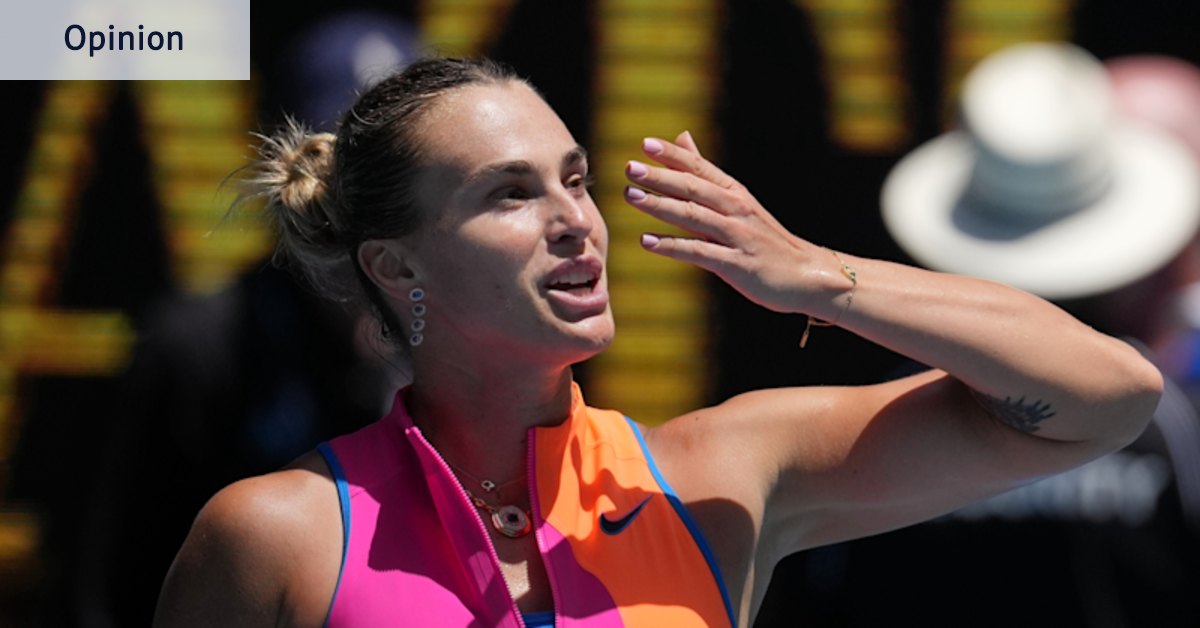
Australian Open with 4K on Stan Sport.Every match, live & on demand.Stream nowAryna Sabalenka might not be to everyone’s taste.On the court, she’s an aggressive baseliner who likes, as her young Canadian opponent Victoria Mboko found during their fourth round match on Sunday, “to step in and take control”.Off the court, she’s brassy and unashamedly commercial – in a video posted to social media she plays tennis in towering black heels and a dramatic, fringed Gucci dress. She rocked up to a post-match press conference on the same day ready to slap on a pair of sunnies in which to spruik the Italian fashion house.It was this off-court collaboration between the world No.1 and a famous fashion label that prompted Ukrainian tennis player Oleksandra Oliynykova to double down on her criticism of Sabalenka, whom she described as “a supporter of a bloody dictator [who] becomes an ambassador for a top brand”.For Oliynykova, who is the only active professional tennis player who continues to live in Ukraine as the war with Russia continues, the juxtaposition is no doubt jarring. Sabalenka is a famous Belarusian athlete, Belarus is a close ally of Vladimir Putin’s Russia, and Oliynykova’s apartment block shook from a Russian drone attack the night before she flew out for the Australian Open.The Ukrainian woman’s anger is understandable – her father is a soldier, as are some of her friends, and she sees the consequences of Putin’s war daily. She wore a T-shirt to promote a fundraising effort for her father’s unit after her first-round defeat to Madison Keys and launched a passionate, political statement in an interview with this masthead after that match.But to hold Sabalenka responsible for the actions of two dictators – Putin and Belarusian president Alexander Lukashenko – is unfair.What is Sabalenka supposed to do, other than denounce the war and Lukashenko, which she has done since the 2023 French Open?At that time, Sabalenka was under pressure from other Ukrainian players and media to condemn the Russian invasion and the Belarusian leader. There was a feeling that she had been slow to do so.Given that Lukashenko has a history of dealing harshly with anyone who speaks out against his regime, it would be understandable if Sabalenka had been under just as much pressure to keep any misgivings to herself.At Roland Garros in 2023, after constant questioning about her views on the invasion, she retreated from the public eye.“I know that I have to provide answers to the media on things not related to my tennis or my matches, but on Wednesday [after winning in the second round] I did not feel safe in the press conference,” Sabalenka said at the time.“I should be able to feel safe when I do interviews with the journalists after my matches.”Thanks to Oliynykova’s stance, which singled out Sabalenka, the world No.1 has again fielded questions about her views on the war and responded only that she is “pro-peace”.The Ukrainian’s broader point is that all Russian and Belarusian players should be banned from the sport because of their countries of origin; that their presence on the world stage – even when they don’t compete under their national flags – makes it easier for their leaders to co-opt their achievements as part of their propaganda machines.Wimbledon imposed such a ban in 2022, but lifted it the following year on the condition that players did not support or receive funding from their governments.Again, it’s not surprising that Oliynykova would take personal offence at seeing Russian and Belarusian players strutting their stuff on the court and on Instagram while her country is reduced to rubble. Whether they should be held responsible for the decisions of their governments is another matter.There are plenty of Russian-born and raised players at the Australian Open who have abandoned their homeland.New Australian citizen Daria Kasatkina defected partly because, as a gay woman who had opposed the war, she could not live safely in Russia. But do we really think the majority of tennis players who’ve switched allegiances did so for moral reasons?Well before the invasion of Ukraine, the former Soviet state of Kazakhstan embarked on an aggressive recruiting campaign dubbed by news agency AFP as “rent a Russian”. Elena Rybakina, who won Wimbledon when Russian and Belarusian players were banned in 2022, and world No.10 Alexander Bublik are among those who have explained they swapped passports because of the extra financial support on offer from oil-rich Kazakhstan.LoadingOliynykova is not the only Ukrainian making a political statement – Elina Svitolina did not shake the hand of Russian whiz kid Mirra Andreeva on Sunday night and Andreeva did not expect her to.But as Sabalenka told The Age’s Marc McGowan before she won her first Australian Open, a ban serves little purpose beyond punishing players for the actions of their leaders.“No one supports war – no one,” she said. “The problem is that we have to speak loud about that ... but why should we scream about that in every corner? It’s not going to help at all. We have zero control under this situation.”Read more about the Australian Open:



Most Popular

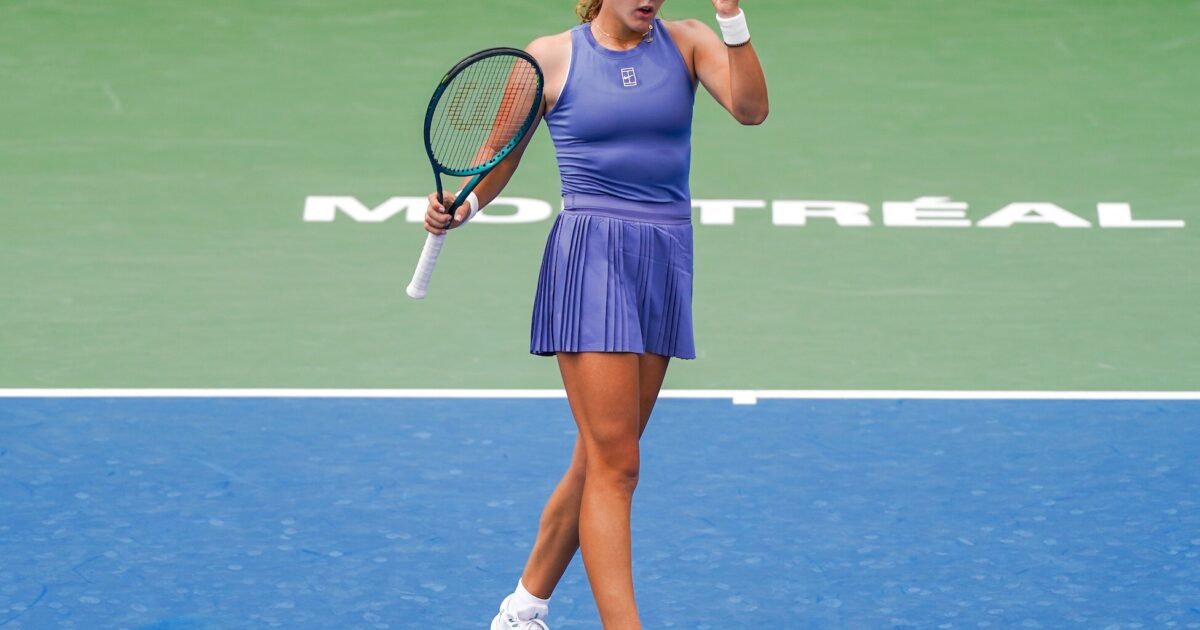
Andreeva, Mboko, and Jovic Lead WTA’s Teen Titans
10 hours ago