Everton: Don Revie and the contract he never signed
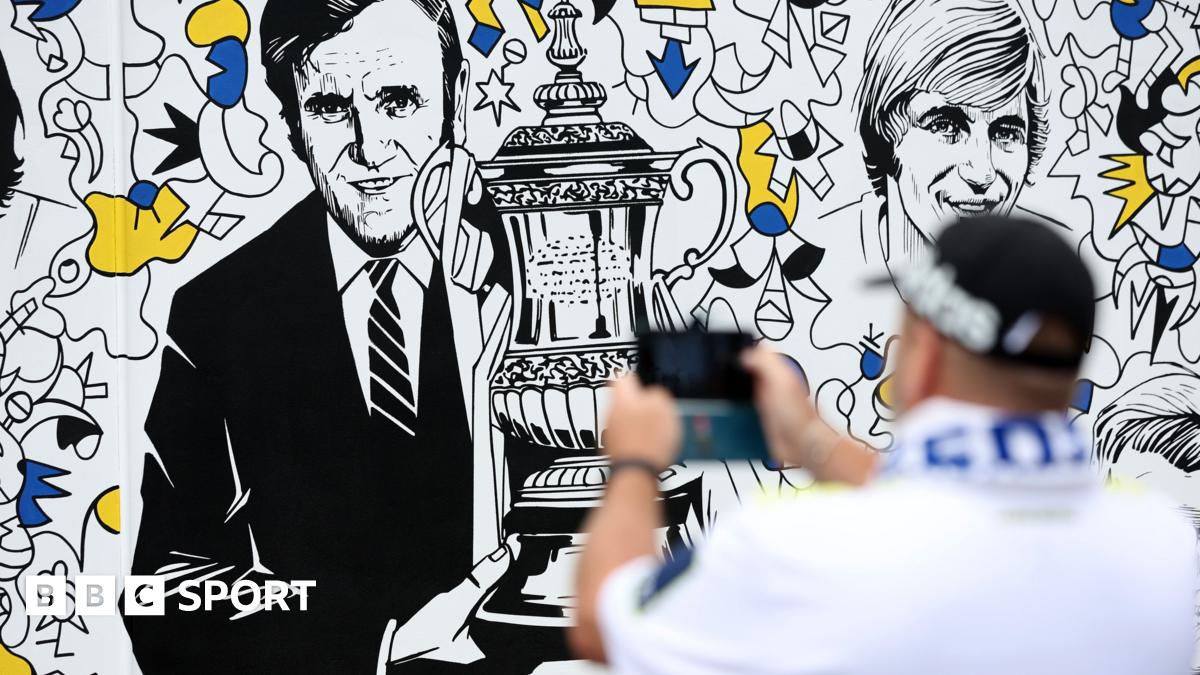
My mother would often say, before she died last year, that there was something valuable in the home in which she had lived with her husband George.Was it an heirloom or an antique, I wondered.George Watts, my stepfather, was chairman and director at Everton while also working for the club's owner John Moores at the Littlewoods Organisation.He was an astute businessman and dealt with club finances. As a youngster, I can recall legendary forward Bob Latchford coming to the house to discuss contracts.When George died in 1988, fellow club director and solicitor Keith Tamlin handled his estate. The filing cabinet rammed with club paraphernalia was emptied - except for one key document.It would remain undisturbed for a further 37 years until last summer, when I went through an experience familiar to many people who have lost a parent - one of painstakingly sifting through decades of paperwork.There were long-out-of-date policies, receipts, family photographs, work mementos and then, undetected at the back of one of the steel grey drawers, was a brown envelope marked 'Everton: Season Ticket Sales'.It seemed innocuous enough, with a running total of revenues from a couple of seasons in the 1970s.But what caught my eye was a schedule of undated flights to Athens from Manchester, accompanied by several copies of a typed contract, one of which was annotated in my stepfather's distinctive, if somewhat indecipherable, handwriting.Closer inspection revealed an agreement between Everton Football Club and the man who in 12 years had taken Leeds United from Second Division also-rans to winners of every major domestic honour and two Fairs Cups - one Donald Revie of Three Chimneys, Sandmoor Drive, Leeds.More than half a century after the contract was drawn up I had, quite unwittingly, stumbled upon an exclusive in my childhood family home - one that saw my two worlds collide as a boyhood Everton fan who has covered the Whites on BBC Radio Leeds for 20 years.Everton wanted the best to replace their most successful manager, Harry Catterick, and Revie's stock was sky high."There were three great managers around in Catterick, Don Revie and Bill Shankly. Three great sides, three incredible fanbases, three top-drawer managers," says Ronny Goodlass, an Everton winger trying to break into the first team at the time."When you get Don Revie's name being bandied around you think, 'We'll have a bit of that - someone at the top who knows what they're doing and who is a winner.'"But the contract lay unsigned and with it the non-acceptance of an annual salary of £15,500 (the equivalent of £240,000 today) and a seven-year deal from 1 June 1973.There was the potential to earn as much again in bonuses, and a car "appropriate to his position" would be provided as well as a club-bought house within 25 miles of Goodison Park. The house would be worth between £20,000-£40,000 and there would be an option to buy at the club's purchase price or rent at £6 per week.The salary was believed to be several thousand more than Catterick's, who won two league titles and an FA Cup in a 12-year reign but whose failing health, combined with a sharp drop in form, meant he left his post in the preceding April.Moores was ambitious. The 'Mersey Millionaires' were prepared to pay top dollar for their new boss, with Ipswich Town's Bobby Robson and Wolves' Bill McGarry also linked.But it was Revie, then aged 45, in his not very subtle gold Mercedes, who was recognised on the Monday morning asking for directions for Moores' house in Freshfield, Formby, just hours before joining up with a Leeds squad flying from Manchester to Greece for the Cup Winners' Cup final against AC Milan.As it transpired, the two had met in the south of France the previous weekend at Moores' villa.It appears a concord had been reached, yet no ink was drying.As Leeds head to Hill Dickinson Stadium for the first time on Monday, it gives cause to reflect on the numerous permutations of how things could have looked had Revie signed with the Toffees.It is possible Leeds could be heading to an Everton ground with a statue - or even a stand - commemorating their most famous manager.If Revie moved to Goodison Park, perhaps there would have been no ill-fated appointment as England manager a year later, by which time he may have fulfilled his intention to bring England internationals Norman Hunter and Trevor Cherry from Elland Road to Merseyside.Would there have been the infamous 44 days of Brian Clough and the Damned United? Or, had the board turned to the then Derby boss in 1973 after Leeds had finished runners-up in the league, FA Cup and Cup Winners' Cup, would he have been given time to make the team his own?Would Everton have claimed the title under Revie rather than let it slip in 1975? Would they have been more than also-rans in two other title races?Revie was a revolutionary figure in terms of opposition analysis and attention to detail and it is no exaggeration to say this would have been a huge coup.So just how close did Leeds come to losing the man who ultimately led them to a second league title in 1973-74 after starting the campaign with a 29-match unbeaten run?Many Leeds players in Greece thought it was a done deal. The gold Merc looked set for Merseyside again."Don was gone," reckons Richard Sutcliffe, author of 'Revie Revered and Reviled', which he researched with the help of Revie's son Duncan and defender Cherry."Trevor also told me that as they flew out to Thessaloniki, everyone knew by then, and everyone thought it was a done deal."He said it was such a depressed atmosphere at the airport as they were going out, because they thought 'this is it' . They were losing a father."It is likely Revie felt he was not appreciated by the current board under chairman Manny Cussins and maybe joining Everton meant avoiding breaking up the side he had nurtured - having taken over as Leeds boss in 1961 - while securing his own future.But he stayed."I never thought he'd go," legendary Leeds midfielder Eddie Gray says."Don was very shrewd as a manager and (in) financial matters. His wife grew up in a footballing family (her uncle Johnny Duncan managed Revie at Leicester) and she knew a great deal about football."Between them they knew the ins and outs of how to deal with directors and chairmen. You put a little threat in here, you get a little rise. I don't think Don had really any intention of leaving, just to put pressure on the board."Revie did have form in this respect, previously turning down reported approaches from Sunderland, Birmingham City and Turin rivals Juventus and Torino.It was to prove fruitless in any case as Revie put an end to the rumours with a phone call from his holiday to Leeds director Percy Woodward.A thwarted Everton were told their offer was rejected for "personal reasons". Billy Bingham was appointed instead.How much financial issues swayed matters is open to interpretation, but it seems Revie's heart made the final decision."The ties with Leeds United, the players and the staff and the directors who have let me manage..." Revie told the BBC shortly after, explaining his decision to stay."They were the first club to give me the chance. This is when I decided that I wanted to stay."Revie went on to win the title the following season, before becoming England boss in July 1974, while a bond with a band of West Yorkshire brothers left a contract without his stamp of approval hidden in a filing cabinet in a Wirral bungalow for half a century.Additional reporting by BBC Sport England's Ian Woodcock.


Most Popular