
Scored 7134 runs, shared best cricketer award with Tendulkar, bribed selectors with ₹10 lakh each, got banned by BCCI
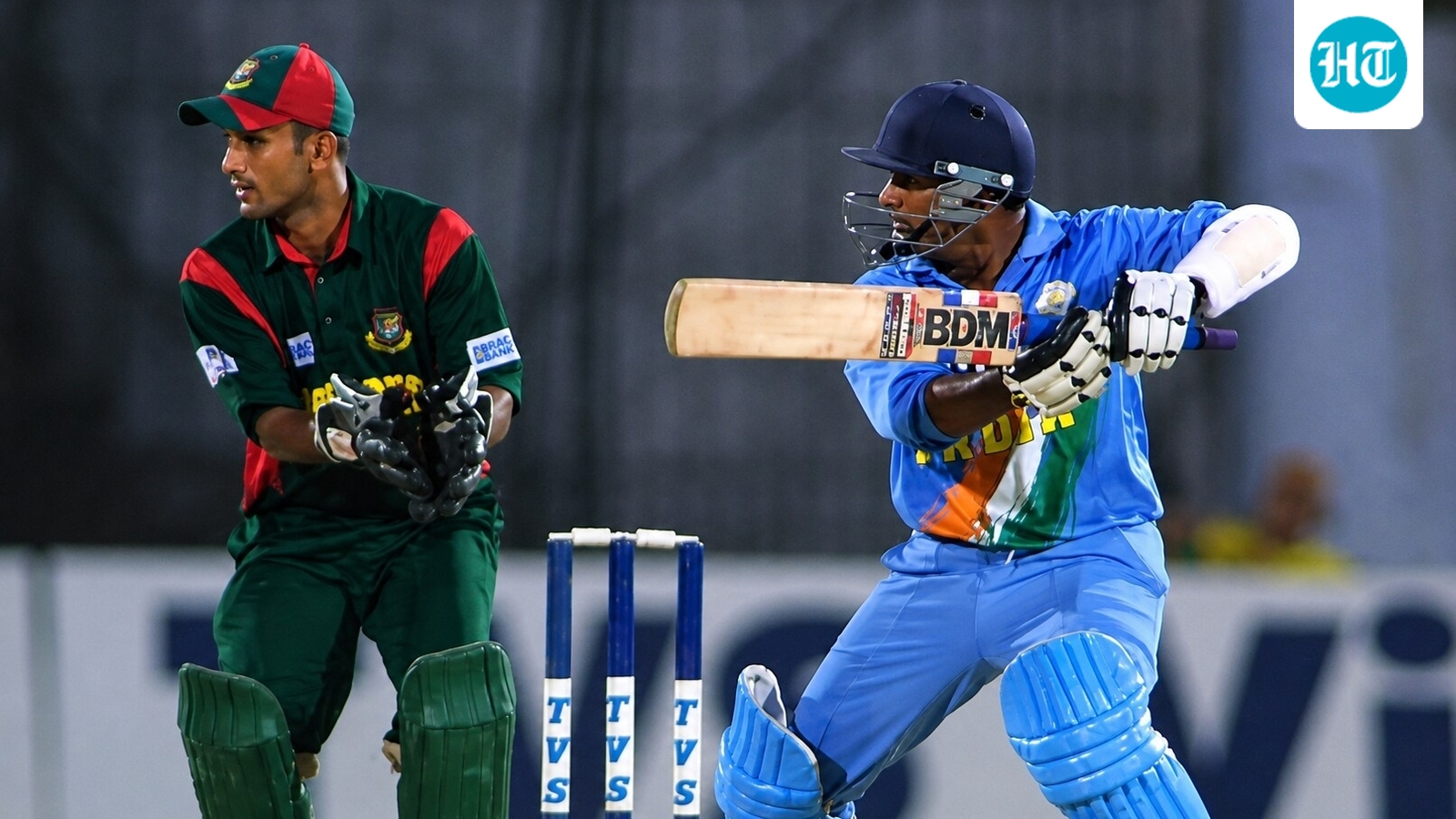
In Bombay cricket of the late 1980s, being exceptional was not always enough. The city was producing young batters at such a frightening rate that even a junior cricketer good enough to stand beside Sachin Tendulkar could disappear from the larger national memory. One season offered a particularly striking illustration: Bombay’s best junior cricketer honour was shared by Tendulkar and another young batter whose career would eventually travel in a very different direction.Their paths had already crossed in representative cricket. Tendulkar captained a Bombay Under-17 side that also included Vinod Kambli, Jatin Paranjape and this other highly regarded youngster. Tendulkar and Kambli would soon become the most recognisable products of that generation. The other batter would spend years accumulating runs away from the international spotlight, eventually finishing with more than 7,000 first-class runs but only one appearance for India.His name was Abhijit Kale. Kale belonged to the same extraordinarily competitive Bombay junior generation that produced Tendulkar and Kambli. In 1987-88, he and Tendulkar shared Bombay’s best junior cricketer award, a reminder of just how highly Kale was regarded before international careers had begun to separate one player from another.Yet his route into senior cricket was far less straightforward. Breaking into the Bombay side proved difficult, and Kale eventually moved to Maharashtra, where opportunity arrived, and runs followed. He developed into one of the most consistent batters on the domestic circuit, building a first-class career of 7,134 runs from 93 matches at an average of 54.45. Those runs included 25 centuries and 28 fifties, with a highest score of 248 not out.That unbeaten 248, against Baroda in the 1999-2000 season, captured something essential about Kale’s domestic career. Maharashtra were following on and in serious danger when the innings began to unravel. Kale stayed, constructed a monumental resistance and helped drag his team away from defeat. It was the sort of performance that strengthened the case that his numbers were not merely the product of piling up runs in comfortable circumstances.The innings that kept pushing his India caseBy the beginning of the new millennium, Kale had become difficult for the selectors to ignore. Against England at Jaipur in November 2001, India A collapsed to 8 for 4 on a surface offering assistance to the visiting seamers. Richard Johnson and Andrew Flintoff had made early inroads, but Kale responded with 122, accounting for more than half of India A’s eventual 233 for nine declared.It was precisely the kind of innings that could reshape perceptions of a domestic batter. Kale was not merely scoring heavily in the Ranji Trophy; he was doing it against international opposition and under pressure. His limited-overs record carried its own unusual distinction. In 1994-95, Kale reached fifty from 16 balls against Baroda, a mark that stood for decades among the fastest List A half-centuries by an Indian. It added another layer to a career otherwise defined mainly by long first-class accumulation.There were further reminders that he was hovering close to the national side. He made 90 for the Board President’s XI against Zimbabwe and toured South Africa with India A, where he made 75 against South Africa A. Former India selector Ashok Malhotra would later describe him as technically sound and particularly suited to the longer form of the game.The irony is that when India finally called, it was for an ODI. Kale made his international debut against Bangladesh in Dhaka in April 2003, at the age of 29 years and 287 days. Several established players were absent from the tournament, creating an opening for fringe contenders. Kale made 10 from 22 balls.There was never a second chance. That single appearance became his entire international career: one ODI, 10 runs, and no Test cap for a batter who had spent years producing first-class numbers that suggested he belonged somewhere close to that level.His story then took a darker and more complicated turn. Later in 2003, national selectors Kiran More and Pranab Roy accused Kale of offering them ₹10 lakh each in connection with selection. Kale denied offering money. During the BCCI proceedings, he admitted that he had tried to influence selectors by approaching them directly or through his parents, and apologised for doing so. The Board found him guilty of misconduct and indiscipline and banned him until the end of 2004.During the development, the Press Trust of India, a news agency, quoted Shetty as saying: "The player had offered to pay money to a couple of selectors for a place in the India A team. I can assure you that stern action will be taken against the player." While Kale's eventual apology letter claimed, ""The entire episode has unnecessarily tarnished the image of the board. I accept that it was wrong on my part to influence the selectors by approaching them directly or through my parents. With regard to the issue of offering money to the selectors, I wish to state that I was misunderstood and I assure you that I had no such intention. I tender [an] unqualified apology for my said act."Also Read: 36 wickets in 4 Tests, dismissed Viv Richards twice; his own success became a burden, career faded with Kumble’s riseThe allegation that money had been offered was never established through direct proof, something BCCI president Jagmohan Dalmiya himself acknowledged at the time. Kale’s punishment was therefore rooted in the misconduct that he admitted, rather than proof of a completed bribe. By then, however, the momentum of his career had been broken.What remains is one of the more unusual Indian domestic careers of his generation. Kale had once shared Bombay’s premier junior recognition with Tendulkar, played in the same youth side as Tendulkar and Kambli, produced more than 7,000 first-class runs at an average above 54 and fashioned important innings against international-quality attacks.Tendulkar went on to play 664 international matches. Kale played one. Cricket careers are rarely determined by talent alone. Timing, competition, opportunity and circumstance can change everything. Abhijit Kale’s numbers ensure that his name belongs in any discussion of prolific Indian domestic batters who received only the briefest look at the international level. His story becomes even more remarkable when viewed from where it began: not far behind the most celebrated young cricketers Bombay had ever produced.

Most Popular