Rebel United: Zlatan Ibrahimovic arrived as a king, and left football as a legend
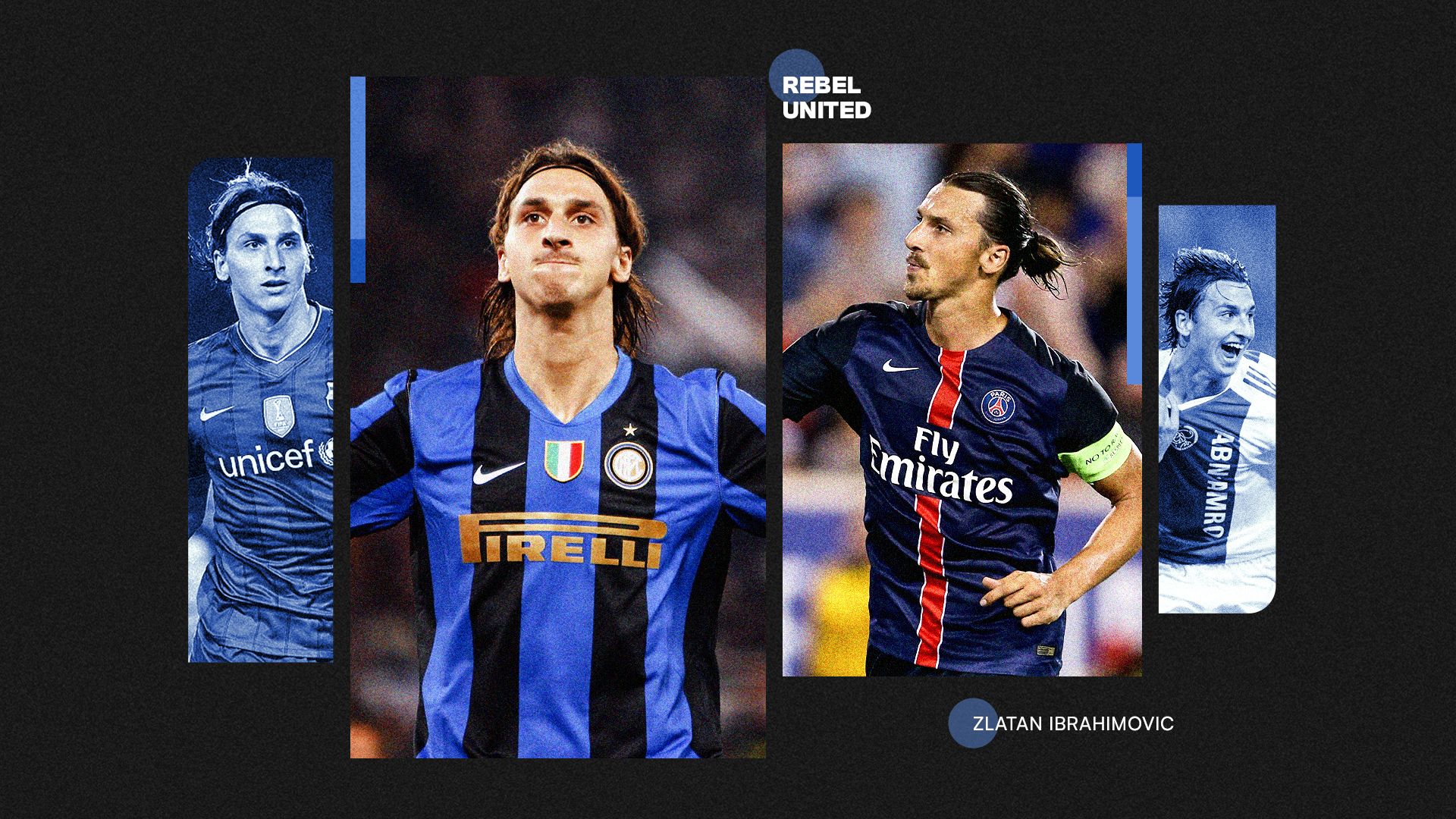
Zlatan Ibrahimovic was never just a striker. He was a lone figure in a system that far too often suppresses individuality.To truly understand Zlatan, you have to go back to the concrete of Rosengard, a social hotspot in Malmo, Sweden. That's where Ibrahimovic grew up as the son of a Bosnian father and a Croatian mother. It is where his character was formed, and where he learned to assert himself.Rosengard laid the foundations for a player who was never streamlined. And for what he later marketed as 'Zlatan style'.When 19-year-old Ibrahimovic received an offer from Arsenal in the summer of 2000, manager Arsene Wenger insisted that he first take part in a trial match. "Zlatan doesn't do trials," he replied. Ibrahimovic didn't want to be part of a random list of applicants – he wanted to be the benchmark against which others were measured. That 'me against the rest of the world' approach remained his driving force."You can take the boy out of the ghetto, but you can never take the ghetto out of the boy," Ibrahimovic once said about his origins, and he cultivated that difference in character, even on the pitch. Where others preferred to play it safe, Ibrahimovic always sought the extraordinary. His numerous acrobatic, spectacular goals reflected the same spirit with which he spoke: Uncompromising, surprising, unique.Ibrahimovic's career as a professional reads like the itinerary of a conqueror: Ajax of Amsterdam, Juventus of Turin, Inter of Milan, Barcelona, AC Milan, Paris Saint-Germain, Manchester United, Los Angeles Galaxy and back to Milan. Everywhere he went, he brought the same message: I am not here to fit in, but to rule.This became particularly clear during his short stint at Barca under Pep Guardiola, where the two clashed. For Guardiola, the collective spirit and total tactical discipline was his driving force. Zlatan, though, did not want to be forced into a straitjacket. His verdict on how his time under Guardiola worked out?: "I'm a Ferrari and you're driving me like a Fiat."Ibrahimovic expressed this nonconformity not only in his sporting prowess, with his combination of acrobatics and physicality, but above all with his language. He subsequently built up an aura that was greater than that of many clubs as he combined self-confidence, provocation and the ability to entertain with just one sentence. His statements were not PR gimmicks; they marked verbal boundaries.When he left Manchester United in 2018 to move to the United States, Ibrahimovic announced the transfer himself with an iconic newspaper advertisement in the Los Angeles Times . Written across an entire page was: "Dear Los Angeles, you're welcome!"Ibrahimovic consistently portrayed himself as a football deity and broke the unwritten rule that athletes must be humble. He proved that even with a huge ego, collective success can almost be guaranteed – as long as the performance justifies all the pathos, and it almost always did as Ibrahimovic collected 32 titles in his career.Ibrahimovic provided proof that as a rebel, you can not only disrupt the system, but also subjugate it."I don't know much about the Ligue 1 players – but they know me," Ibrahimovic told journalists upon his arrival at PSG. Shortly afterwards, the verb 'zlataner' ('to Zlatan', a synonym for 'overwhelm') found its way into French usage.That was the essence of Ibrahimovic: He always defined his environment rather than the other way around. While his peers willingly allowed themselves to be polished to a smooth finish by the media for fear of retribution, the Swede remained the rough edge of the professional game.Even when his body began to show signs of ageing, Ibrahimovic's spirit remained rebellious. In January 2020, he returned to Milan at the age of 38 with the club was in dire straits while languishing in 11th place in Serie A. With Ibrahimovic on board, they climbed the table to finish sixth and qualify for the Europa League."It's no secret that I'm old, but that's just a number," the legendary forward. "I'm not in the same physical condition as I used to be, but I can compensate for that with intelligence. I'm sorry I only joined halfway through the season. If I'd been there from day one, we would have won the championship."This unshakeable belief in his own superiority, coupled with the ability to turn that belief into reality, made Ibrahimovic unique. He didn't need a captain's armband to be the leader, nor did he need external validation to know who he was. "I came as a king, I leave as a legend," he famously said as he bid farewell to PSG.When Ibrahimovic left the stage in June 2023 at the age of almost 42, one thing was clear: He had left his mark with more than just goals and statistics; Zlatan left behind moments that live on in the collective memory while showing that it is possible to survive in professional football without selling your soul to the expectations of the masses.


.png)

Most Popular

Peter Squires obituary: England rugby winger
13 hours ago