Always super, all the time: the CSK way
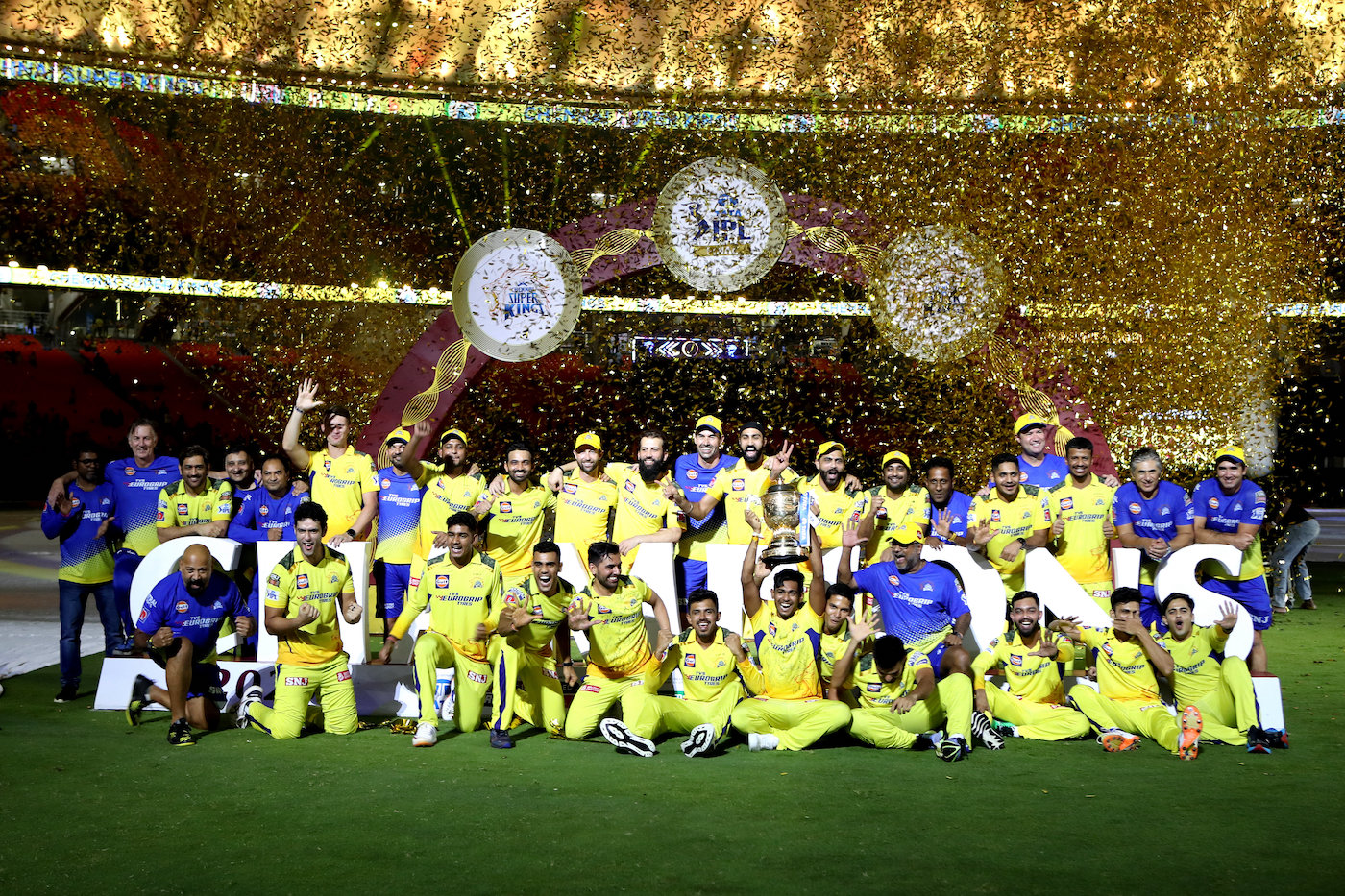
As one of the two most dominant franchises in IPL history, Chennai Super Kings found success by doing things their way. Matthew Hayden and Ambati Rayudu, both CSK veterans, sat down during IPL 2025 to unpack the franchise's underpinnings - from MS Dhoni's leadership to the dressing-room culture that underpins the team's longevity.When I say "the CSK way", what comes to mind first?Rayudu: What comes to mind is MS Dhoni because he's the one who calls the shots. He's the one guy who has kept everything intact and together along with Flem [Stephen Fleming, head coach] and Kasi [Kasi Viswanathan, CSK CEO] sir. That trio have made CSK, and the culture at CSK, what it is that we all speak about today.You two played at different times for CSK. Haydos, you were part of the formative years of the IPL and of CSK. Rayudu more recently. Is it fair to say that the identity of the franchise and a lot of its success is still, in the end, down to how Dhoni handled it?Hayden: That's probably a bit too narrow a focus. MS Dhoni obviously has a legacy as the captain of the team. But before the team even takes the field, there are [a lot of] mechanics that go into Tamil Nadu cricket.When you look at the lineage between the owner, Srinivasan [N Srinivasan], the chief operating officer, Kasi sir, and how that joined together a very proud region of cricket… And the fact that India Cements is the owner and major partner of the game at TNPL [Tamil Nadu Premier League] level later on, the whole cricket community in general, Tamil Nadu cricket and the associations that come into that, it was a bit of a no-brainer, that the one thing that came to mind was just cricket.The people of cricket?Hayden: The community of cricket.I got to experience that in 1996. That was the first time I went to Chennai. I instantly felt, in spite of being an absolute unknown - by that stage I'd played three or four years of first-class cricket - that there was this great reservoir of energy towards the game in a classic old stadium at Chepauk. With the old traditions of the Madras Cricket Club sitting prominently in the foreground of the oval.Behind it, whether it was the person closing the gates or the people tending the ground, there was this great connectedness towards the game of cricket."In some teams they say, 'You'll have a great day, boss,' but it doesn't come [from the heart]. Here, at Chennai Super Kings, they mean what they're saying"There is a great history to the Madras Cricket Club and to Chennai, but the IPL was a different beast. It was private ownership, players from all over. What, as a player, were you most taken by when it came to the CSK ownership?Rayudu: The biggest challenge any owner has is to refrain from interfering with the team, because cricket has to be played like cricket. You can't have your corporate structure getting into the game or managing cricket. It rarely works.With Chennai, as Haydos was saying, they've been running cricket for 50 years. They've had league teams and manage a lot of local cricket. So they understand cricketers. They understand sportsmen. They understand what a cricketer needs.That has made CSK that much better, and now a lot of teams are trying to emulate that culture. I feel that is one area where CSK was far ahead of other teams, especially at the start of the IPL.With India Cements running cricket and knowing cricketers, when you go there as a cricketer, you always feel welcomed, and your family feels welcomed. You are comfortable and the trust they put in you is very different. Other teams give you roles and specialised things to do. Here they make you feel comfortable. They let you explore yourself and get to the best of your potential in your own way. They don't really force much.Isn't that something other franchises do as well? You've played for Mumbai Indians and we've heard of other franchises that will also give you great support, even outside of IPL windows to families. What makes CSK unique?Rayudu: MI has been brilliant that way. MI has been grooming a lot of talent, and I was part of that process where we joined MI and learned professionalism in cricket. You got to meet a lot of great cricketers and learn how the game has to be played. There was a lot of learning there.But with CSK, when we went there, it was more about the trust and belief they put in you. You feel a sense of elevation of self - that they have given me this opportunity and put that trust in me. Their body language never suggests otherwise.Many times there are only words. In some teams they say, "You'll have a great day, boss", but it doesn't come [from the heart]. Here they mean what they're saying.Play 05:43'CSK understand sportsmen. They understand what a cricketer needs'The best part about Dhoni bhai, Flem, and also Kasi sir, is that they know when not to talk. That is the biggest challenge in cricket coaching. A lot of franchises think more information and more input is good. Sometimes knowing when not to talk is the best thing that can happen to a cricketer.Do you have personal experience of that?Rayudu: Yes, many times.When you don't need so much information - when you're recovering from something or you're confused and trying to get clarity - they let things come to you as a person and as a cricketer. They let you explore yourself. It's very different and a great way to play the game.Did you, Haydos, have a similar experience as Rayudu, or as a seasoned international were your individual interactions with captain, coach and management different?Hayden: It was a phase for me personally because at that stage we had a young captain in MS Dhoni, [who was just] 26. He had captained his country but was still learning the game and the situation, as we all were. T20 cricket was something of a joke in many ways at that time and there certainly wasn't the maturity of the business model that exists now. We're now seeing franchises valued at close to a billion dollars.CSK has never been sold, and Mumbai Indians are the same, but recent sales have been just south of a billion dollars. When you get a billion dollars on the table - and I'd argue CSK and Mumbai Indians are worth much more - you get a lot of dynamic relationships.But in the formative years we had a young captain and an old bull like myself, who had finished international cricket and had one more year to go. What excited me personally was T20 cricket. It wasn't really about the money. For me it was about the love of smashing cricket balls with no restraints whatsoever."I had a bloke come up to me - Parthiv Patel, who remembers absolutely everything. He said, you remember you said this and you said that? I said, 'Bro, I don't remember you, let alone anyone else'"Up until that point, though, you had only ever done that with an Australian team. And 2007 was such a significant year - that series down under, where India-Australia cricket relations were perhaps at their most acrimonious.Hayden: That was just terrible.When you first thought you were going to be picked up in this thing called the IPL and would be playing at CSK with Dhoni, who was also part of that series, and you were going to be part of that dressing room, what were the emotions like? I can imagine it may not necessarily have been "Hi buddy, how's it going?" from day one. Or was it?Hayden: It actually was. Although I did [have to face] all the sins of my past. I had a bloke come up to me and say, you said this at that particular game. [It was] Parthiv Patel. It was almost unfair because I was towering over him (laughs). Parthiv remembers absolutely everything. He said, you remember you said this and you said that? I said, "Bro, I don't remember you, let alone anyone else."You thought that was a way to forge a relationship…Hayden: Also, why were the relationships bad? That's the other factor. They were bad because Australia was hammering India most of the time.So you had this very proud Indian cricket culture, an emerging culture that had gone through transition away from your Tendulkars, Sourav Gangulys and Rahul Dravids, and now was in this phase of an MS Dhoni, who was a very unflappable character. The way you upset an Australian is by being unflappable under heat. You could put immense pressure on MS Dhoni and he'd look through you like, what happened?So there was this quirky dynamic happening as the Indian cricket community rallied behind a new captain with a new approach. And Australia - with its ego, pride and passion to win everything on the planet - was coming head to head [with the new culture].Thalas for all seasons: MS Dhoni and Stephen Fleming have always been CSK's brains trust © PTIAt the time it was more than cricket. There were racial undertones. The Indian team gathered as one to say they had been cheated and targeted, there was a judicial inquiry, and at that time the feeling was that the Aussies had cheated them. So to then come into that CSK dressing room - did MS Dhoni carry none of that?Hayden: Zero of it. I remember walking into that dressing room, and in fact, MS and I shared adjoining suites. But it was very smart of the franchise because, in essence, MS and I had to form a bond, being the captain and probably the most senior international player, at the very least. MS and I had a very symbiotic relationship, meaning we often didn't speak about things, but we had a great understanding. It was almost like: You [Hayden] have got the international players. We're a new club, a new franchise - you make sure you look after that. And look after my young boys, domestic boys - Suresh Raina chinna thala, and a young Ravichandran Ashwin, a young Murali Vijay - you look after those guys as well, and I'll do the lifting in terms of our broader management.I'd like to think that your rooms being adjacent, as the senior player and captain, wasn't just an administrative coincidence. Many times you'll have something on a corporate chart saying team bonding is important, but what it actually takes to get these things going are little things like that. I've heard stories about things CSK did that seemed normal or small but made a big difference to players. Do you have experiences like that?Rayudu: Yes, I do. Especially in years when we weren't doing well and after a very bad game when the team had not performed at all. There were days where ten people hadn't turned up to the game and we lost badly. We would come into the dressing room and the coach and captain would say, everything's normal, go and have dinner, boys, let's get to the bus in ten minutes.That is very strange. It would never happen anywhere else. That's the composure they had and their interest in keeping the dressing room normal even on bad days. And very normal even on good days. They don't get too high and they don't get too low. Those things are very unusual and very CSK."Stephen Fleming's biggest strength is understanding Indians, especially in the IPL. He understands that Indians are more emotional and take things to heart"Hayden: I also think that's probably unique to Stephen Fleming.In the early days we had Kepler Wessels. Wessels is a fighter. That combination didn't work. People in Tamil Nadu… it's too hot, you can't be bothered listening to someone banging on to young players about discipline and routine.I love him. Remember, he played for the same club in Queensland as Allan Border. Very similar personalities. They butted heads. So I understood that discipline and culture and drive and motivation. But you could see within minutes he was never going to work inside an Indian change room. Simple as that.When Fleming came along, there was this on-scale respect. For someone like me, Stephen Fleming had never won a Test match against us as a side. So he's got a win percentage [against Australia in Tests] of zero, of 33% [26.19%] in one-day cricket. So there wasn't that immediate, like, what's this guy going to be like? Because we literally had hammered him our entire career.Is it fair to say he didn't command that respect instantly from contemporaries?Hayden: I say that to present a different side of the story. Even though he didn't have a great record, what we thought as his opposition was that he had a great plan for his limited team. And so I think that was where that whole respect came in Chennai as well, because I felt that we had a great team.But he was able, through planning and through gentle manipulation of different personalities, to get the best out of people. He'd give you your head if you're a headstrong person like myself, or if you needed some tender loving care, give you that energy and that vibe. He was also a great conduit between Dhoni, who was a very calm, very planned, strategic captain, and the management, who were also very calm, extremely strategic.So he was a jack-of-all-trades and he commanded respect, simple as that.Play 04:56'Stephen Fleming's single greatest strength is understanding Indians, especially in the IPL'Did that happen instantly? Because Fleming was a player first and then became a replacement player after you had to leave for international duty, and then became coach.Hayden: And look, T20 wasn't really his game. It didn't fit naturally with Flem. I don't know what his record is but I wouldn't imagine it was that strong. But it was an important strategic coaching position. He just fit the bill and continues to fit the bill, always finding new ways to get the best out of people.What's his single greatest strength, from your experience?Rayudu: His biggest strength is understanding Indians, especially in the IPL. He understands that Indians are more emotional and take things to heart.And you spoke about Kepler Wessels and that example you gave, that kind of treatment wouldn't go well [with India players]. A lot of players would go into their shells. Flem understood that very well.He also complements how MS Dhoni works. The biggest aspect of his coaching is that he always understood it is the captain's team. MS Dhoni calls the shots. Flem man-manages, supports him and gives advice, but it is Dhoni's team. They work hand in glove and you have to be that way because it is the captain's team. That is [how] the best teams actually work.And also the management. The biggest thing I feel about the CSK management, right from the logistics guy to the bat-repairer to everybody else, there is not a single negative talk any time. Like if two guys are walking in a corridor, you will never hear opinions, advice, or any negative chat. Nothing at all. They only spread good, positive energy.There's never been a CSK dressing room where there are factions or groups, or people are unhappy about being dropped or played?Hayden: Hence why you don't see turnover of staff.If it were an unhappy environment, you'd go and row in a day. It's just as simple as that. These guys have stayed together for years. They love each other. We talk about fans, the "yellove", but these guys, every day, the day after a game, they go have breakfast together."In the first year, I can remember Srini coming in, having a meeting. And he literally said, 'Guys, I may be the owner, but you are what I admire the most. You are doing something that I can't do. Therefore, I respect you'"Rayudu: Yes, and people vent [but] that's not a problem. I might vent about something to Flem or Tommy [Simsek, head physiotherapist]. Once you're frustrated, you need to let it out. But it's family. That never goes outside. That kind of trust you have in people is important. Everyone knows it happens, but they also know that within two or three hours you'll be normal again. You're brothers again.And that sort of a great understanding in the whole set-up is what makes CSK, I feel, very special. When you call it a family, it truly is. When you enter into that environment, you're really a part of a family.You mentioned a time when CSK were not doing well. And Mr Srinivasan was rarely ever publicly there as a face during the games. And yet, people speak of him with the highest regard. I heard this story that the only time that the team got a direct kind of exposure to Srini was when they were down. And everyone thought that he was to give [the team] a real sounding. And all he came and said was, "I know you guys are trying," or something to that degree. Is it true? Can you tell me a bit about it?Rayudu: Yeah, it is. It is true. Because he understands the sport.I remember it was a video call. He just spoke about how terrible Covid was. And how disturbing it was for all the players. And that we are here to support you. That was 2020, when the team was not doing well. And it was quite comforting. And that also showed what kind of a character he is. That they also walked the talk. That is the biggest thing.Because CSK has been doing well throughout. So it's very easy to say that, you know, we are a very, very good side. And we keep people happy. And the culture is really good. But when you are down, [like that year], nothing has changed in the way they have treated players. In the way the dressing room was. So it was quite amazing.I don't think it happens anywhere else. Because there's always people out there to put out their opinions. And really go after players or the staff. But it has never happened there.N Srinivasan's patronage of cricket in Tamil Nadu has extended beyond the IPL to the TNPL, of which India Cements is a sponsor © TNPLHayden: And Srini had a pretty difficult job initially. Because he had a dance to play between being secretary of the BCCI and also the conflict of being an owner of a competition within the BCCI. So there was a tricky period that he publicly probably couldn't get involved.But I remember the very early days. Because, bear in mind, CSK didn't win the tournament until the third year. In the first year, I can remember him coming in, having a meeting. Where he was a lot more actively involved in the club, at its formation. And he literally said, "Guys, I may be the owner but you are what I admire the most. You are doing something that I can't do. Therefore, I respect you." And it was really as simple as that.Actions speak louder than words. His actions backed that up. Always, he would be a quiet, silent partner to the game. But you always knew that he was one phone call away. So if there was an issue or you needed to clarify something, you could pick up the phone.This is a franchise that's had no shortage of tough times - they were banned from the IPL for two years. All that went down with the saga at the time, where Gurunath Meiyappan was involved. And yet, when they came back, 2018, it was like they had never left.Hayden: Yeah, they wanted so badly to get back. And the fans remember at the time [CSK were playing in] Pune, they were migrating in numbers over to Pune.Rayudu: Yeah, in a train. They booked an entire train.Hayden: What did they call it at the time? The CSK Express [Whistle Podu Express] or something like that?"When you know that the franchise is backing you and is giving you that freedom to do well, you yourself will put in that extra effort. Because there's no insecurity there. You know when you go back they're going to trust you and give you that opportunity"Yeah, you just couldn't take cricket out of Chennai. It was impossible.Rayudu: Yeah, it's just the administration. After every travel, there's always a meal, lunch or dinner set up. There was something there for the players. Families were always taken care of, their travel was taken care of.I think it's very, very unique to CSK. Other teams are always looking at your bills or your, you know, end of the day, what the cost is. CSK don't do that. Not at the expense of happiness.Hayden: And joy. And peace even, probably. It's a tumultuous season. An IPL season, it's a roller-coaster ride.Do they do anything to sort of cultivate that kind of loyalty and that kind of relationship with players off-season, in between two IPLs?Rayudu: They actually just tell you, try and improve 10% year on year. Like, you know, in corporate language, try and get better at what you're doing. Try and improve yourself the next time you come.So obviously, when you know that the franchise is backing you and is giving you that freedom to do well, you yourself will put in that extra effort. Because there's no insecurity there. You know when you go back, they're going to trust you and give you that opportunity. It's very rare. All the other franchises, you feel that bit of insecurity.Play 04:25'That little window of Jadeja's captaincy was as confusing as you could possibly get for CSK'I know certain franchises take very good care of their players even in the off-season. If there is a medical procedure or something with the player's family, for instance. They don't really need to, because their obligation is only for the IPL.Rayudu: CSK does that as well - for players and their families. There are many players whose families got medical treatment in Chennai. Their kids, whatever special needs they had, were taken care of or the right help was suggested.There was always an orthopaedic doctor with the team, which was very rare. Nowadays some teams [have one], but CSK always had Mr Madhu, who is an orthopaedic surgeon. It was very thoughtful on their part.There is also this idea that some players don't find love anywhere else and then find it at CSK. That players whose careers are done find a second wind there. When you see someone who has flopped at other franchises suddenly in your dressing room or picked up at auction, what is the sentiment inside the team? We've all written players off and been proven wrong in the end.Rayudu: I think CSK has a knack for picking players after a bad season who are still hungry to prove a point. They do that really well at the auction. Sometimes you have bad years as a cricketer, but they look at whether you are willing to put in the effort the next year. They sense that and they pick players who are hungry. Like Sam Curran this year - he wants to make a comeback. We saw it with Ajinkya Rahane last year.Hayden: Yeah, it's interesting because we were talking about that while analysing yesterday. It's a real unknown factor that you're not necessarily putting on a cricketing dashboard. But in life, if you're not hungry, you've got no need. [If] you've got no need, you're less likely to want to try and go that extra mile.You talked about the Chennai way. The way from the inside is that you do the extra mile. If you have to do a sponsor's appearance because that's something that's going to help the franchise, you do that appearance."In life, if you're not hungry, you've got no need. If you've got no need, you're less likely to want to try and go that extra mile."There are things that cricketers like to do and things that they don't. One of [the latter], I can tell you, is turning up at 12.30 at night for a sponsor's appearance after playing a game. And the media as well. The media is something that is a must-do situation. But it's hard at times to front, and there are so many layers to it. But Chennai is probably the most protective beast that you can possibly get, [they] make sure that the players are not getting examined and broken apart by the media.Now that we're in the media, it's like, geez, I wish we had a bit more access [to the players]! But we also understand and respect the boundaries that they do set. The parameters are there consistently, because there's been the one bloke that's been sitting there the entire time that's been managing just that alone.Planning, tactics and match preparation - what was unique about how CSK prepared for match day compared to other franchises?Rayudu: It was pretty much the same, except there was far less anxiety in the dressing room or even in meetings, however short they were.In cricket, there are so many variables as it is, and in a game when you go with set plans, sometimes you get confused whether to execute them or not, because if something doesn't happen that day [according to plan], you are stuck. So they give you that freedom to think on your feet and be there on the ground and assess what's happening. So that's the trust I was talking about and the belief that they have in every individual that they pick to play in the XI or XII now. They really trust the [player's] judgement. Even if it is wrong, they never criticise him and they would still want him to go and do that the next time and succeed.Keep it simple, Super Kings: Dhoni's advice to his players is to the point - focus on your job © BCCII know in some franchises the bowling coach will do a full PowerPoint presentation, book a conference room in the hotel and call all the bowlers for a 45-minute or even one-hour session, which obviously has its value…Hayden: No, it doesn't. Because I can guarantee what happens after that one-and-a-half-hour meeting. You get to the first ball and bowl an absolute pie outside off stump and everyone in that meeting regrets it because they think that's an hour and a half they could have spent on the tee box, in the gym or doing recovery, because you have to at some point in time go, bud, you've got the new ball, you're picked because we think you've got the talent to do it. Now it's up for you to execute.MS Dhoni was always saying to you as a player, it is for you to execute. It's not for me. You think for yourself.Rayudu: Correct. And the biggest challenge is, when you have these meetings the previous day, you go and sleep at night as a cricketer and you're thinking about those visuals, whatever they said in the meetings, and you're so overloaded. When you go on to the ground and it doesn't happen that way, you're completely stuck.Hayden: Your expectations are shot.There still has to be some balance, though. It can't be completely instinct?Rayudu: No, this is more like for you to know that this might happen or this guy is trying to do that.You once told me once the analyst's job is simply to prepare you for what to expect.Rayudu: Yes, what to be aware of.Hayden: So what's the point of doing that the night before the game? You've got two, three days of preparation. You want to talk to the analyst at the start of that cycle in the lead-up to, say, [you're] playing Delhi Capitals. So you're only mentally rehearsing it at that point, which you've already done two, three days, four days in advance. So there's a cycle to it."In a joking way, most Indians can't understand about 40% of what he says because of his accent. He eats up his words. Which is good for him in a way!"Rayudu: With the CSK analyst, we usually ask things like if a bowler is bowling under pressure, what are his go-to balls? What is he trying to do? If he's bowling a slower ball, what are his general lengths? That way when you need ten from two balls or six from one ball, you know what he is likely to bowl.So they do use data and have an analyst, but they simplify it into potential on-field scenarios rather than overloading players with information?Hayden: Any analyst will overload you if you let them. You see, if we wanted to be scientists, we would have gone to university, we would have got a degree. But we're not. Cricketers, when all's said and done, they see the ball, they hit the ball. It's a reactionary sport. And our eyes and our hand-eye coordination are better than yours, for example.And [the analyst] is much better at doing the data and doing what they do. But that's just our truth, right? You can't be all things. We're not businessmen. We're cricketers.What we do really well is, we shortcut the data and we somehow filter that better than most of the people that play the game. And so the cleaner, the clearer, the easier that is… And I say this in the context of two people, Stephen Fleming and MS Dhoni, who clarify it that for you as well, and take the decisions away from your hands so that you can just go be a cricketer. It seems so stupidly easy, but it's that stupidly easy.I want to finish on Fleming and Dhoni. I've worked with Stephen Fleming, and I've rarely met someone who seems so intelligent while using exactly the right number of words. It's almost like you're dealing with someone who's prepared for that exact question, though I'm throwing it to him on the fly. Do you think his intelligence commands respect so you listen to whatever he's saying?Rayudu: For me, I felt very comfortable whenever I spoke to him or whenever I needed to speak to him. Very rarely does he come to you and say something, but when he says that, you know that he really means it, so you have to take it on board. He just doesn't talk for the sake of it.Also, in a joking way, most Indians can't understand about 40% of what he says because of his accent. He eats up his words. Which is good for him in a way! (laughs)From dad's army to lad's army? Under Ruturaj Gaikwad's captaincy, CSK could well see a change from the old ways © BCCIHayden: One of my favourite memories of Fleming was during the Champions League in 2010. I was at the tail end of my career and not really motivated either. I was fit enough but not fully committed and Stephen had the job of dropping me. So he came to my room, knocked on the door and he had this severe case of cotton mouth. He was so nervous that literally the words just weren't coming out. I said, I'll make it really easy for you - I'm dropped. And we had a great laugh, and because my interests were purely about the success of the franchise and how it is, I just knew I wasn't at that stage cutting the mustard.There's this notion that Dhoni often just drops these pearls of wisdom when you're down that will stay with you or change your life. Can you think of perhaps the most memorable piece of advice you got from MS, or something he said?Rayudu: In the huddle he often says "Apne kaam pe dhyaan do" - focus on your work. I think that's the best thing you can do. As a cricketer, if you're not the captain, if you are focusing on what you have to do, that is it. That simplifies so much. Because Dhoni loves to keep it simple and he loves people who keep it simple.In the game or even on the field, if you're doing your role well, that's all it takes. Eleven people doing their role well means the team wins. And the best part about Dhoni and why he doesn't drop players, [is because] in these 14 games, CSK management expects [each of you] to win two or three games for the side. It might come at the later part [of the tournament] or the first part. But once they believe that you can do that for the team, you're always there. They don't drop you for a while.Like Shane Watson in 2018? He was vindicated eventually but was the rest of the team like, he's not getting a run, surely we can do better?Rayudu: No, never. Inside the dressing room at least that sentiment never comes through. Because as Haydos said, right from the start, right from the inception of CSK, most of the foreign boys have been taken care of by you [Hayden] at the start, then Flem coming in.So there, whatever talk [Dhoni] has to give, he does that in private. And most of the Indian boys nowadays are taken care of by Rajiv [Kumar, fielding coach]. And even Kasi sir, or Dhoni bhai, if you have played enough cricket with him, he gives you that one-minute advice on how to go about work, or [says] your opportunity will come, or whatever.So that atmosphere will never go bad. There's never an open statement or something that puts people off."If we wanted to be scientists, we would have gone to university, we would have got a degree. But we're not. Cricketers, when all's said and done, they see the ball, they hit the ball"They also seem to recover quickly from high-profile conflicts - the suspension years, Ravindra Jadeja's brief captaincy.Hayden: That was probably the most confused I've ever seen Jadeja, though. That little window there [his captaincy] was as confusing as you could possibly get for CSK.We found it very unlike CSK. And we thought, okay, this is quite embarrassing for Jadeja. He's probably headed into the auction. He's played his last CSK game.Hayden: It was also just a sign that they [CSK] were human. You know, like it's a very human club. It feels that emotion. It wants that connection. And it wasn't just quite there.Rayudu And also, I think it's the care for CSK from MS Dhoni and Stephen Fleming, the way they've built CSK as a whole, the culture, the way the game is played, the way [Dhoni] led. And he led the team for so many years. And to give up that and to trust someone was very, very difficult for MS Dhoni in that period.And Jadeja, unfortunately, felt that he was not being able to express himself. But obviously, there's love between both of them. And the friendship that existed eventually took centre stage and they both came together for CSK again in the next year. So it's a great story. As Haydos said, they are human. And they're really good mates. Basically, love prevailed.Everyone empathised with Jadeja at that point. Whoever is going to take over from Dhoni is going to have the hardest job, perhaps, in the IPL.Hayden: It's an impossible job, really. I mean, because you're judged by the titles. And the affection of people, not just in Chennai, but all over India.[What happens when there's] no Dhoni, no Fleming, then what? Then we're actually going to be talking about what the club now looks like and what it's now missing. I think we'll firstly have to talk about how it's missing something first.Hayden on Jadeja's captaincy turmoil: "That was probably the most confused as you could possibly get for CSK. But it also showed that they were human" © BCCIWill the club ever miss Dhoni? At some point his playing career will come to an end.Hayden:I think yes. The answer to that is inevitably yes. Because he's just got so much skin in the game, so much emotional connect to the fan base, to Chennai. And you can sit out [of the dugout]. But we all know that you can't. You're just a puppeteer when you sit out. When you sit in, that's when you get the influence.When he takes a young boy under his helm, which he does do, and says his one or two words of genius, there's an understanding that that's an expectation immediately. Sit out and it's different.Is the franchise in a position where Dhoni the player, or Dhoni not being on the field, may not make as much of a difference?Rayudu: I think it will make a huge difference in him not playing, because you see the crowd, they want him to play. They want to see MS Dhoni. And eventually, everybody has to digest the fact that he's not going to be playing forever. That transition, I feel, will be turbulent, especially for the fans. I don't think it will be easy even on the cricket field, because a lot of things that CSK has done over the years, or the way they have played on the field, might actually start changing. It might start becoming like some other franchise, because the captain's views might be different."In the huddle Dhoni often says 'Apne kaam pe dhyaan do' - focus on your work. I think that's the best thing you can do. If you are focusing on what you have to do, that simplifies so much"Hayden: Yeah, I'm not sure about that. I think there's a very certain way that Chennai go about operating. And a little bit like Sachin Tendulkar, who's got a 58% win record as captain. And Dhoni, obviously, even better than that. But I still feel that there's enough common ground. And I'm sure you'll agree with this as well. When a former player goes back into that dugout, which I've done recently, and you're exactly the same, it's like you haven't left the environment.There are so many similarities. Like the team song, for example, was actually created by George Bailey and Stephen Fleming. So there wasn't even a team song in the early days, they were just writing out a poem. And still to the day, the same team song is the one that they created back in 2009. I think it was in South Africa, the second year of the IPL.Rayudu: But I'll have you know, the last game that they played against MI, I've seen a little change in the patterns. I was trying to make a comment, a judgement on that. Because they bowled six different bowlers in the first eight. That has not happened for a very, very long time. Under MS' captaincy, it's always two bowlers or three bowlers max. So there we can see Ruturaj [Gaikwad, captain] his imprint slowly on captaincy and his views.Hayden: It should be there, right? The game has changed enormously. You know, the Impact sub [at this point] being the thing that's changed the landscape of what is an acceptable total forever. And the strike rates we all sort of dreamt about when we were playing… We flirted with consistency versus strike rates. But now the guys just don't care. You look at the way Travis Head plays the game. He just simply doesn't care less about whether he's going to get out or not. Abhishek Sharma, exactly the same way.In the early days of CSK, that would have challenged the traditional way of playing cricket. And, it probably wasn't until Murali Vijay sort of popularised that sort of formula for Chennai Super Kings that it became the norm there as well.Rayudu: That shot over midwicket. He used to pick that up.Hayden: Pick-up shot, bang, beautiful.Raunak Kapoor is deputy editor (video) and lead presenter for ESPNcricinfo. @RaunakRK© ESPN Sports Media Ltd.



Most Popular