
Melbourne's MCG is ready for first-ever NFL game with Rams-49ers
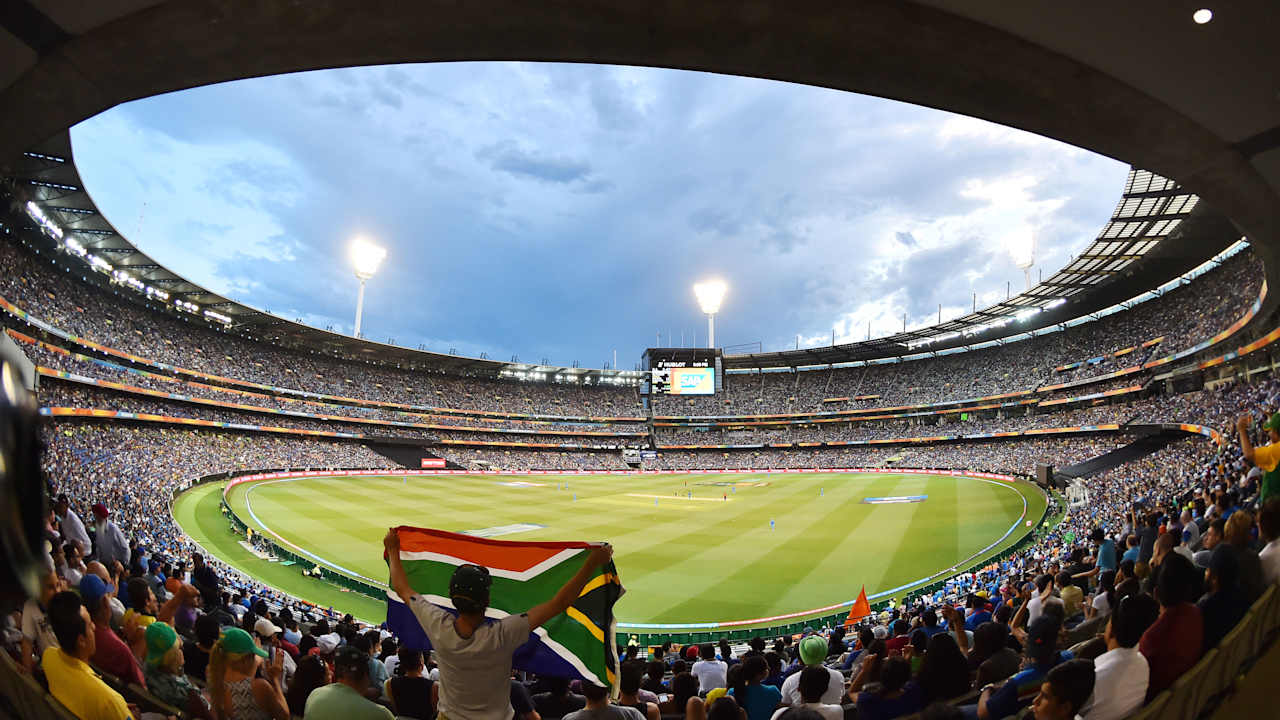
Established in 1853, The G has developed a revered place in Australian sports and cultural life. Australia’s premier venue will host the first of the NFL’s nine international games this season.The NFL ran a bid process across multiple Australian states for the debut Down Under and it was the MCG, being so cherished and so close to downtown, that sealed it. Along with Melbourne’s success delivering high-profile events including the Australian Open — the season-opening tennis major at the adjoining Melbourne Park — and the Australian F1 Grand Prix.“Melbourne as a city really stood out, having a huge stadium of that size, that caliber, that historical nature, in the middle of the city,” Charlotte Offord, GM for NFL Australia/New Zealand, told The Associated Press. “It just felt like a bit of a no-brainer.”Former Prime Minister John Howard, a self-described cricket tragic, once characterized the MCG as a place of worship.In a 1996 speech at The G, Howard recounted how he’d mentioned to the Catholic archbishop that after visiting St. Patrick’s Cathedral, “I was going to one of the spiritual centers, the true temporal shrine and sporting shrine, not only of Melbourne but also of Australia.”“Without any doubt the Melbourne Cricket Ground is the greatest sporting arena in our nation, and I think probably without comparison anywhere in the world.”It helps that Melburnians are renowned for a love of sport. It can create the kind of atmosphere at The G that cricket icon Dennis Lillee, the mustachioed and hairy chested fast bowler of the 1970s and 80s, compared with the ancient arena in Rome.“To me the MCG is the people’s ground,’’ Lillee told Fox Sports before the Boxing Day test in 2014. It’s not about the facilities, “It’s the people. Even though the wicket was flat and the ball was old and dead, the crowd lifted you. They would go to watch ant racing. But for crowd involvement as an arena, a coliseum, the MCG was my favorite.’’It was a theme the late, great Shane Warne embraced, too. So much so that a big part of the homegrown cricket star’s state memorial service was staged at the stadium in 2022 and a stand was renamed in his honor.A week and many time zones away from that famous kiss with Travis Kelce after the Chiefs beat the 49ers in the 2024 Super Bowl, Swift told the crowd after three sold-out shows on her Eras tour at the MCG: “Melbourne, you are the love of my life. I cannot believe you, what you have done.”“Ninety-six thousand people the first night, 96,000 people the second night, 96,000 people tonight,” she said. “All of that, those are all the biggest shows I’ve ever played on a tour and you did it three times!”Swift’s influence has helped grow the popularity of American football in Australia. Girls and young women account for a big proportion of the NFL’s growing fanbase in Australia.“I’d put that down to, one, flag football and girls playing,” Offord said. “I’d also put it down to the Taylor Swift effect. We don’t hide behind that at all — she has done great things for the league in terms of her ability to bring a new demographic of people into the fold.”The G has been home to Australian rules football since 1859, and has a pride of place in cricket history. Australia hosted England there in the very first official cricket test in 1877 — the forerunner to the Ashes contests between the two countries — and the first one-day international in 1971. The 1992 and 2015 World Cup finals were decided here.It was the main stadium for the 1956 Olympics and the 2006 Commonwealth Games.The MCG hosted baseball as early as 1888. In 1914, the New York Giants and Chicago White Sox played there.While high-profile soccer, rugby union, rugby league and Gaelic football games have been contested at the G, American football’s previous exposure to the venue has been limited. A 1908 game featuring teams from a visiting U.S. Navy fleet is one example.As well as sports and concerts, the G has hosted the armed forces. In World War II, it housed a U.S. Army Air Forces depot called Camp Murphy, a regiment of the U.S. Marine Corps in 1943 and Royal Australian Air Force personnel.


Most Popular


BCCI plays down Agarkar's absence
1 hour ago
.png?w=1120&h=630)