The Myth of Beautiful Football and the Riddle That Killed the Arabs' Dream: 10 Lessons Learned from the 2026 World Cup
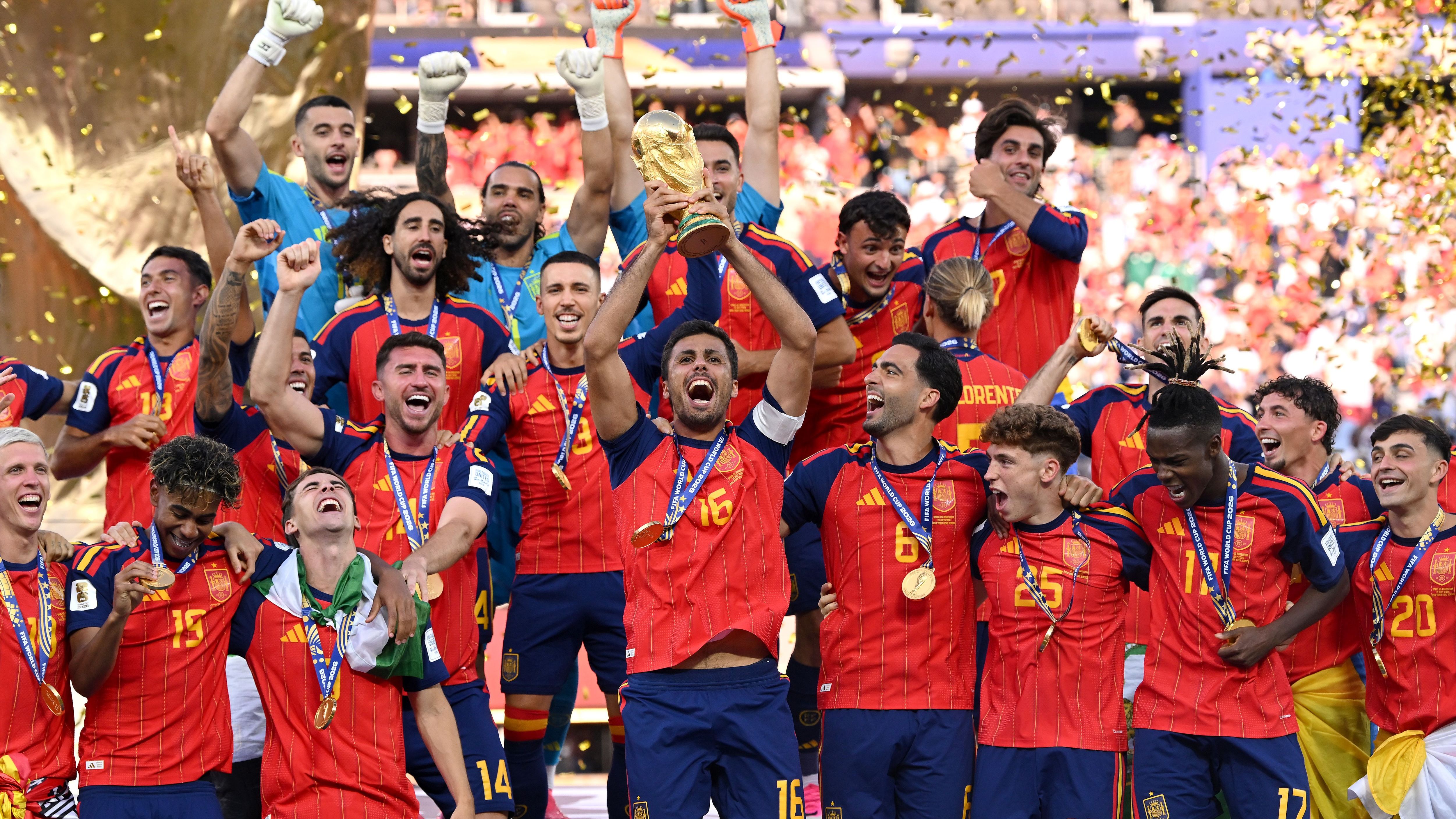
Arab football entered the 2026 World Cup with unprecedented dreams. Eight national teams qualified for the first time, doubling the previous record set across the 2018 and 2022 editions, when only four made the cut.What looked like the dawn of a new Arab era ended well below the ceiling of expectations.Three teams reached the knockout stages, true. But Algeria bowed out in the round of 32, Egypt exited in the round of 16, and Morocco's run stopped at the quarter-finals, even though many had tipped them to match their Qatar heroics or go one better.Tunisia, Qatar, Saudi Arabia, Jordan and Iraq settled for group-stage exits after displays that fell short of their ambitions.Results alone do not tell the whole story.The common thread running through most of the Arab teams was not only the technical gap. It looked like a mental barrier, one that surfaced every time they faced a major side. In the moments that demanded boldness and belief in the possibility of an upset, hesitation crept in, and the matches drifted into familiar scenarios that ended in victory for the big teams.Egypt against Argentina stands out as the clearest example. Egypt imposed their character on the match for 79 minutes and were the better side for most of it, before losing concentration in the closing stages. A dream of historic qualification became a painful exit, whatever the refereeing controversy that surrounded the encounter.The same story played out to varying degrees across the rest. Algeria and Jordan ran into Argentina, Iraq could not hold out against France, Saudi Arabia fell to Spain, and Tunisia met the power of Sweden and the Netherlands.Even Morocco, who delivered a fine tournament and stood toe to toe with Brazil and the Netherlands, looked a different team against France in the quarter-finals. Their attacking threat vanished, as if they had shed the character that had set them apart in the earlier rounds.Yet the tournament carried plenty of positive signs. Chief among them were Egypt's performance against Belgium and Morocco's displays against the major nations, proof that the technical gap is no longer as wide as it once was. The real obstacle may be mental rather than footballing.If the Arab teams ran into a psychological barrier, the African teams lived through the same scenario in an even crueller fashion.The black continent turned up with its largest representation in history, 10 teams in all, and started the tournament in ideal fashion. Nine of them reached the knockout rounds, a practical response to the voices that had questioned Africa's entitlement to this number of places, among them the Italian coach Gennaro Gattuso.Then the picture changed quickly. In the knockout rounds, most of the African teams fell into the same trap: a good performance, then a collapse in the final moments.South Africa lost to Canada in the dying breaths. Ivory Coast fell the same way to Norway, Senegal bowed out against Belgium, the Democratic Republic of the Congo against England, and Cape Verde against Argentina. Then came Egypt to repeat the scene in the round of 16.Most striking of all, 3 African teams, Ivory Coast, the Democratic Republic of the Congo and Senegal, conceded decisive goals in the 86th minute. It looked more like a shared curse than coincidence.This scenario prompted Belgium coach Rudi Garcia to speak of a decline in the physical fitness of the African teams in the decisive moments, before he later clarified that his statement was not intended to belittle the continent's teams.Away from the controversy, the tournament raised a question the African federations need to answer: is the crisis really physical? Or is it the psychological factor that leads to a loss of focus as the final whistle approaches?The answer may well determine the future of African football in the tournaments to come.One of the clearest messages from the 2026 World Cup was that age is no longer a measure by which to judge a player's ability to compete.Lionel Messi embodied that truth more strikingly than anyone. At thirty-nine, the Argentina captain delivered his finest individual World Cup campaign, and few had seen it coming. Many believed his triumph in Qatar 2022 would close the book on his World Cup story.Topping a string of individual statistics, Messi contended for most of the tournament's awards before losing the all-time top scorer title to Kylian Mbappé. He proved that experience and intelligence can offset much of what age takes away.Messi was not the only exception. Cape Verde's goalkeeper Vozinha, aged 40, became one of the tournament's most inspiring stories.He arrived as an obscure figure plying his trade in the Portuguese league. He left as one of its biggest stars, having repelled attack after attack from the game's heavyweights. No other goalkeeper kept a clean sheet against Spain in the opening match. He was outstanding again against Argentina, even as his country went out.Little wonder, then, that the fans rewarded him with a place in the tournament's ideal line-up, ahead of major names. Among them was Unai Simón, winner of FIFA's best goalkeeper award.The 2026 World Cup confirmed that modern football is no longer measured in years. What counts now is the ability to hold your level, the mental readiness, and the professionalism that lets a player compete with generations far younger than himself.Major tournaments have always carried the idea that the most creative team deserves to lift the trophy. The 2026 World Cup reaffirmed a truth coaches know all too well: football does not hand titles to the most entertaining side, but to the one most capable of winning.Spain proved the clearest example. Crowned world champions for the second time in their history, La Roja were not the most exciting side going forward. They relied instead on a cohesive collective system, sharp tactical discipline and exceptional defensive solidity, which made them the first champions to lift the title having conceded only one goal, despite playing eight matches in the first edition to feature 48 teams.Their success was not built on a single star carrying the load alone, but on players fulfilling their roles across the pitch. Even Lamine Yamal, who arrived amid enormous expectations, never hit his best level. The award for the best player of the tournament went to Rodri, whose importance lay in his tactical work rather than in showpiece moments.Argentina reached the final with a completely different approach, one built on pragmatism and physicality. They topped the list of teams picking up the most cards, leaning on defensive solidity and strong challenges. The technical flashes were often limited to the touches of Lionel Messi, who did not manage a single shot on target during the regulation time of the final.France, by contrast, produced one of the most entertaining editions going forward, thanks to the brilliance of Kylian Mbappe, the tournament's top scorer, and Michael Olise, its best playmaker. Chances and goals flowed. It still was not enough to secure the title.England told the same story. They possessed one of the most varied and creative front lines and delivered impressive attacking displays, especially in the third-place play-off, yet even that could not carry them to the final.The conclusion was clear. Across a tournament stretching eight matches, organisation, discipline and the ability to manage the small details can prove more valuable than beautiful football.Football has changed beyond recognition, throwing open its doors to coaching schools of every stripe. Yet the World Cup clings to one of its strangest historical quirks.The title still smiles on the home-grown coach. The 2026 World Cup proved the rule holds firm. Luis de la Fuente led Spain to glory, Lionel Scaloni took Argentina to the final, and the showpiece pitted two coaches who are sons of their respective countries against each other. The foreign coach was nowhere near the podium once again.Here lies the irony: this came in the edition boasting the highest number of foreign coaches the tournament has ever seen.Some 26 coaches led teams to which they do not belong by nationality, more than half the field, up from just nine at Qatar 2022.The trophy, for all that spread, stayed faithful to its history.Many analysts put it down to emotional attachment. A home-grown coach feels a deeper bond with his national team, lives the pressure and the public's dreams differently, and draws extra motivation from it when the big occasions arrive.None of this belittles the ability of foreign coaches. History simply keeps sending the same message: success at the World Cup does not hinge on tactics alone. It demands a deep grasp of footballing identity, local culture and the psychological makeup of the players.That is why the rule has held firm, despite every attempt to break it.The 2026 World Cup gave birth to new success stories. It also wrote a sad ending to one of the greatest careers the game has ever seen.Cristiano Ronaldo arrived at the tournament for the sixth time in his career, equalling the record for appearances, hoping to close the gap on his historic rival Lionel Messi. The Argentine lifted the trophy in 2022 and carried on shining in remarkable fashion in 2026.Reality took a very different turn. Portugal looked nowhere near title contenders and settled for the round of 16, while Ronaldo failed to leave a mark befitting his stature. Voices grew louder calling for his role in the starting XI to be reduced, with many arguing his ever-present status no longer rested on technical grounds alone.All of this unfolded as Messi produced one of his finest individual tournaments, stretching the gap in a comparison that has followed the two stars for two decades.Ronaldo's World Cup career remains exceptional by any measure.He is the only player to have scored in six different editions of the World Cup. That figure looks out of reach for anyone in the near future, and it proves the disappointment of 2026 cannot erase a legacy built over more than 20 years.The World Cup has always seemed to celebrate Kylian Mbappé, in stark contrast to Ronaldo. At 27, the French star has become the first player in history to finish as the tournament's top scorer in two consecutive editions. He now holds the record as the all-time leading scorer at the World Cup, and with no current player anywhere near him, he has every chance of extending that dominance across the next two editions.His first taste of the award came on debut in 2018, even though he was not the most prolific scorer that year. He then repeated the individual honour in 2022 and 2026 without lifting the trophy in either.Consistency is another record he has shattered. Mbappé has not missed a single match his national team have played across the last three editions, 22 in a row, the only Frenchman to manage it. His return? 22 goals, a goal a game.Refereeing stayed one of the tournament's most controversial issues from the first whistle to the last. The opening match produced three red cards in a historic first. The final saw a contentious goal for Spain disallowed.The World Cup brings together the finest referees on the planet, yet several stirred controversy with striking decisions and conduct. Some faced accusations of favouring particular teams, chief among them Argentina.Consider the most contentious cases. Messi escaped a sending-off after a rough tackle on Algeria's Aissa Mandi. Egypt's Zizo saw a goal ruled out for a foul on Marwan Attia. Croatia had a goal disallowed in the final minutes against Portugal. These calls prompted scathing criticism from a number of coaches and officials, most notably Hossam Hassan, Thomas Tuchel, Didier Deschamps and Carlos Queiroz.The controversy went beyond individual decisions. It extended to the way the new rules were applied, specifically the authority of the video assistant referee to intervene in determining the identity of the offending player. Refereeing experts considered that intervention to go beyond the letter of the law. It happened in the match between Argentina and Switzerland, when the video referee stepped in to change the decision and had Breel Embolo, the European team's player, sent off.Off the pitch, the 2026 World Cup posed extraordinary organisational challenges. For the first time, three countries staged the tournament across a vast geographical spread.Travel between cities proved punishing. Climates varied wildly, distances stretched on, and the toll fell on teams and fans alike, hitting logistics, recovery and even match preparation.One lesson stands above the rest. The United States, handed the largest share of matches, was no ideal host for an event of this magnitude. Ticket sales soared, yet much of the crowd came from other nations to back their own sides, at a time when Americans stay more loyal to sports such as basketball and American football.Crises arrived thick and fast, more than any previous edition had seen. The first was an entry visa row that sparked wide controversy, with Somali referee Omar Artan among those hardest hit.Weather threatened throughout. Officials suspended the match between France and Iraq after the first half because of it, and the start of England's game against Mexico, played on Mexican soil, was pushed back.Fans in the Middle East and Europe faced their own battle with the clock. The time difference with the United States forced many to reset their sleeping schedules just to follow their national teams.Scheduling drew fury on other fronts too. Egypt coach Hossam Hassan led the criticism, tearing into the organising committee and declaring it "did not understand football" after it set his side's clash with Argentina for twelve noon, despite only one other match taking place that day.Then came the rest: an unprecedented surge in ticket prices, political interference in sporting decisions and more besides.



Most Popular