College sports' eligibility crisis is sprawling well beyond LSU, football and basketball - 'It's beyond unfair. It's heartless.'

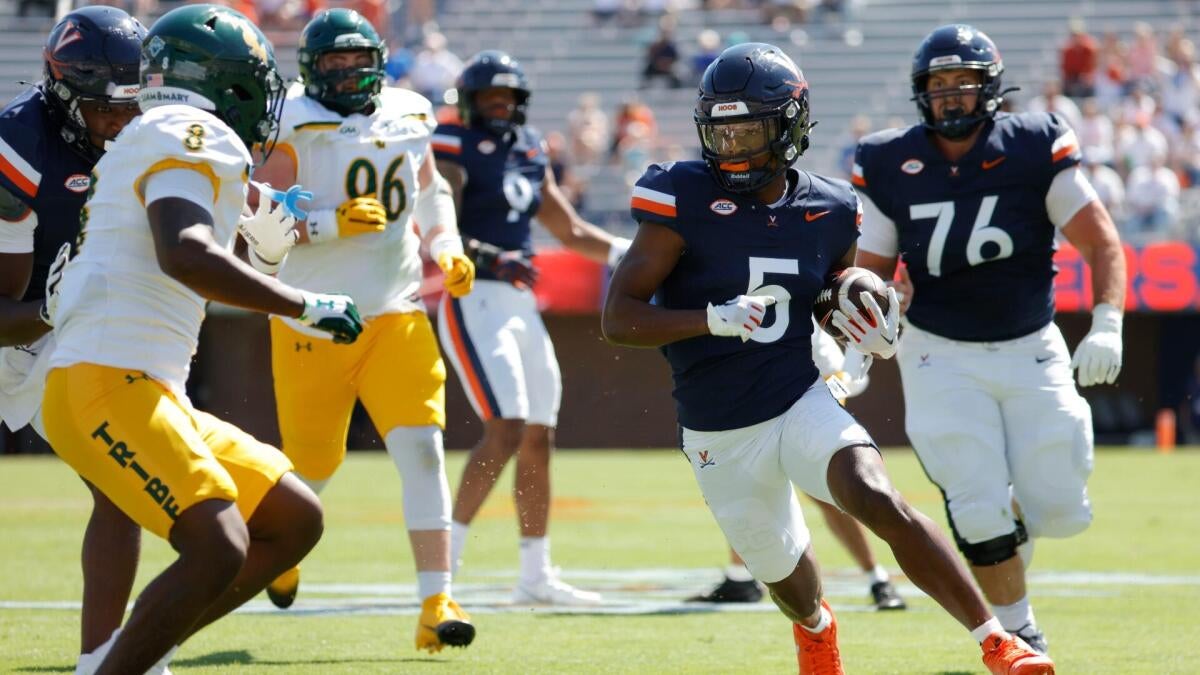
On Friday, the day he was scheduled to fly to Knoxville, Tennessee, to begin camp as a late addition to the Volunteers, Monty Hunt awoke in his San Diego home to a text.A Tennessee staff member informed him that he was, as of that morning, no longer eligible.AdvertisementHow could he be eligible one day and not eligible another?Upon opening social media, he got his answer: A federal appeals court ruled in favor of the NCAA by freezing a Colorado court's sweeping decision to grant all of the 2022 high school class members an additional fifth year of eligibility.The appeals decision — to stay the lower court's order until the completion of a full appeals process — means that Hunt's lifelong dream, at least for now, is dashed. And so too is the $50,000 in promised NIL compensation and scholarship costs."It's stressful for sure," he told Yahoo Sports on Monday during an interview. "I was waiting all these months and I finally got a chance to play SEC ball and the day before I leave, it gets pulled."AdvertisementHunt is one of many.The appeals court ruling dealt a stunning blow to hundreds of athletes across the college sports landscape who were preparing to play this fall season in their respective sport through the federal ruling out of Colorado.They were actively practicing, some even had already participated in exhibition games. They were on depth charts, travel rosters, scholarship lists and even NIL payment plans. They are team captains, key backups and role players.Out from under them all, the proverbial rug was pulled."I literally spent all day Friday crying," said Ocean Rideout, a Portland State soccer player.AdvertisementIn the middle of a multi-game exhibition trip to California last week, Rideout learned of the court's ruling from an assistant coach at breakfast, just a few hours after she started in a preseason match and hours before she was scheduled to start in another one."I was suspended from all team activities," she said. "It's emotionally distressing to be in a limbo situation. One day you are eligible and one day you are ineligible."Like many athletes across the country, Rideout spent much of her weekend researching ways to file a lawsuit in state court to regain her eligibility. It beats waiting weeks or months for the completion of an appeals process in the federal case in Colorado.College administrators and athletes say that's the biggest rub with all of this: Inconsistent judicial decisions create an uneven playing field.AdvertisementThose athletes who did not file or win lawsuits in state court are at the mercy of the Colorado federal case. A mad scramble is now unfolding for athletes to file locally.Most of these players are similarly situated as part of the 2022 high school class requesting a fifth season of eligibility — a move sparked by the NCAA's new eligibility policy to grant athletes the ability to play five seasons, not four as was the case under the previous policy. However, the NCAA — a membership association where schools create the rules — did not grant an exception to those four-year players graduating this spring.With the sweeping federal, class-action ruling frozen, hundreds of athletes are now exploring state-wide lawsuits — at least those who can afford it."I'm trying to find an attorney that will do it pro bono," Rideout said. "I don't have NIL funds like some of the football players."AdvertisementSome may be unable to do so, like Abby Jeffries, a track and field athlete at Long Island University. As a named plaintiff in the federal case, she is unlikely to win an individual state court lawsuit, her attorneys say."It's beyond unfair. It's heartless," Jeffries said of the NCAA's approach."What happened with the stay has been devastating to athletes all over the country," said Diana Florence, with Shumaker, Loop & Kendrick law firm and one of the leaders of a team of attorneys representing athletes in the Colorado federal case. "If these athletes were born one year later, they'd be greeted with open arms for next year's eligibility. The NCAA's mission is supposed to center on the best interest of the student athlete. In what way is preventing athletes like Abby Jeffries from competing consistent with that mission?"The Colorado ruling sent Jeffries, an aspiring medical student, quite literally to the bank. She needed to extract a $30,000 loan now to cover tuition after her scholarship was revoked.Advertisement"It's a mess," said Darren Heitner, a Florida-based sports law attorney who claims he's received nearly 1,000 inquiries since Friday's ruling. He expects dozens of lawsuits to be filed this week from athletes seeking a fifth season of eligibility.More than 18 eligibility lawsuits have already been filed in 15 different states by more than 150 athletes in response to the association not making an exception for those 2022 high school class members. The NCAA has won a stay in three: the federal court decision, one in Ohio and another in New Jersey.LSU vs. the SECNo single suit has drawn more attention than a Louisiana judge's decision to grant a group of athletes a fifth year, including several of them who signed NFL undrafted free agent contracts and even competed in NFL preseason games.AdvertisementAt least two of those players hold agreements to join coach Lane Kiffin and the LSU football team: tight end Dae'Quan Wright from the Cleveland Browns and defensive lineman Zxavian Harris from the New Orleans Saints. Kiffin coached both last year at Ole Miss.Though he was careful not to confirm any new signings, Kiffin addressed the situation during a regularly scheduled news conference on Monday, defending his program and other schools for recruiting players in the NFL. He pointed the finger at the current system.Athletes are only using legal avenues to regain eligibility that they did not know would exist, he said. The NCAA did not vote to implement the new five-year eligibility policy until June. Many players were required to make the decision to turn professional months before that."Because of the [court] rulings, they are going to play for you or someone else," Kiffin said. "We made the decision to recruit them. It's wrong to be critical of these kids. They were granted a fifth year and a judge said they were wronged."AdvertisementBut his own conference is taking exception to his transactional moves.Many players choose to file legally knowing they have an open roster spot at a specific school or schools. This often means that schools are supporting player lawsuits that are challenging the very rules that the schools themselves created.In a hurriedly-called virtual SEC presidents meeting on Monday night, the league's leaders unanimously supported opposition to professional players returning to college, even releasing a statement decrying such."College sports are for college athletes," one of the lines of the statement read.AdvertisementBeyond the statement, university presidents and league officials are expected to direct their athletic departments against accepting players who signed professional contracts and competed in pro contests, or risk potential sanctions, according to those with knowledge of the meeting.According to SEC bylaws, commissioner Greg Sankey and/or the conference's presidents hold authority to deem a player ineligible, fine or suspend school coaches and administrators, and even prohibit a program from competing in league games or the conference championship.More discussion on these topics are expected during a joint, two-day meeting of SEC presidents and athletic directors in Birmingham that begins Tuesday — an unusual and significant gathering that was scheduled weeks ago, where officials plan to continue exploring a long-discussed conference-only governance model.AdvertisementThe eligibility fiasco is now expected to take center stage at a meeting that could turn tense and even heated.LSU's new president, Wade Rousse, and athletic director, Verge Ausberry, are scheduled to attend. The program not only is in line to accept multiple professional football players. Basketball coach Will Wade landed a big win Monday night: A Louisiana judge granted additional eligibility for RJ Luis to return to college. Luis, a member of the 2022 high school class, went undrafted during the 2025 NBA Draft, signed a two-way contract with the Utah Jazz, was traded to the Boston Celtics and played in three NBA games.Awaiting Luis following the victory was none other than Wade, who embraced the player outside of the court room in an emotional moment caught by a local TV sports anchor from WBRZ. Wade landed a key piece for the inaugural team of his second stint in Baton Rouge.Outside the courthouse in Baton Rouge on Monday, Luis' attorney, Elliot Abrams, described the NCAA's decision to permit schools to pay players directly as creating a "professional league," where "arbitrary" eligibility rules "don't stand up to reason."Advertisement"This is a judge forcing the NCAA to live up to the law," he told reporters.During an interview on Monday, one college sports stakeholder described the situation as Sankey's "Sorsby moment," a reference to Brendan Sorsby and Texas Tech's legal entanglement with the Big 12. The conference filed suit against the school for its intentions to play a player who gambled on his own team.Questions abound.If the SEC penalizes LSU or the professional athletes who plan to play there, will the school or those athletes file suit against the conference? Will the league file suit against its own school?AdvertisementLSU may be aggressively signing these players at a higher clip than most, but the school isn't alone. In fact, just last week, a former Kentucky basketball player, Mark Mitchell, won a lawsuit for additional eligibility and is transferring to Missouri. This flies directly in the face of another SEC policy against intraconference transfers outside of the portal period.What now?On Monday, attorneys filed a motion to expedite the federal case in Colorado.The goal: reach some sort of conclusion before the start of, or at least during, the fall sports season. It may be difficult. Football season kicks off this weekend.AdvertisementThe expedited motion is in an attempt to schedule oral arguments on the court's September calendar. If the judge declines or the calendar is full, that puts the case on the November calendar."We are doing everything we can to accelerate the briefing," said Rob Shelquist, another attorney on the case from Cuneo Gilbert Flannery & LaDuca. "If this drags to November, it is probably the end of the road for the fall athletes. If the court doesn't accelerate briefing and this languishes until November, we will still do everything we can to save the winter and spring athletes. The NCAA claims its mission is to create opportunities for athletes and yet we are the ones fighting to allow schools and coaches who want to fill open roster spots and award unused scholarships to these athletes."Meanwhile, the inequalities will continue across the landscape.For instance, Texas State has a football player on its roster, linebacker Treylin Payne, who's now ineligible after the Colorado decision. The Bobcats' season-opening opponent, Texas, will play in the game lineman Cole Hutson, who participated in minicamps with the Browns and Cowboys before winning a local eligibility lawsuit.AdvertisementThe players are in a similar situation as 2022 high school athletes seeking a fifth season of eligibility. Payne is expected, like so many others, to seek a state court ruling.Coaches have publicly expressed varying degrees of opinions on the situation.Some, like Oregon's Dan Lanning, rebuff the notion of recruiting pro players."Once you go to the NFL, to me, you're in the NFL. You don't get the opportunity to come back," Lanning said.But others like Ohio State's Ryan Day suggested that he'd consider NFL players who formerly played who are granted eligibility. "Do I like anything about it? Absolutely not, but we gotta do what's right for Ohio State," Day said.AdvertisementMeanwhile, NCAA executives and the power conference commissioners continue to hold conversations on their approach and options. There is no easy solution for the situation, administrators say, but there are several options to consider.Leaders could issue a broad waiver to grant all members of the 2022 high school class eligibility, but that likely means creating a transfer portal for movement and exceptions for roster caps. Those are moves that school executives declined to make in May — a reason that an exception wasn't made to begin with.This move also does not solve another festering problem for college officials: the ban on professional players returning to college, which is now under attack within these eligibility lawsuits.Leaders could decide to continue to litigate individual state and federal court cases, hoping for more friendly judicial decisions or appeals court victories like the one in Colorado. But this is costly, time-consuming and creates the current uneven playing field.AdvertisementAnother option has emerged, too: conferences taking matters into their own hands by creating league policies and enforcing them from the conference office. This dovetails with this week's meetings in Birmingham as leaders consider and view presentations of league-wide governance in an effort to limit the amount of legal challenges.In fact, all four power leagues are expected to consider such a rule — something that may put the conferences at the center of new lawsuits rather than the NCAA.In the meantime, it isn't just football and basketball players chasing hundreds of thousands of dollars who are caught in the quagmire. Soccer, field hockey and track athletes are mired in what one person calls the "NCAA Trap.""It's beyond unfair," said Jeffries, the track athlete at Long Island who now needs a bank loan to enroll in classes. "My coaches told me, 'We have the [scholarship] money for you! We just can't do it!'"

Most Popular



England alter squad for second Test against Pakistan
15 hours ago