
He won two league titles with Manchester City alongside Vincent Kompany: former starlet opens up about his depression and shares a special TV moment with Thierry Henry
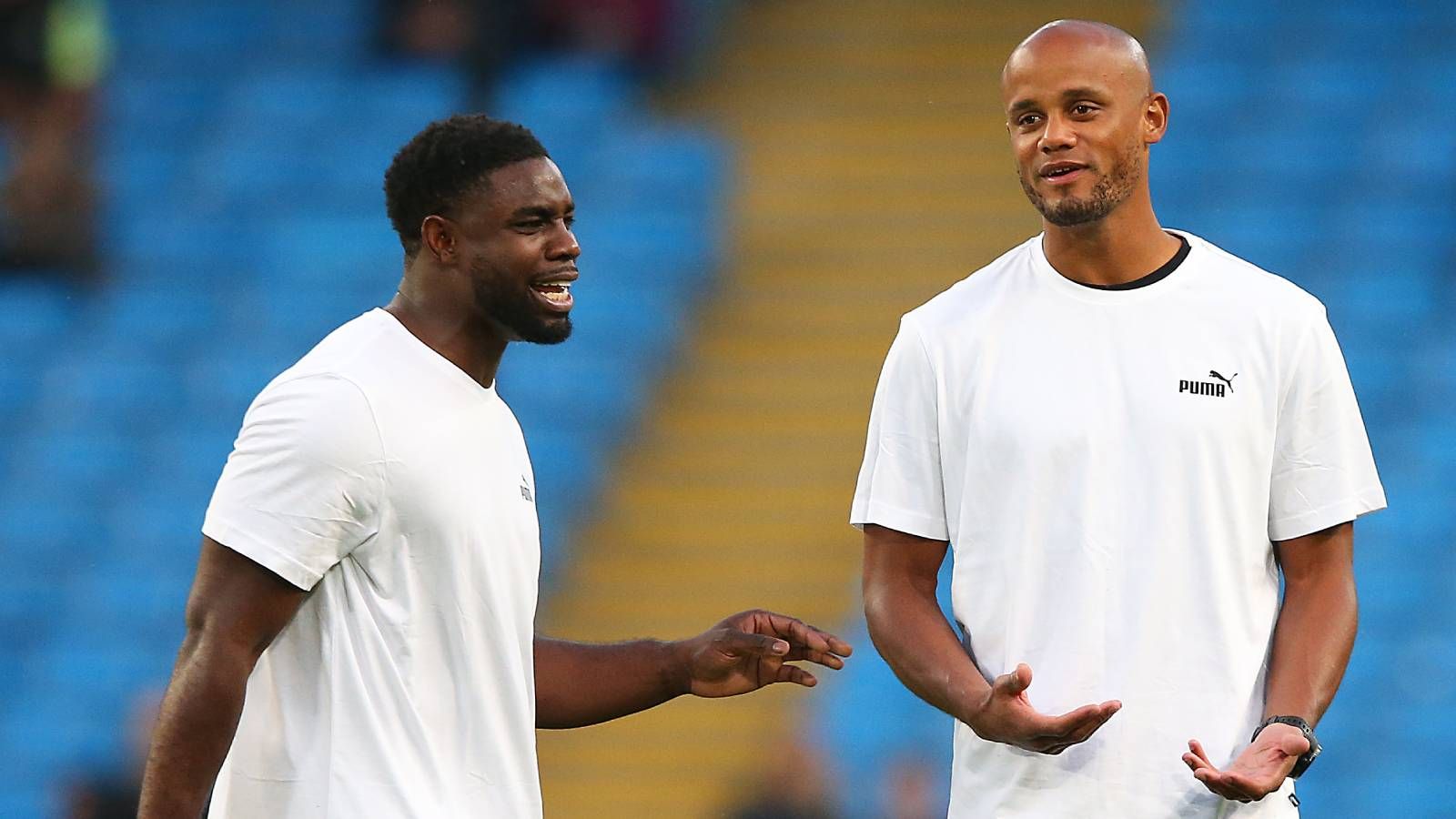.jpg)
Last Wednesday, the legendary football programme CBS Sports Golazo enjoyed another typical Champions League evening with its team, before Henry briefly interrupted presenter Scott and took over for a few minutes. “May I interrupt you briefly? May I take over for a moment?” asked the 48-year-old. After first offering a few words of praise to former US international and guest Clint Dempsey, Henry turned to his colleague and friend Micah Richards, sitting one seat to his right, and the tone became more serious: “I wanted to say something to you because I couldn’t yesterday. Yesterday, you made me realise something I could relate to. And I wanted to tell you that in person.”The French World and European champion then spoke about his problems with both Achilles tendons, which had plagued him for ten years, but emphasised that he had at least been able to end his illustrious career "on my own terms" – something Richards was denied. The Englishman, who played 245 competitive matches for Manchester City as a right-back, was forced to end his professional career back in 2019 at the tender age of just 31 following serious injuries. He had actually played his last match at the age of 29.“I have the utmost respect for how you’ve handled it. I don’t know how you managed it mentally. And yet you’re always sitting here in good spirits, lifting everyone’s spirits and making everyone happy. I just wanted to tell you: we don’t take you for granted. I wanted you to know, because sometimes you think people don’t see you – but we do,” Henry emphasised.Somewhat surprised, but visibly moved, Richards stood up and created a heart-wrenching moment as he embraced Henry. When pressed further by Scott, Richards opened up and spoke about the most difficult periods of his life towards the end of his career: “I was definitely depressed. But I didn’t deal with it. I drank a lot to try and push it out of my mind somehow.”Richards’ list of injuries over the course of his career is indeed very long – hardly any part of his body remained unscathed during 13 years of competitive sport. As early as 2010, the first signs of chronic problems in both Achilles tendons appeared. This was followed by thigh, calf and ankle injuries. Knee problems ultimately dealt the final blow to his career. "I had my first operation when I was 17 or 18. That carried on throughout my entire career." He realised it couldn’t go on any longer "when I basically had to have fluid drained from my knee every three days." He ignored the doctor’s warnings that this could take a heavy toll on him later in life, "because I simply loved football so much."His friend Madge was a particular help to him. “He put my life into perspective to some extent, in the sense of: Are you happy? Do you have your family around you? It’s not all the other things that come with it,” explained Richards. "It was just a façade – all the glitz and glamour that comes with life as a professional footballer. That made me look at life differently – in the sense that there’s more to it than cars and houses. It’s about relationships and the people around you."Compared to his teammates Henry and Carragher – who were indispensable at their respective clubs (Henry at Arsenal, Carragher at Liverpool) – Richards’ career pales in comparison. In 2006, he made the leap from Man City’s youth team to the first team. However, the Manchester City of that era had little in common with today’s version of Man City, apart from the sky-blue club colours. At that time, the Citizens were still, at best, an average side, usually found in the lower half of the Premier League table.It was not until 2009 that the picture changed with the takeover by the Abu Dhabi United Group, which provided massive financial backing, signed numerous superstars and turned City into a serial English champion in the years that followed. Richards also celebrated two of those Premier League titles – alongside legends such as David Silva, current Bayern coach Vincent Kompany and Sergio Agüero – before being loaned to Fiorentina in 2014 and then moving permanently to Aston Villa in 2015. During his four years at Villa, he made just 26 competitive appearances. He also earned 13 caps for the England national team.In football, therefore, Richards is nowhere near on a par with Thierry Henry, who is regarded as one of the greatest strikers of all time, or even Jamie Carragher, who won the Champions League with Liverpool in 2005. That is why Richards is taken a little less seriously on the show; people are quicker to laugh at him. Richards himself takes this in his stride, always with a grin, and never takes it personally – he is the likeable whipping boy who can be teased every now and then. Particularly in Scott’s introductory segments, which regularly go viral, Richards is usually the one at whose expense the laughter is directed. “I try to see the good in people. I always try to build others up. That’s how I’ve been my whole life,” he said. Most recently, he even made the usually taciturn Michael Olise laugh.But behind all the jokes, Richards has a serious side too. On the pitch, the physically robust defender has always shown himself to be passionate and unyielding. Off the pitch, he has offered insights into the darker sides of a professional footballer’s career that are rarely discussed: mental health issues, intense pressure to perform, the fear of losing one’s place in the team due to injury, criticism when things go wrong, and online abuse. "I definitely saw things a bit differently. But ultimately, I’m a positive person."



Most Popular


)