From the Pocket: Andrew Dillon needs authenticity and nuance, not AFL talking points
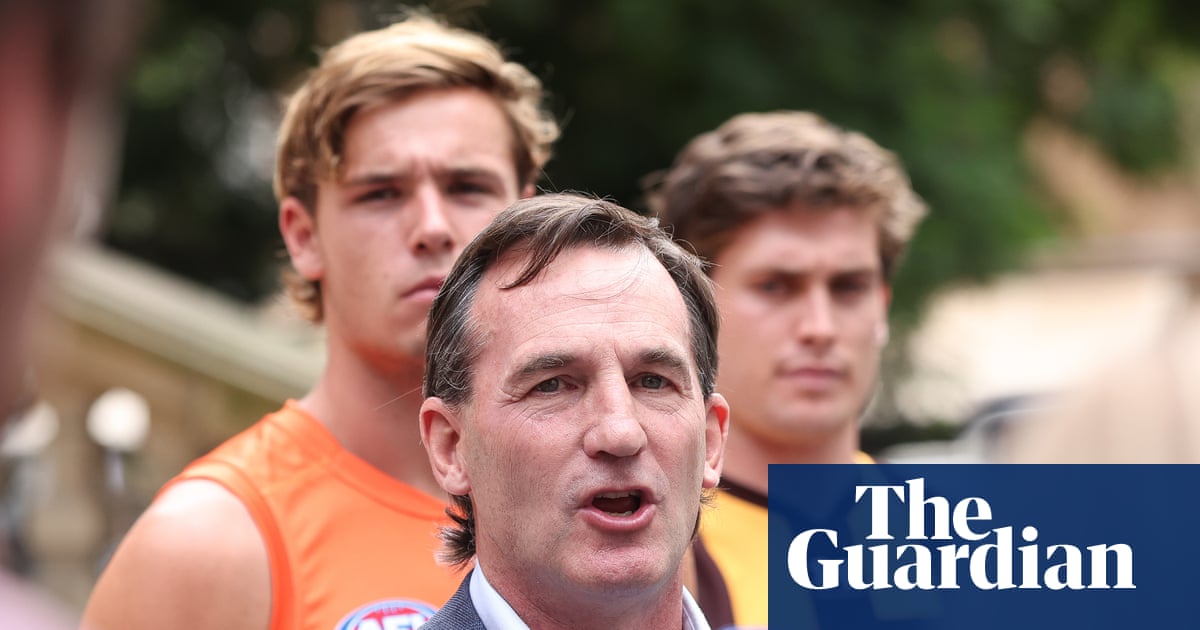
In 2023, the late Sam Landsberger wrote a piece in the Herald Sun recalling how Andrew Dillon came to work at the AFL. Dillon was driving down Punt Road in the early 2000s after playing a game for amateur club Old Xaverians. Senior AFL administrator Ben Buckley, who was recruiting for an in-house counsel, was in the next lane and spotted his former Xavs teammate. “Hey Dills,” he shouted across traffic, “you’re a lawyer, aren’t you?”A quarter of a century later, a line from North Melbourne coach Alastair Clarkson in an interview with Jay Clark jumped off the page on Sunday. “I spoke to Gil [McLachlan] on Tuesday night and he says: ‘This will all be resolved by the end of next week,’” Clarkson said. “This was the grand final week of 2022. Just talk to ‘Dills’ and this will all be resolved.”Both say so much about how the AFL does business. And in the second instance, about how so many people involved in the Hawthorn racism scandal were in over their heads. Clarkson’s comments give a snapshot of what sort of operator Dillon was for more than two decades. Whether you wanted to sort out a minor quibble or douse a major inferno, he was the man you called. Given the backroom roles he played in some of the biggest issues the sport was confronted with, he could easily have been a more divisive figure. But he was the sort of man who would penalise you, fine you or charge you, and leave you liking and respecting him when you put the phone down. The question mark was always whether he would excel at being the frontman, at being the face of the league and the sport.On the weekend, Dillon did the rounds of the major radio stations. Here’s a few of his answers.On the unevenness of the competition: “Look, I think it’s something you keep an eye on.”On the cost-of-living pressures which are dissuading fans from going to games: “It’s a really good question and it’s something we are acutely aware of.”On a mandatory five weeks suspension for homophobic slurs: “I would not be expecting that we’d be dealing with that again – sometimes there’s mitigating circumstances and sometimes there’s aggravating.”On his preference for a day or twilight grand final: “Tradition is really important, but so is progression.”And finally, on the controversy over Sydney’s tribute to the victims of the Bondi terror attack: “I don’t know the ins and outs of scripts and the like.”None of those responses fell under the train wreck category, though a few came close. But all were typical of his communication style – wooden, scripted, equivocal and often just plain unsatisfactory. In this regard, he will always be compared with Gillon McLachlan. The former AFL chief executive was a master charmer, disarmer and deflector. He was a born frontman, and he would have made a fine politician or the head of a wagering company.Dillon will never be that type of leader. He’ll never be someone who can go on a show like The Front Bar and banter with comedians, or flick questions from experienced journalists down to fine leg. And that’s not a bad thing. After all, we should be wary of leaders who have mastered the art of speaking supposedly off the cuff with lines that are often heavily workshopped.But there are issues in and around the game that require decisive leadership, nuanced conversations and proper words. Some are the usual football related issues – day or night grand finals, equalisation, fixturing. Others are broader societal concerns – terrorism, homophobia, cost of living – the kind of issues the AFL has always considered itself worthy of commenting and leading on.Dillon often responds to questions and criticism by pointing to crowds, ratings, memberships and finances. Indeed, anyone running a business would look at the AFL’s numbers and concede that it’s doing a good job. But much of the angst that surrounds the way this sport is run could be assuaged by a CEO who wasn’t so tethered to his suggested talking points.Running the AFL demands a lot. You have to be commercially savvy, be well respected by your inner circle, be a good delegator and have a genuine love for your sport – all areas where Dillon cannot be questioned. In the modern media landscape, however, the ability to sit in front of a microphone and speak authentically and persuasively has never been more critical. And it’s an area where Dillon is failing badly.



Most Popular