Jews compete and unite globally through summer athletic competitions
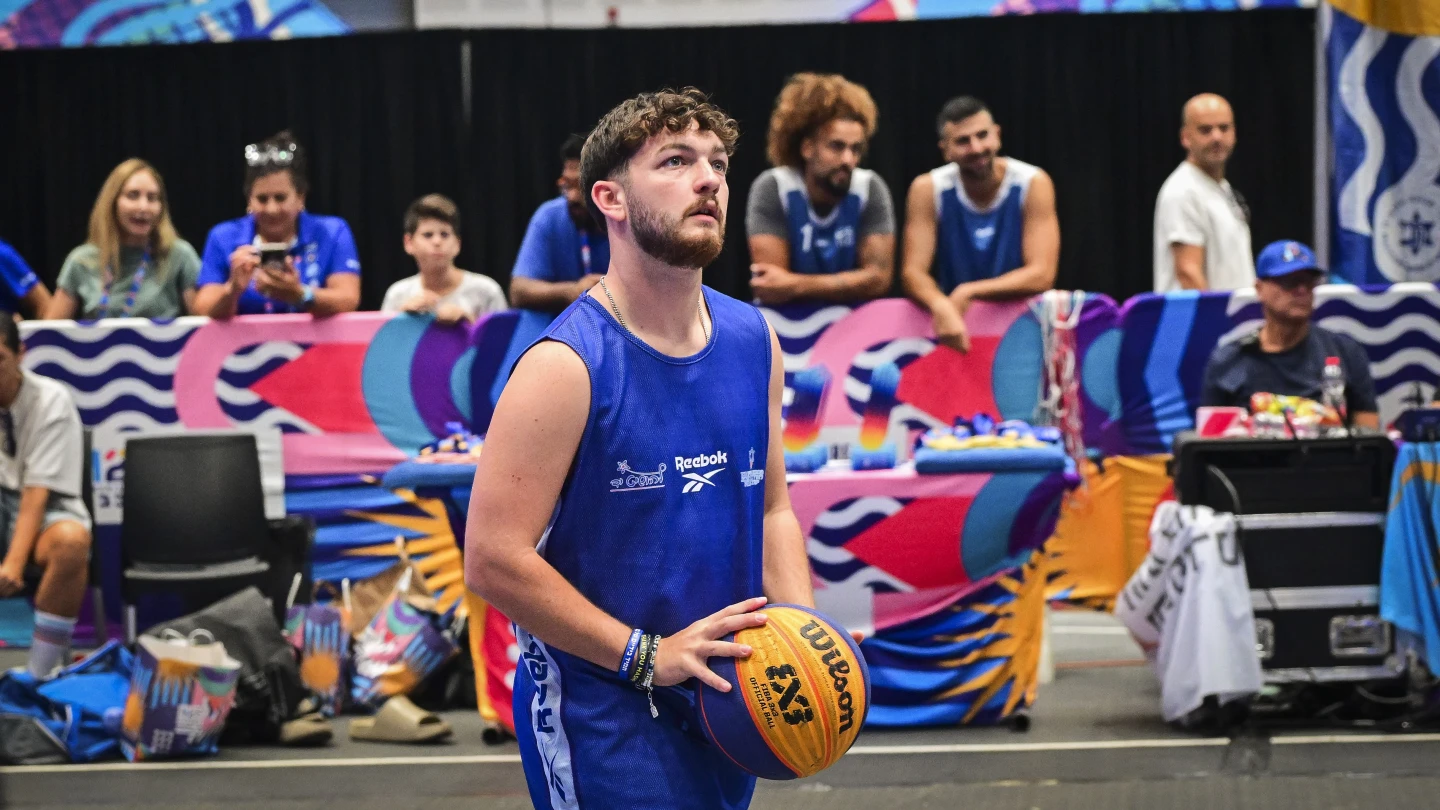
Much of America and the globe is captivated by the World Cup games, which are still underway. One of today’s biggest stars on the field, Norway’s captain Erling Haaland, made news last year when he made a surprise call to one of his fans: Former Israeli hostage Omer Shem Tov, newly freed after 505 days in Hamas captivity. The goodwill gesture was made despite the Norwegian government’s hostile position toward Israel. The moment captured what sports do best—reaching across barriers.This summer, the Jewish world gathered in Israel. Athletes from 43 countries—from teens to participants in their 80s—returned to Jerusalem for the Maccabiah Games. The sports competition, held from July 1 to 14, is the largest gathering of the global Jewish family in Israel since the Hamas-led terrorist attacks in southern Israel on Oct. 7, 2023, now more than 1,000 days ago.They came despite ongoing threats of violence against the Jewish state. Threats and attacks against Jews continue to rise around the world, but the answer is to show up together in Israel.For 17-year-old Josh Mandel, a pitcher from Manhattan, this summer’s trip to Israel was never really about baseball. When the Games were postponed by a year, the delay gave him time to reflect and to conclude that the competition is “bigger than baseball.” He described how the Jewish community must unite and “be strong against antisemitism” and spoke of his pride in representing America while playing in Israel.Mandel is one of 900 Americans participating in the 22nd Maccabiah Games. Held since 1932 and known as the Jewish Olympics, it is one of the world’s largest sporting competitions, taking place every four years. The Games opened at Jerusalem’s Teddy Stadium, where Israeli President Isaac Herzog proclaimed Am Yisrael Chai, “The Jewish people live.” The Parade of Nations featured athletes from Argentina to Zimbabwe. The United States sent one of the largest delegations: Teenagers competing for a first medal marched alongside grandparents who have made the trip for decades.For the Berman family of Mexico City, the Maccabiah is a three-generation affair. This summer, Karla Berman came to Jerusalem to cheer on her father in the 70-and-over tennis draw, her husband on the soccer field and her 16-year-old daughter, who is competing for the first time. Jewish athletes from around the world compete alongside Israeli Muslims, Druze, Jews and Christians. Brazilian soccer legend Ronaldo’s 17-year-old son competed in 2017 for São Paulo’s Hebraica club, even though he is not Jewish.‘A reminder of love, values and lives cut short’These are the first Maccabiah Games since the Oct. 7 massacre of 1,200 people, offering an opportunity to remember fallen heroes. The open-water swims honored fallen soldier and youth national team swimmer Eden Nimri. The commander was murdered while standing guard at an Israel Defense Forces shelter, shielding 17 unarmed soldiers inside. She was honored with a symbolic swim of 170 meters—10 meters for each of the 17 lives she saved in her final moments—remembered in the sport she loved.Nimri was one of 18 fallen Israelis honored with memorial pins designed by their families. One featured a cat that soldier Adi Leon drew for his little sister in a farewell letter he wrote before entering Gaza. Each pin, said Maccabiah chairman Assaf Goren, is “a reminder of love, values and lives cut short too soon.”The opening ceremony provided more moments of commemoration and unity.The families of the 12 Druze children who were murdered on a soccer field in July 2024 by a Hezbollah rocket carried the Maccabiah banner into the stadium during the opening ceremony. The delegation from France wore shirts honoring their teammate Dan Elkayam, who was murdered in the Chanukah mass shooting on Australia’s Bondi Beach in December. He had planned to compete this summer but never got his chance. Freed from a Gaza tunnel, former American Israeli hostage Edan Alexander spoke to the crowd about how he survived.He commemorated how “Israel remembers and sanctifies all the heroes who fell along the way.”The opening torch became a symbol of grief, turning into resolve, as it was carried by Evyatar Zeituni, a paratrooper officer gravely wounded defending a kibbutz on Oct. 7, before Paralympic champion Asaf Yasur and Olympic medalist Inbar Lanir lit the Maccabiah flame together.‘Strength, diversity and spirit of American Jewish life’A few delegations, including Canada and Australia, could not send athletes because international travel warnings prevented insurance coverage. Some of them went to the Games on their own. Just showing up made a strong statement.This year’s slogan—“More Than Ever”—was built to capture an Israel-Diaspora bond that feels more vital now than at any time in recent memory. Jews from dozens of countries stood together, cheering in Hebrew, Spanish, French and English, a unified people gathered around sport.Unity is the Maccabiah’s original purpose. The first Maccabi sports club was founded in 1895, after a group of Jewish gymnasts was barred from a local sports club in Constantinople for being Jewish. They created their own, responding with strength to those who called Jews weak and turning sport into an expression of Jewish pride.Through its partnership with Maccabi Ukraine, Maccabi USA helped bring a 51-member delegation of Ukrainian athletes, coaches and staff to the Games, many traveling out of an active war zone. The American and Ukrainian delegations gathered together in Jerusalem—Jews standing with Jews across two conflicts.In the United States, a new Combat Antisemitism Movement survey found that 57% of American Jews faced antisemitism this past year and 38% hid their Jewish identity. At the same time, 60% feel personally attached to Israel, embodied by the American Maccabiah delegation.Maccabi USA CEO Marshall Einhorn stated that “our delegation represents the strength, diversity and spirit of American Jewish life. We are proud to connect to the global Jewish community. The essence of Judaism is resilience, commitment to our community and love of Israel.”A thousand days after the worst day for Jews since the Holocaust, the Jewish world’s response was not to split from one another and from Israel. Just as the world came together to watch the World Cup, the Jewish world came together in its ancestral homeland to compete and to unite.Points to consider:1. Sports reach across divides.This summer, millions who could not have found Cape Verde on a map found themselves cheering for the tiny island’s team as it nearly toppled Argentina, the defending champions. That is the quiet magic of sports: For a few weeks, strangers become friends. Many tourists visiting America were surprised by the warm reception, just as many foreigners are surprised by Israel’s diversity, realities that news reports often omit. Sports often dissolve borders built by politicians and remind a divided world how much more unites us than drives us apart.2. The Jewish bond with Israel remains strong.Even as antisemitism worldwide climbs to record highs, the tie between Jews and their homeland has only deepened. A new Combat Antisemitism Movement survey found that most American Jews feel personally attached to Israel, and this summer, they proved it as American Jewish organizations resumed trips that war had suspended. Teams from 43 countries gathered in Israel’s capital of Jerusalem to compete in the Maccabiah Games.3. The Maccabiah Games honored the fallen, who paid the ultimate sacrifice.At this year’s Maccabiah Games, Israel honored the Druze children murdered in July 2024 on a soccer field by a Hezbollah rocket. The Jewish nation honored a young commander who died shielding her unarmed soldiers on Oct. 7, and distributed memorial pins for 18 fallen sons and daughters. As freed hostage Edan Alexander told the crowd at the opening ceremony, Israel “remembers and sanctifies all the heroes who fell along the way.”4. The answer to hatred is a stronger Jewish identity.For 1,000 days, much of the world has told Jews to keep their heads down and silence themselves. The Maccabiah is the answer. Jewish athletes did not hide their identity; they carried it into a stadium in Jerusalem, before the world, with pride. The strongest response to those who hate Jews is not fear or silence. It is a Jewish life lived louder and unafraid.



Most Popular