Bev Priestman: ‘You become very isolated so I’ve loved getting back on the pitch’
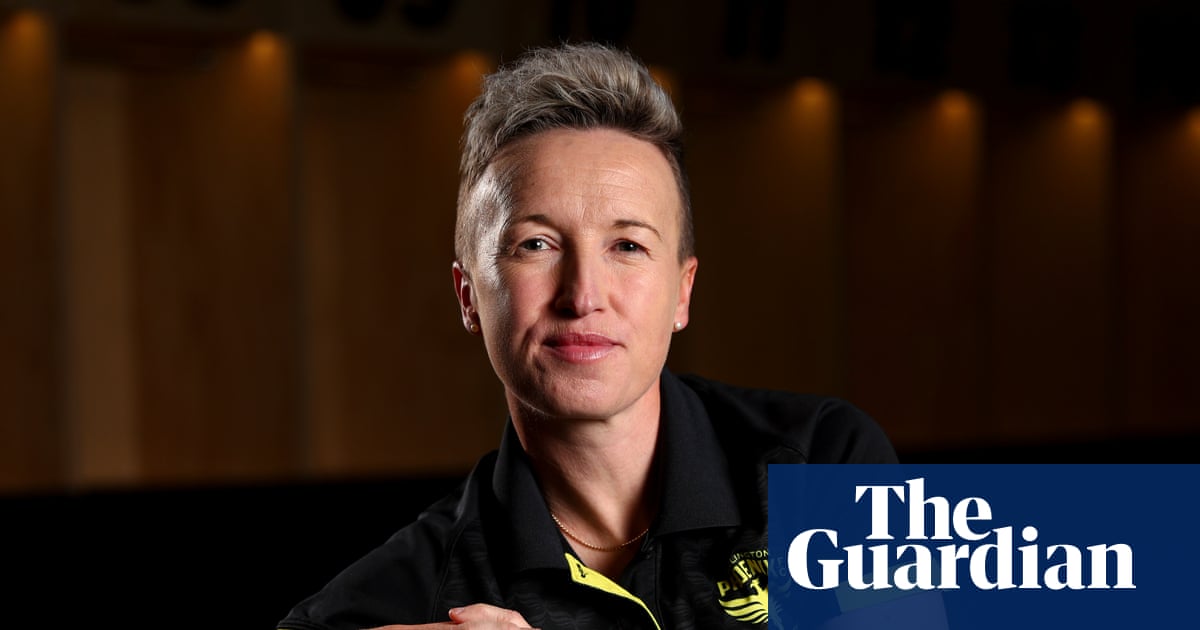
Football is not the kind of profession that lends itself to time off for birthdays and the like. Especially when one is preparing to lead the Wellington Phoenix into their first A-League Women’s finals campaign, as Bev Priestman was last week. Yet, especially when contrasted with the year prior, when she was still in the midst of a one-year Fifa ban after the spying scandal that engulfed Canada women’s football team during the Paris Olympics, being among “her people” turned out to be a gift in and of itself.“It was my 40th birthday [last week],” Priestman tells Moving the Goalposts. “And it’s those moments, I think to a year ago, and how I felt. And then how I felt in the club [this year], around my staff, around the team. I do this job because I love people. I love the game, obviously, but it’s working with people, getting your energy with people, and trying to inspire people and help them find a better version of themselves.“What happened in Paris, and off the back of that, and the media runaway stories that you know necessarily aren’t accurate. You just become very isolated, very, very quickly in a job where it is about being part of a team. That isolation hits you really, really hard, as well as things playing out in the public domain. The biggest joy I’ve had the most this year is just again, getting back on the pitch, working with people who want to be better. I’ve loved that.”Now, if one were looking for somewhere to make a fresh start, somewhere well off the beaten track away from the spotlight, then Wellington would be right up there. Half a day’s flying from anywhere that isn’t Australia (and even then you’ve got a 10-hour flight to play Perth Glory), its Phoenix are the only professional women’s football team in New Zealand, meaning that it plays in the Australian top-tier.Introduced during the buildup to the Australia and New Zealand co-hosted 2023 Women’s World Cup, they had never reached the end-of-season playoffs in their four campaigns before 2025-26, with their best finish coming in 2023–24, when they finished eighth. They were somewhat lovable losers, generating little in the way of ill-well but rarely threatening to upset the established order.But in 2025-26, Priestman took the foundation that had been built and constructed perhaps the competition’s most well-oiled machine: fielding its highest scoring attack and most miserly defence, while being among the competition’s leaders in most of its underlying metrics. Under her tutelage, the likes of Brooke Nunn and Grace Jale had breakout campaigns, while the 17-year-old Pia Vlok cemented herself as a star of the future.This was not enough to break the dynastic hold that Melbourne City – part of the City Football Group – holds over the A-League, but it did secure them a second-place finish and a week off in the first week of the finals. If they can overturn a 2-1 deficit to Brisbane Roar in the second-leg of their semi-final this Sunday, temporary seating brought in to host an expected 5,000-strong crowd at Porirua Park in the biggest game in the team’s history, they will qualify for a first grand final. Needless to say, people have taken notice.“For the last three months, wherever I go in the city, people seem to know who I am, who the team is, and how we did on the weekend,” Priestman says. “That’s very different to when I arrived in Wellington. It’s really turned into a women’s football community. There’s a buzz about the city. But I think also being the only New Zealand team to compete in the A-League, it’s wider than just Wellington. We’ve got a lot of Football Ferns [New Zealand internationals]. I think there’s a real buzz and energy.”That Priestman is getting stopped by well-wishers on the street creates a contrast, too, given that she previously spoke about how she “didn’t feel safe” in the aftermath of the spying scandal. New Zealand had always been something of a home, anyway, and her wife, Emma Humphries, was born in Wellington and took up a position as Phoenix’s academy director before the club’s senior women’s role opened up.“That’s nice. Not to be talked about, maybe for the controversial side of it, and just getting back to what I love and what I know I can be good at, that’s really nice,” she reflects. “And I think it’s the reason you do want to take people with you, to see a bigger opportunity in what you’re doing. And I hope the people at the club, as well, now really do see what women’s football can do.”Get in touchIf you have any questions or comments about any of our newsletters please email moving.goalposts@theguardian.com.


Most Popular

March to the 'G is Back in Round 9
11 hours ago