Five takeaways as Steve Borthwick's men end the losing run by 'suffocation'
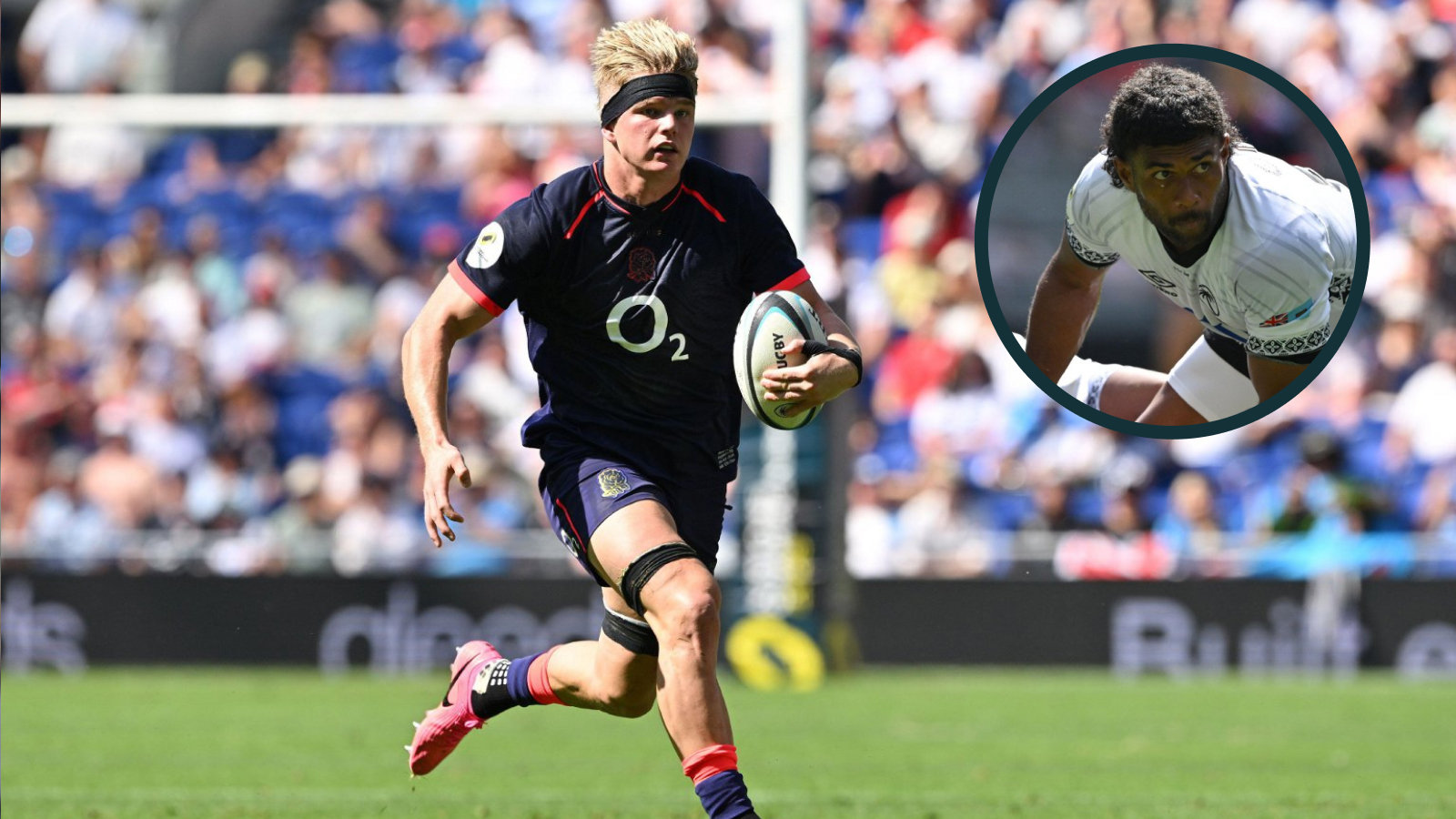
Following England’s 73-8 victory over Fiji at the Hill Dickinson Stadium, here are our five takeaways from a sweltering afternoon in Liverpool where a five-Test losing run ended in an eleven-try procession, Henry Pollock made history off the bench, and Fiji spent 80 minutes playing anyone but themselves.The top lineOn a day hotter than Suva, at a football ground staging its first Test match, England arrived carrying a five-match losing run and in front of them, the genuine threat of a banana skin; Fiji, after all, had won at Twickenham in 2023 and pushed Wales hard last weekend.Whatever anxiety existed lasted roughly six minutes. A Fijian scrum penalty inside the first sixty seconds set the tone, and the opening try was pure farce: Fin Smith’s cross-kick beat Salesi Rayasi and Tommy Freeman in the air, struck the corner flag post and sat up on the touchline, and whilst the entire Fijian defence switched off, Marcus Smith alone remembered the ball was live and dotted down his 15th England try.From there the half was a set-piece procession; Jamie George mauled over to equal Lawrence Dallaglio as England’s most prolific try-scoring forward, Guy Pepper scored his first Test try with Levani Botia in the bin, Benhard Janse van Rensburg scored with his first touch in Test rugby barely a minute after replacing Seb Atkinson for a head assessment, and Atkinson returned to score himself. Five tries, all converted, 35-3 at a 20-minute interval, and the bonus point long banked.The second half brought Tevita Ikanivere’s reply off Eroni Mawi’s hard carrying, a red card followed that erased Fiji’s best moment, and a late English flood through Immanuel Feyi-Waboso, Henry Slade, Noah Caluori and a Pollock hat-trick. England are off the mark in the Nations Championship; Fiji remain pointless at the foot of the Southern Conference.SuffocationThe theme of England’s afternoon was suffocation in every sense the word allows.They suffocated Fiji’s pace, their ambition, their set-piece and their breakdown, and did it in suffocating 35-degree heat that turned the contest into a slog of scrums, stoppages and hydration breaks; the first half contained just 14 minutes of ball in play and felt, as one weary observer noted, as shapeless as a docker’s overall. But the tedium was the product, and England deserve credit for manufacturing it.Fiji’s entire threat model runs on chaos and transition, and Steve Borthwick‘s side simply refused to supply any; they kicked 21 times, starved the visitors to a single line break in 80 minutes against their own eight, exited immaculately after every score, and made 296 post-contact metres to grind the Fijian tackle count into the heat.A week after trailing South Africa 17-0 inside 20 minutes, the fast start was itself a correction, and the errors that did creep in, a dropped maul transfer and a loose Jack van Poortvliet pass that launched the game’s only real Fijian counter, were absorbed rather than punished.Standards and stardustIn a match this turgid, the truest test of a player is whether his standards survive it, and Fin Smith’s never slipped once.The Player of the Match award was earned in every department; nine from eleven off the kicking tee including a touchline beauty, the cross-kick that manufactured the opener, an exquisite 50-metre corner touch-finder, two outstanding wide passes that created the late tries for Caluori and Pollock, and nine tackles, a figure that put a fly-half in the match’s top five defenders.England player ratings: Fin Smith ‘dominant’ in Fiji thrashing but it becomes the ‘Henry Pollock show’ in the second halfAround him came the stardust. Feyi-Waboso was England’s most dangerous runner all afternoon, an airborne finish in the corner the highlight of 77 metres and a remarkable nine defenders beaten. Caluori, 19 years old and on debut, topped the match for clean breaks, provided a beautifully calm inside ball for Slade’s try and took his own with the composure of a 50-cap veteran; rugby’s own 6’5” propelling pencil looks the part already.But history belonged to Pollock. Three tries in a cameo, each finished with raw acceleration, the second gassing Rayasi over 35 metres on the outside, made him the first England back-rower to score a Test hat-trick since Nick Easter against Uruguay at the 2015 World Cup.The starts-versus-bench debate will now rage louder than ever, and on this evidence the argument is entirely understandable.Fiji unfijiedFiji spent the week talking about kicking more, being streetwise, adding structure. In essence, they talked themselves out of being Fiji and removed their own pace and superpowers in the process. Jiuta Wainiqolo and Josua Tuisova, two of the most devastating broken-field runners in world rugby, spent the afternoon starved and structured into irrelevance, whilst the template game Fiji chose instead is precisely the one England win in their sleep. England shackled them superbly, but Fiji had also played themselves into a mindset that is not intuitive to them, and the two truths compounded each other.The Achilles heel, though, remains the game’s administrative disciplines: scrums and penalties. Fiji conceded a scrum penalty inside a minute, won barely half their own put-ins whilst England secured 90 per cent of theirs, and finished with 11 penalties conceded to England’s six, having shipped nine to two by half-time in a week where Hollie Davidson had run touch for their penalty-strewn defeat in Cardiff. Botia’s yellow, for going over the top of a ruck after repeated warnings about interfering with the nine, was a pattern card rather than a moment.And then came the flashpoint: Kalaveti Ravouvou finished Fiji’s best passage of the match, sustained, instinctive, Peceli Yato smashing holes, only for the try to be chalked off and Simione Kuruvoli shown red for kicking out at Ellis Genge on the floor in the build-up. The television view held that the heels into Genge’s chest were petulant and the red correct. The counter-case is factual: Kuruvoli may argue that he was held by Genge for a time, the kick came in the act of trying to free himself, but that evidence was absent on the TV replay and the officials called what they saw.To their credit, Fiji kept scrapping; the defensive shove that drove England off their own five-metre scrum was magnificent, Elia Canakaivata led the match with three turnovers from the bench, and Ikanivere’s try showed what the instinct game still offers. As last week’s first half in Cardiff proved, Fiji are a lot better than this.Want more from Planet Rugby? Add us as a preferred source on Google to your favourites list for world-class coverage you can trust.A breath, not a statementFor England, this was a breath in a suffocating day; a shuffle forward, a reprieve. They could not have done much more than they did, and that should be said plainly; the losing run is over, the bonus point was banked by half-time, three debutants were blooded successfully, the captain reached a milestone, and their fly-half set the standard in conditions built for slippage.In essence, and in cricketing parlance, as a Test side, they held their shape to score a hundred against club bowling, which is always a challenge and never quite the statement. Every try flowed from set-piece dominance or numerical advantage against a side that could not scrummage or stay onside, so the questions that produced five defeats, the attack under parity, the accuracy against organised resistance, remain unexamined.There was, though, a hint right at the end, just a sniff, that the midfield looked right: Janse van Rensburg and Slade gave England’s backline a shape and alignment it has lacked all year, and the late tries flowed through it rather than over it.Alex Mitchell’s injury, which finished the game with Marcus Smith at scrum-half and Slade at full-back, is the concern to watch with six days’ turnaround. Argentina in Santiago next Saturday will be a stern test on the road, and it will be interesting to see how England choose to frame this one before they get there.


Most Popular