Is Curt Cignetti’s Coaching Performance the Best of All Time?
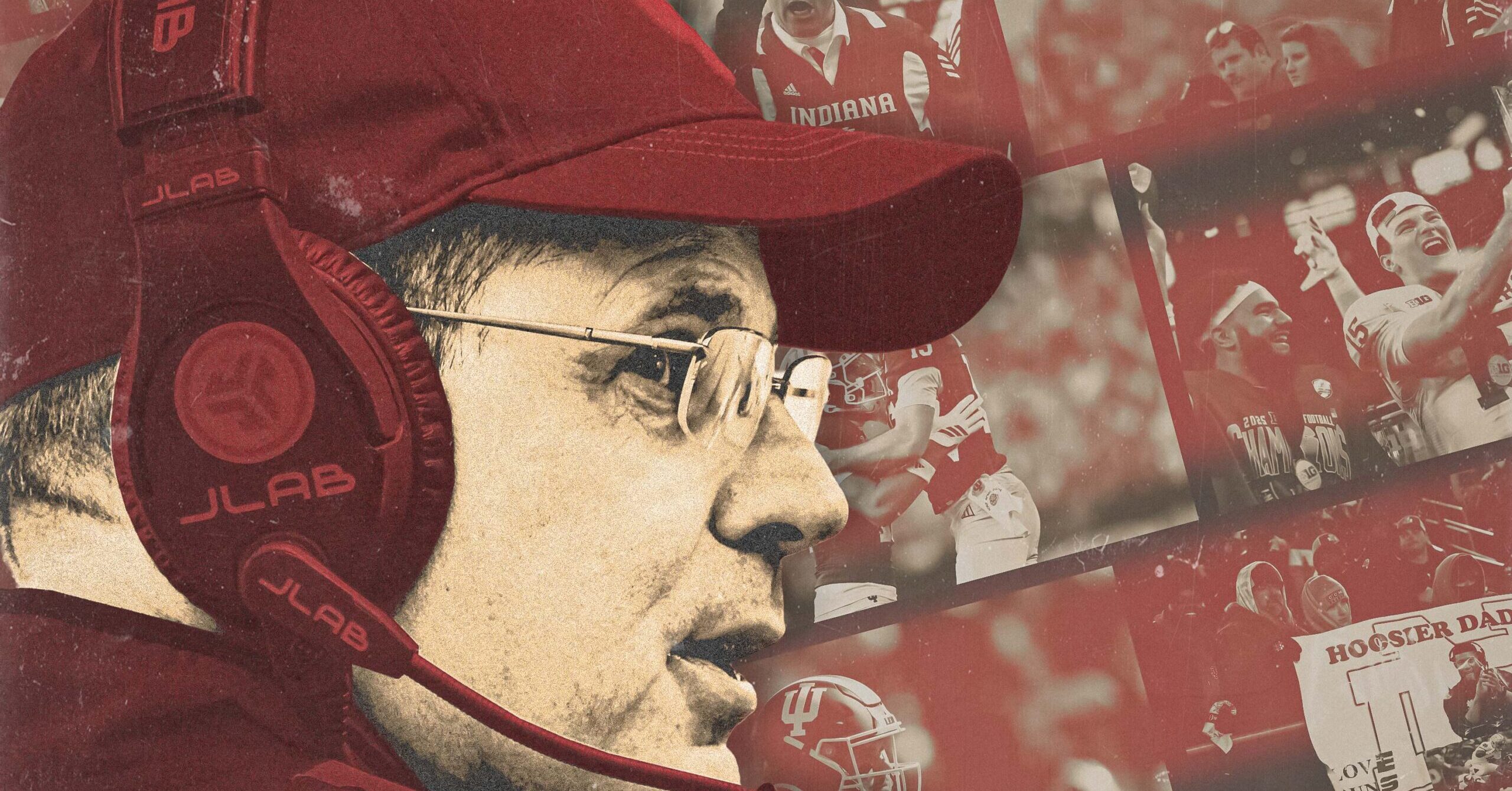
Sports media is the boy who cried GOAT. We’re so incentivized to produce hyperbole that it can often be easy to tune out our takes.But the Indiana Hoosiers are about to play in the College Football Playoff national championship game. And they’re favored. By a lot.One of the most perfect college football teams I’ve ever seen sprung up, fully formed, at the last place anybody would expect. I actually think the plot of the movie Hoosiers is more believable than what has happened to these real-life Hyperbole is warranted here, as the following statements about 15-0 Indiana are inarguably true.This is the greatest turnaround in college football history.Indiana entered the season with the most losses of any program in college football history. It finished with a winning record just three times between 1995 and 2023. When it started 10-0 in the 2024 season, that marked the first double-digit-win campaign in school history. This year’s Rose Bowl victory was its first bowl win since 1991.And that Rose Bowl victory came by a margin of 35 points. Against Alabama! Nothing remotely like this has happened in the sport before. (OK, one thing remotely like this happened—we’ll talk about it later.)This is the best-coached college football team in recent memory.Curt Cignetti’s Hoosiers are incredibly disciplined. They do not drop passes. They do not miss tackles. They do not have breakdowns in coverage. They block every play on offense precisely as it’s drawn up in the playbook. They lead the nation in turnover margin and rank second in penalty yardage per game, behind literally Army. In the rare instances when the offensive line does allow pressure to get to quarterback Fernando Mendoza, he’s better at handling it than any other player in college football. (He probably has a note about “problem-solving” or “handling adversity” on his LinkedIn.)The Hoosiers’ consistency and execution feels like Alabama during its heyday under Nick but Saban’s Crimson Tide excelled behind back-to-back-to-back top-rated recruiting classes. Cignetti’s Hoosiers are doing this primarily with players he originally recruited to James Madison. Every national champion since the birth of the modern recruiting industry has had at least 50 percent of its roster composed of players who were once four- or five-star recruits. This Indiana team is at 8 percent.And yet, Cignetti will not be involved in any coaching GOAT conversations. He spent years climbing the ladder, getting teams to improve drastically at every stop. At Indiana University of Pennsylvania, where he coached from 2011 to ’16, he took a team that had gone 4-10 in conference play the prior two seasons and led it to a 33-11 conference record; at Elon, where he was at in 2017 and ’18, he flipped the Phoenix from 2-9 to 8-4 in one offseason; at James Madison, where he worked from 2019 to ’23, he went 8-3 as the Dukes transitioned from the FCS to the FBS. But Cignetti didn’t get his first power-conference head coaching job until he was 62, preventing him from racking up the rings necessary to get into those conversations. (Unless the Hoosiers go ahead and win the next seven national championships, which, hey, maybe they will.)But there is one more hyperbolic question that needs to be answered: Is this the greatest coaching performance of all time? Not just in college football, but in any sport, at any level? Cignetti’s overall résumé lacks the rings, but his ability to transform Indiana into a contender overnight stacks up against the greatest coaching turnarounds in history. So, is it the best?To bring a level of objectivity to this exercise, I created the CIGS Scale. Let’s break it down.Consistency: No flashes in the pan. Great coaches are able to keep their team’s turnaround rolling for multiple seasons, or demonstrate a repeated ability to turn teams around.Irrelevance: You’ve gotta raise the dead. We’re giving bonus points for coaches who win at historically dismal stops, but we’re ignoring those who simply turn a good team into a great one. Terry Francona should get credit for being hired by the Red Sox before the 2004 season and immediately breaking their 86-year World Series curse, but we’re going to skip him on this list because Boston was a blown save away from making the World Series the year before Francona was hired.Growth: We’re looking to identify the best coaching performance as it pertains to turning a losing team into a winning one. That means the players on the team have to outperform expectations. If a turnaround happened because a team got a generational talent with a draft pick, landed a superstar in a trade, or benefitted from any decision made by LeBron James, we’re downgrading it. We are not, for instance, celebrating Gene Chizik winning after Auburn got Cam Newton.Speed: To garner consideration for the greatest coaching performance honor, a coach needs to win almost immediately after being hired.A few additional notes:We are not searching for the greatest coach of all time! That’s too big and too layered a discussion. Given the above criteria, we’re excluding basically any coach who took over a team that was already good, or took a few years to get their act together. That excludes most great coaches! Apologies to Mike Krzyzewski (no Final Four trips before his sixth season), Phil Jackson (Michael Jordan was already in the playoffs every year before he took over), and countless other exceptional coaches.I’m going to be harsh in my write-ups. That doesn’t mean I think that any of the coaches below did a bad job. It just means I don’t think they did as good a job as Cignetti. That’s a high bar.This is not a complete list. Despite my best efforts, there was no way for me to scan every coach in every sport at every level before hitting publish. I look forward to hearing who I missed!Finally, here are some honorable mentions:Bobby Cox: He flipped the Braves from worst to first and led them to back-to-back World Series appearances after taking over as manager in the mid-1990s. However, he missed the cut for going 266-323 during his first stint with the franchise from 1978 to ’81.Bill Walsh: He turned a moribund 49ers team around, leading it to a Super Bowl in his third season and sparking one of great runs in NFL history. Still, he went 2-14 in his first year. Cignetti would never.Geno Auriemma: He transformed a perennial cellar-dweller into the predominant program in the sport, but took six years to make his first Final Four and over a decade to win a championship.Gregg Popovich: He won the Finals in his second year as Spurs coach, but doesn’t qualify for this list because he got to draft Tim Duncan, whom he paired with David Robinson, in his first year as Spurs coach.OK, without further ado, let’s get to the candidates.Claudio Ranieri, Leicester CityLeicester City is probably the best Indiana comp available. Like college football, the Premier League historically has been dominated by a small handful of teams with more money and fans than everybody else. Like the Hoosiers, Leicester came out of nowhere to win it all. But how much of their miracle run to the 2016 Premier League championship was due to the guidance of their first-year manager?Why this is the greatest coaching performance: The Foxes were in the third tier of English soccer in 2009 and were nearly relegated in 2015, when they hired Ranieri. In his first year as manager, they won their first Premiership. And it wasn’t particularly close! They finished 10 points clear of second-place Arsenal. They got career-best performances from players few had taken seriously; Jamie Vardy and Riyad Mahrez scored a combined nine goals in 2015 and 41 in 2016.Why it’s not: Ranieri never achieved any similar success, so he lacks the consistency factor. This remains his only top-flight championship, despite being the head man at clubs like Chelsea, Juventus, Inter Milan, Roma, and about a dozen other clubs in his five-decade career. And while Vardy and Mahrez did outperform anybody’s wildest expectations, Leicester made one hugely important addition in the 2015 offseason: N’Golo Kanté, who was plucked from relative obscurity in the French second division and emerged as one of the world’s best players. Beyond Leicester City, he won another Premiership with Chelsea in 2017 and a World Cup with France in 2018.Verdict: Certainly, Leicester City’s management didn’t feel Ranieri was primarily responsible for the club’s success: The 64-year-old Italian was fired (sacked, sorry) just nine months after lifting the trophy, as six straight losses had dropped the Foxes into 17th place. Despite the remarkable story, I have to say that Cignetti’s performance was better.Gary Barnett, NorthwesternRemember how I said Indiana began this season as the losingest program in college football history? Well, in 1995, the losingest program ever was Northwestern. (It now is again, after overtaking Indiana in November.) The 1995 Wildcats went on a Hoosier-esque run, going undefeated in Big Ten play to make the Rose Bowl, and then followed that up with a second Big Ten championship in 1996.Why this is the greatest coaching performance: Northwestern was historically so bad at football that at one point Dennis Green was named Big Ten coach of the year for going 3-8. Barnett won the Big Ten. Twice!Why it’s not: Northwestern went 8-24-1 in Barnett’s first three years at Northwestern, only breaking through in Years 4 and 5. That hurts his case in the speed department. Consistency wasn’t a thing, either: The Cats promptly collapsed, going 0-8 in Big Ten play in 1998. The miracle runs likely had as much to do with the play of back-to-back national Defensive Player of the Year Pat Fitzgerald and all-American running back Darnell Autry as it did with Barnett’s coaching.Verdict: Barnett’s case really highlights what makes this Indiana run so special. One of the best football comps is this team that went 10-2 30 years ago. And it didn’t even win the Rose Bowl!Howard Schnellenberger, Miami HurricanesBefore we crown Cignetti, let’s celebrate the man who changed the fortunes of the team they’re playing against on Monday night. Schnellenberger, like Cignetti, was an Alabama assistant under a legendary coach (Bear Bryant) and had a long career making something out of nothing. But his biggest accomplishment was turning a regular old football program into The U.Why this is the greatest coaching performance: Miami had a losing record in eight of the 10 seasons before Schnellenberger took over in 1979. He won the Peach Bowl in his second season and a national championship in his fifth. He also helped Miami develop a string of elite quarterbacks (Jim Kelly, Bernie Kosar, and Vinny Testaverde, although Testaverde blossomed after he left).Why it’s not: One could argue that Miami’s rise was mostly about changing demographics. Florida was the 31st most populous state in the 1920s when Miami founded its football program; the state had jumped to fifth by 1980, around when Schnellenberger figured out there was enough talent in south Florida to win titles. The other top programs in the state experienced similar booms as nearby talent exploded: Florida State under Bobby Bowden in the 1980s, and then Florida under Steve Spurrier in the 1990s. Plus, it did take Schnellenberger five years to win a championship.Verdict: Three of the next four coaches at Miami would win national championships, including Larry Coker, who is not considered one of the greatest coaches of all time. While Schnellenberger is undoubtedly a legend, it feels like he merely sparked something that could’ve happened without him at some point anyway.Cheryl Reeve, Minnesota LynxWhen Reeve took over the Lynx in 2010, they had the second-worst record in WNBA history. Now, they have the second-best. Reeve’s hiring sparked a dynastic run, and she’s the winningest coach the league has ever seen.Why this is the greatest coaching performance: Before 2010, Minnesota had never won a playoff series (let alone a championship). After a down year in Reeve’s first season on the job, the Lynx won the title in her second. They then posted the WNBA’s best record in three straight seasons.Why it’s not: The Lynx’s turnaround coincides with the franchise drafting the legendary Maya Moore, and their dynastic run ended with her sudden retirement in 2018. While Moore wasn’t an MVP-caliber player right away, the direct correlation between “championships” and “Maya Moore” is notable. We’re probably not writing about Reeve here if the lottery balls give Tulsa the no. 1 pick in the 2011 draft.Verdict: Reeve is one of two coaches on this list who had a losing season in their first year with their team, and she got to coach a lot of players who were clearly Hall of Famers (Moore, Seimone Augustus, Lindsay Whalen, and later Sylvia Fowles). That hurts her case with the “G” part of the CIGS Scale.Bill Belichick, New England PatriotsTo be clear: I had to agree to mention at least one Boston-area sports team before The Ringer agreed to run the piece. It was either this or Bill Fitch and the Celtics winning in Larry Bird’s rookie year.Before Belichick, the Patriots’ successes topped out at “blowout Super Bowl losses.” Then their star quarterback, Drew Bledsoe, went down with a season-ending injury—and Belichick’s Pats won the Super Bowl anyway, with a guy drafted 199th overall.Why this is the greatest coaching performance: Belichick took over the Patriots in 2000. He had one losing season and then won the Super Bowl. The early part of the Pats dynasty was built with players who had been part of New England’s roster for years—Troy Brown, Ty Law, Tedy Bruschi, Lawyer Milloy, etc.—but weren’t winning at anything resembling this level before Belichick arrived.Why it’s not: The Patriots weren’t exactly bad in the years right before Belichick showed up: Their previous two coaches, Bill Parcells and Pete Carroll, are now both known as legends. New England finished .500 or better for four straight seasons before Belichick came to town, and then went 5-11 in Belichick’s debut season. That makes him the only coach on this list whose team initially got worse.Verdict: The question of whether Brady or Belichick deserves more credit for the Patriots dynasty seemed like it was going to be the ultimate sports GOAT-or-the-egg debate topic … until, you know, Brady won a Super Bowl for the Tampa Bay Buccaneers and Belichick had an embarrassing ending to his Pats tenure, an even more embarrassing offseason job search, and an even more embarrassing stint as head coach of the 4-8 North Carolina Tar Heels. But the man really did win a Super Bowl with a fresh-off-the-bench sixth-round quarterback and dominate for most of two decades.Mike Keenan, New York RangersYou’d think Keenan would be a hockey hero for showing up and instantly lifting the Blueshirts to their only championship in more than 50 years, but his decision to go one-and-done after an ugly, public feud with Rangers management tarnished his reputation. Also tarnishing his reputation: his … trying to be polite here … abrasive coaching persona.Why this is the greatest coaching performance: Pretty simple: Keenan spent one year as the Rangers coach, taking over a squad that had missed the playoffs entirely the season before. In that one year, New York won the Stanley Cup, in overtime of Game 7. It remains the Rangers’ only championship since 1940.Why it’s not: Everybody hates this dude. Keenan quit the Rangers just a month after lifting the cup, citing a bonus payment that arrived in his bank account a day late as legal justification to void his contract. Keenan left several other jobs in similarly heated circumstances and would never come close to winning a title again. His players universally describe him as a sociopathic bully.Verdict: Keenan passes all four elements of the CIGS Scale with flying colors, but is docked points because he’s a huge jerk who everybody hates. My list, my rules!Jim Leyland, Florida MarlinsHonestly, just typing the word “Cigs” into my browser enough times caused Leyland to spontaneously appear in this article like Nicotine Beetlejuice. Leyland was a master of the turnaround: Before he took over the Detroit Tigers in 2005, they’d had 12 straight losing seasons. He pushed them to the American League pennant in his first year at the helm. But nothing touches winning a World Series with the Marlins, a franchise whose shoddy ownership has prevented them from attaining any lasting success.Why this is the greatest coaching performance: The Marlins winning the World Series was as weird in 1997 as it is now. The team in teal was then just 5 years old, and up to that point hadn’t posted a winning record in franchise history. But the Marlboro Manager pushed all the right buttons as the Marlins became the first wild-card team to win it all. Leyland trusted unproven talent in huge spots; rookie Liván Hernández won World Series MVP and rookie Édgar Rentería had the walk-off hit to topple Cleveland in Game 7.Why it’s not: The 1997 Marlins were champions, but weren’t exactly great: They didn’t win their division and were outscored by their opponents in both the NLCS and World Series. Additionally, part of the Marlins’ big turnaround in 1997 came from big-time free agents Bobby Bonilla and Moisés Alou joining the roster. When cheapo owner Wayne Huizenga woke up from his championship hangover and dumped every good player from the team in 1998, Leyland’s managerial skills couldn’t keep the Marlins from posting MLB’s worst record, 54-108.Verdict: Leyland’s work with the Marlins (and, to a certain extent, with the Tigers) is certainly Cignetti-adjacent. But his one championship came with extremely slim margins—and the largest strike zone in MLB history.Lenny Wilkens, Seattle SuperSonicsTechnically, Wilkens’s coaching career began during his Hall of Fame playing career, as he was the player-coach of the Sonics and Blazers. (The NBA now forbids player-coaches, ostensibly to prevent Steve Ballmer from paying Kawhi Leonard $193 million to be the Clippers’ video assistant.) But his first real coaching job came in 1977, when the flailing Sonics fired their coach midway through the season. Wilkens took that team to the Finals and won the title the next season, the first and only title in Sonics history.Why this is the greatest coaching performance: The Sonics were 5-17 when Wilkens took over midway through the 1977-78 season; they went 42-18 from that point forward. They hung a banner with perhaps the most unheralded championship roster in NBA history: No players on those Sonics would ever win MVP during their careers, and nobody was even named all-NBA first- or second-team in either of the two Finals seasons.Why it’s not: The consistency part of the CIGS Scale is not kind to Wilkins. Seattle’s title came in the season before Magic Johnson and Larry Bird entered the NBA, and the Sonics weren’t able to keep up in the era that followed. They lost to Magic’s Lakers in the 1980 playoffs and were eliminated early in the postseason a few times before Wilkens moved to the general manager role in 1985.Verdict: As the only coach on this list who took over his team midseason, Wilkens might have pulled the most impressive turnaround of anybody on this list. But the success of his Sonics was a blip in NBA history before the start of the Magic-Bird era. Still, Seattle will forever celebrate him: The city honored Wilkens with a statue outside the Sonics’ old arena months before his death last year.Sean McVay, Los Angeles RamsWhen the Rams decided in 2016 to hire a 30-year-old with middling offensive coordinator experience as their head coach, it seemed like yet another poor decision from a franchise that had made plenty of them: They hadn’t had a winning season in 13 years; they had moved from St. Louis to Los Angeles to play in front of tepid crowds at USC’s stadium; and their recent no. 1 draft pick, Jared Goff, seemed like a total bust. But the Rams’ fortunes changed as soon as McVay took over.Why this is the greatest coaching performance: The 2016 Rams finished dead last in scoring offense; the 2017 Rams finished first. They did this without a significant influx of new talent, as L.A. had traded away multiple first-round picks the year before to get Goff. That seemed like a disaster, as Goff seemed totally unsalvageable as a rookie, and yet he became dependable with McVay calling plays. The Rams improved from 4-12 to 11-5 in McVay’s first year at the helm, and won the NFC in his second. The franchise had zero winning seasons between 2004 and ’16; it has posted a winning record in eight of the nine years of McVay’s tenure.Why it’s not: McVay is the only coach included here who didn’t win a championship or a major bowl game in his first three seasons as head coach of the listed team. It took him all the way until his fifth year—blegh! disgusting! horrible!—and his crowning achievement only came after he realized he couldn’t mold Goff into a Super Bowl champion and Los Angeles made a blockbuster trade to acquire quarterback Matthew Stafford.Verdict: McVay checks most of the key boxes: He’s responsible for the Rams’ transformation from annual afterthought to one of the NFL’s best franchises. Yet his turnaround speed doesn’t quite match Cignetti’s, and the Stafford trade works against him when it comes to growth.Joe Maddon, Chicago CubsMaddon won a World Series with the CUBS! THE CHICAGO CUBS! The most famous losers in sports! The only team specifically named after a cuddly baby animal! Previously, he demonstrated his credentials as a turnaround king by taking the Tampa Bay Rays—a franchise with no winning seasons before he became the manager—to the AL pennant in his third season at the helm.Why this is the greatest coaching performance: The Cubbies finished last in the NL Central in 2014, made the playoffs in Maddon’s debut in 2015, and then won their iconic 108-year-drought-ending World Series with an extra-inning Game 7 victory over Cleveland in 2016. (Yes, two of the phenomenal coaching jobs on this list featured Game 7 extra-innings losses by Cleveland. You’ll get yours someday, Guardians.)Why it’s not: Maddon wasn’t exactly coaching the Bad News Bears. The Cubs’ rise to relevance coincided with Chicago’s ownership spending on the team for basically the first time. The franchise basically doubled its payroll from 2014 ($89 million) to 2016 ($167 million).Verdict: I think Maddon might be the coach who passes every aspect of the CIGS Scale we created most thoroughly: He took over a historically blighted franchise and instantly won big, and also did something similar with another previously middling franchise. But I’m gonna be honest with you: I just don’t think baseball managers do as much as football coaches. (Oh wow, same lineup as yesterday? Great call, stick with what works. Oh you’re going with the closer in the ninth inning? How does he do it?) I’m giving the edge to Cignetti.After reviewing the data, I’ve reached the conclusion that in this case there’s no hyperbole: Cignetti is on the doorstep of capping the greatest coaching performance of all time. None of the other coaches mentioned above turned the worst team in the sport’s history into the best team. And the culture of college football makes it harder to go from overnight failure to success than in some other sports: The baseball teams on this list signed prized free agents; some of the basketball and football teams had high draft picks.Man, I’m gonna feel dumb as hell if Miami wins the championship.


Most Popular