
Asian Games: Amid rain threat, Shreyas Iyer & Co begin gold defence against new-look Afghanistan
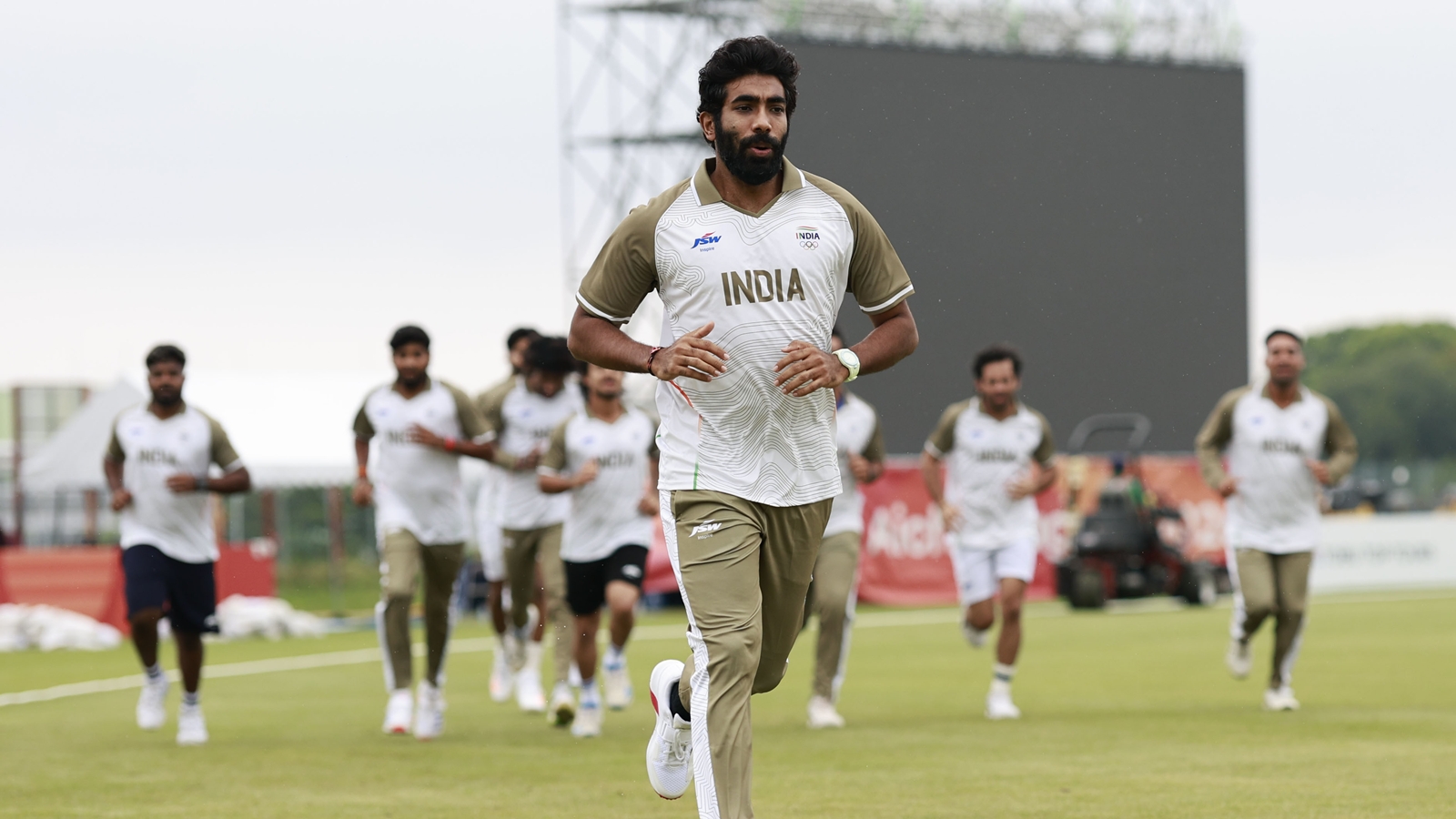
Monday’s quarterfinal therefore presents an unusual challenge. India know Afghanistan, but not necessarily this Afghanistan. After Sano, they also know how unfamiliar opposition and conditions can lead to a close contest.The weather adds another uncertainty. Nagoya has seen almost continuous rain since Saturday, with more forecast until Thursday. Korogi Sports Park has no floodlights, and visibility has remained poor even when it has not rained, although the forecast improves from Friday.“It is not just normal rain. It’s a torrential downpour,” Iyer said on Sunday after India’s practice session.While Sano offered turn, the tracks during the women’s competition at Korogi were largely good for batting and helped teams batting second. The men’s matches, however, have shown that spinners can have an impact.Story continues below this adIyer said India could not take Afghanistan, or any other team, lightly after their experience against Japan.“Not only Afghanistan, any team in the Asian Games, like Japan, gave us a very good competition. Because the wicket here cannot be set in a particular standard. But as I said earlier, it is very important to adapt,” he said.“It will be challenging and difficult for every team.”Afghanistan have already seen both sides of those conditions. Against Japan, they had to work hard for 129/6. Debutant Akram made 34, but Afghanistan were only 84/4 after 16 overs before captain Darwish Rasooli and Mohammad Ishaq gave the innings a late push.Their spinners then took control. Gul finished with 4/8, including two double-wicket maidens, while Kharoti took 3/19 as Japan slipped from 53/2 to 63/8 before being bowled out for 81.Story continues below this adBut Afghanistan’s next game showed they can also struggle against spin. Nepal left-arm spinner Lalit Rajbanshi left them 16/3 inside five overs and finished with 3/13. Kushal Bhurtel then took 4/21 as Afghanistan were restricted to 102/7 before Nepal won by five wickets.Those games have given India some clues. Afghanistan’s batting can be put under pressure by spin, but their slow bowlers can also be difficult to score against when the pitch offers help.India have the bowlers to exploit that weakness. Axar Patel, Washington Sundar and Ravi Bishnoi bowled all five overs against Japan and would have noticed what Nepal’s spinners managed to do.The bigger question is how India’s batsmen handle Afghanistan’s spinners if the ball turns again. Against Japan, Abhishek Sharma fell for a golden duck, while Sanju Samson and Ishan Kishan also departed inside three overs.Story continues below this adAfghanistan may not have Rashid, but Gul and Kharoti have shown how effective they can be in helpful conditions. There is experience too, with Najibullah Zadran and Karim Janat having spent years with Afghanistan’s senior side, while captain Rasooli has also played international cricket.India are one of the few teams to have brought close to a full-strength squad. That makes them favourites on paper but also means expectations are higher.There is something at stake for Iyer too. His tenure as India’s T20I captain began with a difficult run in Ireland and England. Since then, India have clean-swept Zimbabwe and Afghanistan, giving him momentum heading into the Asian Games. A gold medal would add to that turnaround.Before that comes their first knockout game. Afghanistan won silver three years ago and, despite missing several senior players, have shown that their younger players can pose a threat.Story continues below this adIndia have more experience and a stronger squad. But after being pushed close by Japan, they will know they cannot afford to take time to settle on Monday.


Most Popular

LIVE Nations League: Denmark vs Wales
6 hours ago




Let basketball breathe again, by Patrick Omorodion
16 hours ago

England vs Sri Lanka LIVE: Third ODI, The Oval
9 hours ago