Soumya Sarkar's return driven by Australia's pace challenge, says Habibul Bashar

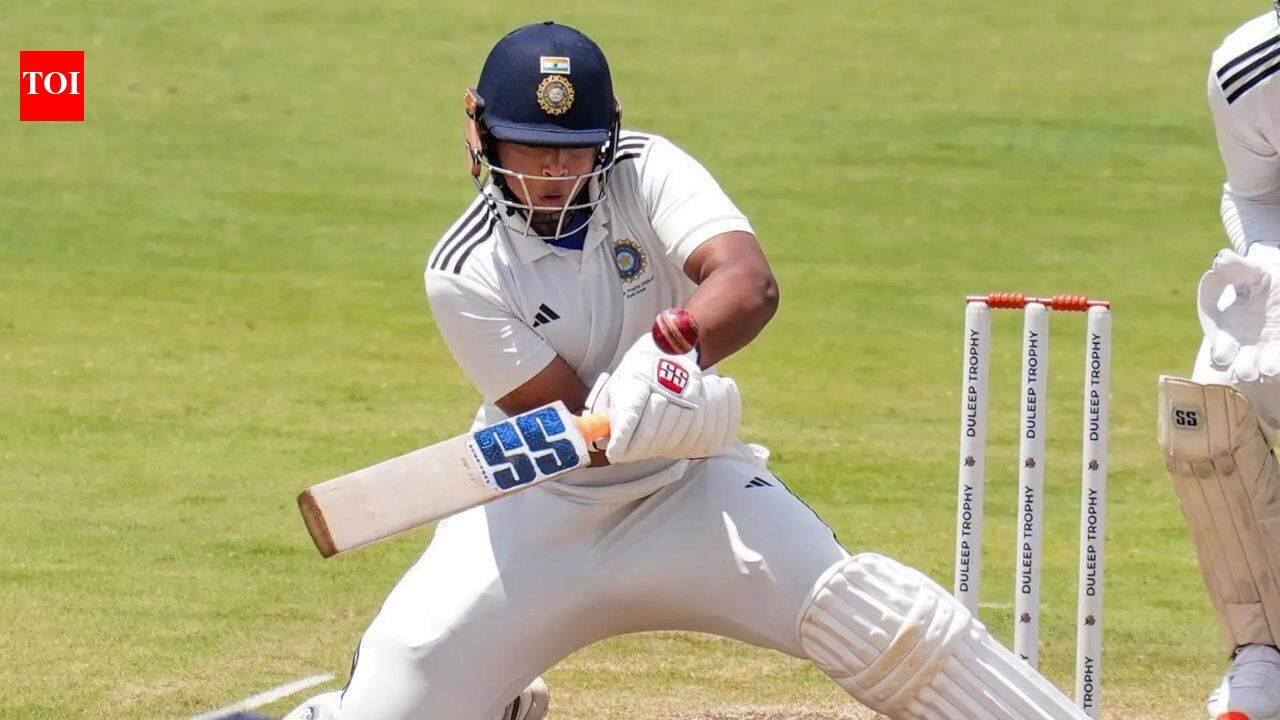
Bangladesh chief selector Habibul Bashar said the recall of Soumya Sarkar to the Test side after more than five years was driven by the belief that the left-hander is better equipped than most other available options to cope with Australia's pace attack.Sarkar was the biggest surprise in Bangladesh's squad for the opening Test against Australia in Darwin, starting on August 13. The left-handed batter returns to the Test setup having last played against West Indies in Mirpur in February 2021.Bashar admitted Bangladesh's lack of a reliable right-handed opening batter also influenced the decision. Mahmudul Hasan Joy's recent struggles with form and technique prompted the selectors to look elsewhere, while they felt Sarkar's skills against pace and bounce made him a suitable option for Australian conditions.“We definitely had a few things in mind. When we picked Soumya, we had in mind that we are going to have two left-handers at the same time. We almost have five left-handers in the top now. And if we open Tanzid Tamim and Shadman [Islam], then we are going to have four left-handed batsmen in a row. It is not ideal,” Bashar said."Definitely from this thinking, Joy is one of the right-handed openers who is useful for this combination. But so far, we are a little worried about Joy’s performance and the way he is batting. But he is still very much in our plan because we need a right-handed opener, otherwise we are going to have many [left-handers] at once. So since Joy’s is not in that good form and his batting looks a little vulnerable."Soumya Sarkar is definitely someone who has played international cricket for a long time and the pace we are expecting in Australia he is used to it.“We also thought about other openers, but unfortunately, at the moment, our right-handed opener is not very ready. The few people we are working with are completely new. Taking them to Australia will definitely be a little difficult for them. We are working on them. Our series will be a high-performance team. In the following series, we hope that within a year we will be able to prepare a right-handed batsman in the opening slot, which we really need,” he said.Bashar also backed the return of wicketkeeper-batter Jaker Ali, saying he had earned his place through strong performances after being dropped from the Test side. Jaker, who last featured in a Test during the Sri Lanka series in 2025, returns with Litton Kumar Das unavailable for the opening Test because of injury. The chief selector acknowledged that Mahidul Islam Ankon was unfortunate to miss out but stressed that Jaker remained ahead in the pecking order.“Jaker Ali was not playing badly when he was playing the Test match. So when he was out of the team, he was actually fighting with his form. Then we took Jaker Ali as we had a lot of games ahead of us and we wanted him to come back after playing these games because his mental state was not very good at that time, I mean he was a little devastated,” he said.“So the job we gave him, he did very well. The opportunities he got, the Premier League, our high performance games, he proved that he is ready in these games,” he said. Ankon went as our backup keeper [to Zimbabwe] but Jaker will always come first."Explaining Litton's absence, Bashar said the wicketkeeper's recovery had been complicated despite multiple scans initially suggesting the injury was not serious. “Litton got injured in the ODI against Australia. If you see, he was also in the T20 series. So then, the diagnosis was that it's a calf muscle injury, but it's not that big. But when he couldn't play in the T20, another scan was done, and the further scan showed a grade one tear, and the medical team said that it shouldn't take more than three weeks. But those three weeks ended in June, that same month,” he said.“I can't really blame the medical department because when the scans came,they showed something that was initially detected. Somehow Liton's pain was not going away. So when he did it [the scan] here again, nothing came. So then we rested him against Zimbabwe for the Test and when he was okay in the ODI, he went on this basis, but even then he was complaining that he was in pain.“So the next scan that was done in Singapore actually detected swelling, no tear. So now maybe he is fine, but he will have to go through a process now because an incident means he is actually unfit after doing this and that repeatedly,” he said.Nahid Rana (r) will miss the Australia series with injury. © BCBBashar also defended Bangladesh's handling of Nahid Rana's workload after the fast bowler was ruled out of the Australia series, rejecting suggestions that his injury stemmed from poor workload management following his involvement in the Zimbabwe series. “With Nahid Rana, we always respect the workload management, but now the workload management is not what you say because there are GPS trackers so they track everything,” said Bashar.“GPS tracks who will play which match, who will play how many matches, who will be able to play in which series, but everyone is followed. If you look at Nahid Rana, we didn't play him in all the matches with Australia there [at home], but first he played two ODIs, then he got a week break, then he played two T20s.“He was available according to workload management in the Test match too, but since Australia is an important series for us, we didn't play him in that Test match [against Zimbabwe] as a precaution.“There is one thing here that our workload managers say that there are two things that they track, especially for a bowler, we call it a red, green, yellow zone. So many times, if you overload more balls, it goes to red, and if you bowl less, it goes to red. So he has to bowl enough, that means he has to bowl enough overs and then go to the green zone and then play your Test match. So he had to play something. That means if you don't play fast bowlers and keep doing what we are saying now, that is also not good for the bowler.“No matter how hard you try as a fast bowler to stay injury free, if you look at the history of fast bowlers, it's difficult. You can minimize it, but to say a fast bowler will bowl without getting injured, it's actually difficult no matter how hard we try. But we are maintaining it a lot, taking extra care of it every moment, but still when someone gets injured, I would say it is sad,” he concluded.

Most Popular


Awer Mabil supports multiculturalism in Australia
13 hours ago