FAW 150th anniversary: Pele, borrowed kits and Euro glory among key moments
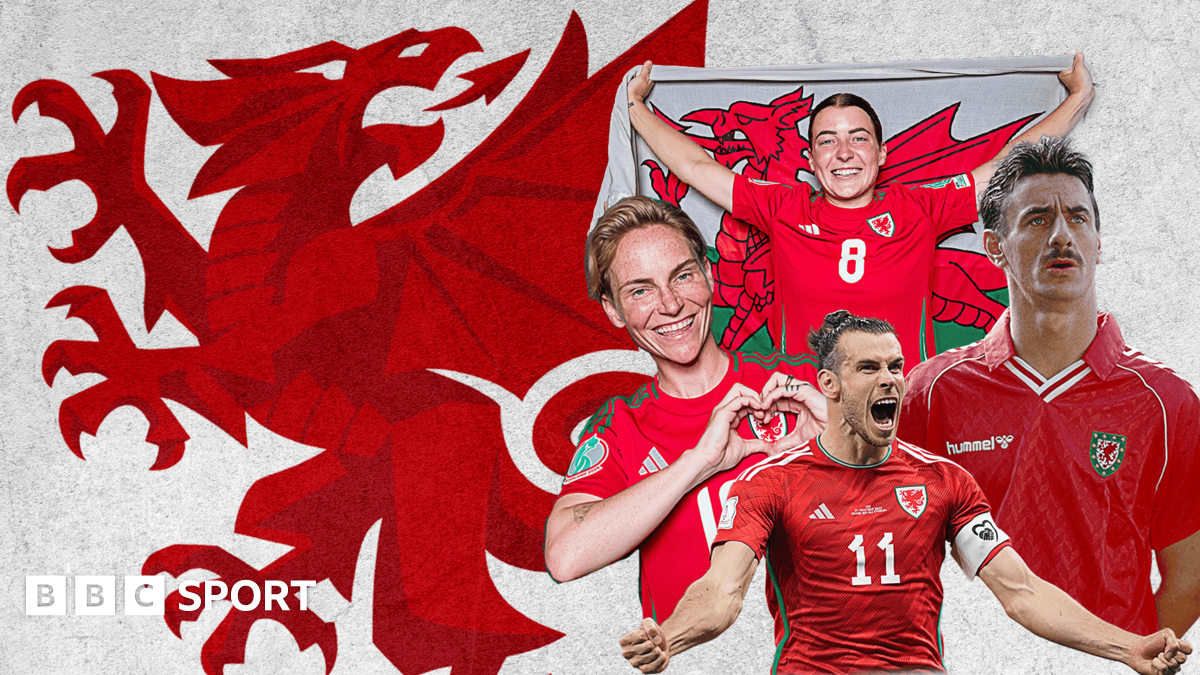
It is perhaps little wonder that Wrexham can feel like the centre of Welsh football given it was the birthplace of the Football Association of Wales (FAW).On 2 February, 1876 only the third football association in the world was formed following a meeting at the town's Wynnstay Arms Hotel.Llewelyn Kendrick, a solicitor, was appointed chairman with Hawley Edwards taking the role of treasurer.A century and a half later the FAW is unrecognisable from the association established in the three story Georgian red-brick hotel that still stands in the centre of Wrexham today.BBC Sport Wales looks back at the most significant moments in the association's history.Founded three years after the Scottish Football Association (SFA) and 13 after the FA in England, the FAW is the third oldest football association in the world.Some seven weeks later - on 25 March, 1876 - the Wales men's team played their first international match, losing 4-0 away to Scotland at Partick.A year later, Scotland travelled to Wrexham and beat Wales 2-0 in their first home international at the Racecourse Ground - now named Stok Cae Ras - which remains the oldest international football stadium still in use.Wales had to wait four years until 1881 for their first victory when John Vaughan scored the only goal to clinch a 1-0 win over England in Blackburn.The 1950s marked a golden era for the Wales men's team, featuring iconic players such as John and Mel Charles, Ivor Allchurch, Cliff Jones, Trevor Ford and Terry Medwin.World Cup qualification was achieved for the first time in 1958 following a defeat of Israel in a play-off.The tournament was held in Sweden and Wales faced the hosts, Mexico and Hungary in the group stages.All three Wales group games ended level, but Jimmy Murphy's side booked a place in the quarter-finals with a play-off win against Hungary.Goals from Allchurch and Medwin set up a tie against Brazil, but Wales would be without their talisman John Charles who was injured by some ferocious treatment from the Hungarians.A 17-year-old Pele scored the only goal as Brazil won the quarter-final 1-0 but almost 70 years on Welsh football fans still wonder what might have been had Charles lined up to face Brazil.It took more than a century for the FAW to formally recognise a women's national team.Initially established in 1973, the team received no support from the FAW as players were forced to arrange their own training sessions and matches as well as funding it themselves.A crowd of around 3,500 witnessed their first fixture against the Republic of Ireland in Llanelli, and saw Wales play in kits borrowed from Swansea City's men's team.Wearing shirts several sizes too big for them, Gaynor Blackwell and Gloria O'Connell scored the side's first goals in a 3-2 defeat.Concerns over Wales' status as an independent football nation grew in the 1980s which many felt threatened the very existence of the FAW.Leading Welsh clubs competed in the English pyramid system, and the absence of a national domestic league was a source of indignation to many FIFA members.In response, the League of Wales was formed in 1992.Some clubs, including Newport County, Merthyr Town and Colwyn Bay rejected an invitation to join and were forced to play their non-league league matches in the English system outside Wales.Twenty teams took part in the inaugural season of the new League of Wales and Cwmbran were crowned the first champions.Since 1992 the league has undergone several changes and is now known as the Cymru Premier, featuring 12 teams.The New Saints are the competition's most successful club and have won the title on 17 occasions.Heavy defeats to the Netherlands, France and England on the pitch were countered by some unforgettable moments including the singing of the national anthem before the opening match against the Netherlands, Jess Fishlock's goal against France and the passionate support of the Red Wall.The hope now is that Euro 2025 will inspire more girls and women to take up the sport in Wales.Early signs are encouraging, with more than 20,000 girls and women now registered to play football.The next target is qualification for the 2027 Women's World Cup, as Wales look to add another memorable chapter to the story of the national team.



Most Popular