Former Iranian footballer fears for athletes' safety as they return to Iran
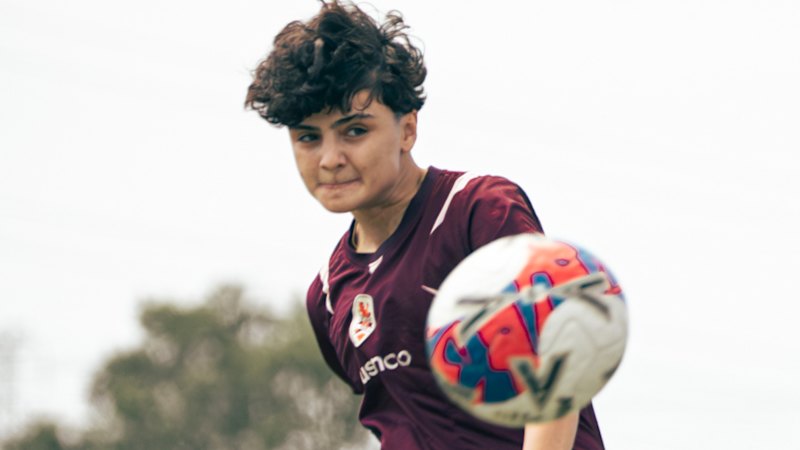
Atefe Moradi knows the Iranian regime's playbook well.She was part of her home country's national league before moving to Australia.She played local matches in Iran rather than internationally, but said her every move was tightly controlled by the regime's football federation."Everyone is telling you to keep your hijab on, roll your sleeves down, don't do makeup," she tells ABC News."You know, they have a system that they put pressure on you that you shouldn't go there, or do this or that, or even talk to media."Ms Moradi was heartbroken when a fifth woman, team captain Zahra Ghanbari, changed her mind and headed back to Iran.Seven team members, including a player handler, were granted humanitarian visas by the Australian government last week while in the country for the Women's Asian Cup tournament.The competition began in Australia at the same time as the United States and Israel launched air strikes on Iran, killing former Iranian supreme leader Ayatollah Ali Khamenei and raising fears of a wider regional conflict.The football team refused to sing the Iranian anthem during their opening match on the Gold Coast.The gesture, which was seen as an act of defiance against Iran's rulers, resulted in Islamic Republic of Iran Broadcasting presenter Mohammad Reza Shahbazi labelling the players wartime "traitors" on state television.After several days of waiting, most of the team left on a flight for Oman on Monday night.International media with ties to Iranian expat communities are reporting the players have been coerced into returning to Iran — and were played audio messages from their families pleading for them to go back.Only two of the original seven who sought asylum remain in Australia.Fatemeh Pasandideh and Atefeh Ramezanisadeh began training with the Brisbane Roar yesterday.In a statement on social media, Brisbane Roar chief executive Kaz Patafta said the two Iranian players had started training with Brisbane's A-League Women squad.He said the club "remain committed to providing a supportive environment for them whilst they navigate the next stages".Ms Moradi feared the two remaining women could be pressured to go back."I have been for some time trying to get in touch with one of them … because they are under watch, I can't talk to them right now," she said.Iran's football federation keeps watch over playersBut as the two women settle into Australia, the diaspora fears what might happen to the athletes who chose to return.Iranian Australians campaigning for the women to stay claim that a staff member granted asylum was passing on threats from the Iranian regime and that played a part in convincing them to go back.Ms Moradi also claims they were pressured to change their minds by the team staff member, Zahra Soltan Moshkehkar, who also left on the weekend.Government sources say they have looked into those claims and have found no basis for them.Ms Moradi said that, when she played in Iran, she knew the officials of the football federation well."Honestly, the Iranian football federation is not like the rest of the world's football feds that are about sports — it is completely political," she said."From Mr Taj, the head of the federation, to Mrs Shojaei, to Ms Bodaghi, they are all political."Mehdi Taj, re-elected as president in August 2022 and again in 2025, is frequently described as having strong links to the regime and is a former commander in the Islamic Revolutionary Guard Corps's intelligence organisation in Isfahan.Farideh Shojaei, who travelled to Gold Cast with the players, had served as the vice president for women's affairs within the federation.Her tenure has often been marked by a conflict between representing the interests of female players and adhering to the regime's strict ideological and political mandates.Fatemeh Bodaghi, travelling with the delegation as the team's manager, has been described in media reports as being sent to keep watch over the players during her stay.Iran International — a UK-based media organisation which has sources inside Iran and in the diaspora — cites sources as monitoring players' social media activity and reporting developments to officials in Tehran.Ms Moradi goes even further to describe her observations of the way the Iranian football officials behave."They are all part of a mafia-like organisation," she said."There's no meritocracy whatsoever."Claims regime sent staff to convince players to returnMs Moradi said she called team manager Fatemeh Bodaghi when she knew the female footballers were returning from Sydney back to Iran.Ms Moradi said the conversation took place just a few hours before their departure from Sydney to Malaysia."I said to her, 'Could I ask you to stay in Australia and keep the team with you?'" she said."She said, 'Why should I stay?'"I told her, 'Please don't go back to Iran'."She said, 'Why shouldn't we go back? What's happened? That's our country. They all love us.'"I said, 'No, dear, a lot of things could happen to you if you go back. They've threatened you. They even threatened to execute you.'"She said, 'So what? We should stay here and wash dishes for a living? I would never stay here, even if they gave me the best money. Everyone respects me in my country and they give me the best treatment. Everything is going well in Iran. I don't know what you're talking about.'"Ms Moradi claims that Mrs Bodaghi and Mrs Shojaei played the role of the bad cops, and the staff member Zahra Soltan Moshkehkar was sent to play the good cop."Being [acting] motherly and all," she said."They [the regime] sent her to join those who wanted to stay and seek asylum herself."She infiltrated the group and brainwashed them into going back."Ms Moradi says while she has not played with the Iranian footballers directly, she understands the difficulties they faced while in Australia."They want you to be their slave, to do whatever they ask you," she said, noting that both she and her sister used to be referees in Iran."It affects the morale of the players."Footballers returning to Iran risk arrestMs Moradi says when she witnessed the players refusing to sing the national anthem at their first match against South Korea, she was "very proud of them"."The girls were very brave," she said."I know how scared they were when they did this."While Shadow Immigration Minister Jonno Duniam backed the offer of asylum to the players, the opposition was critical of the government's approach."The government should have done everything it could not to make a massive song and dance about what had been achieved for and with these women," he said on Monday.But Labor Minister Clare O'Neil, who in 2024 revealed that the Iranian government had been spying on dissidents in Australia, said of the players returning: "It is, at the end of the day, their choice.""And they have made a different choice. We have to respect that as Australians," she said.Ms Moradi said the team did not leave Malaysia for days, as the Iranian football officials travelling with them were waiting until most of the players who had initially sought asylum in Australia returned.Ms Moradi was concerned for the players who had left Malaysia and what would happen once they landed in Iran."They could put them in jail and cancel all their matches. Not allowing them to play football any longer," she said.



Most Popular
Ikorodu victory blows NPFL title race wide open
6 hours ago