
Spain no longer need perfect football

Victory had to arrive wrapped in elegance, carried by possession and polished by precision.Spain did not simply want to beat opponents. They wanted to prove their football was the right way to play the game.This team has quietly moved on. Their 2-1 victory over Belgium in the World Cup quarter-final was hardly a masterpiece.It lacked the flowing rhythm that has become synonymous with Spain and, for long spells, Belgium succeeded in dragging the European champions away from their comfort zone.The passing lost some of its fluency, the final ball deserted them and frustration crept into their play.A few years ago, that might have been enough to derail Spain.Not this version.The biggest transformation under Luis de la Fuente is not tactical but psychological. Spain no longer behave as though every match must conform to their ideal.They have learned that knockout football asks different questions, and the team that keeps answering them usually lifts the trophy.Portugal asked them to remain patient while Belgium asked them to become persistent. Spain answered both.That is why this team feels different from the one that conquered the world in 2010.Vicente del Bosque’s champions perfected an identity. De la Fuente has expanded it.The familiar principles remain. Spain still dominate the ball, stretch opponents through intelligent movement and trust that possession is the safest form of defending.Yet there is another layer now, one built on adaptability rather than ideology. They are prepared to play around problems instead of pretending they do not exist.Belgium exposed that evolution better than any opponent so far.Rudi Garcia’s side pressed aggressively when opportunities appeared, retreated into disciplined defensive lines when necessary and countered with enough purpose to unsettle Spain.Charles De Ketelaere’s equaliser, Spain’s first goal conceded since the group stage in Qatar, briefly interrupted the sense of inevitability that had surrounded La Roja throughout the tournament.Yet Spain never looked rattled. There was no rush to force impossible passes or chase spectacular solutions. The tempo remained measured, the structure stayed intact and, above all, belief never wavered.Spain continued probing because they trusted the process more than the moment. That patience eventually became Belgium’s greatest opponent.It is tempting to describe Mikel Merino as Spain’s latest hero after another decisive goal from the bench, but that risks missing the wider point.Merino has become the face of something much bigger than himself. His repeated interventions are possible because this Spain no longer depends on one player to rescue it.Earlier generations leaned heavily on Xavi, Andres Iniesta or David Villa to illuminate the biggest occasions. This side spreads responsibility across the pitch.Fabian Ruiz opened the scoring. Lamine Yamal stretched Belgium until spaces finally appeared. Dani Olmo knitted attacks together. Merino simply arrived to complete the picture.That collective responsibility may prove Spain’s greatest strength.Opponents know how to prepare for teams built around one superstar. They can assign markers, alter defensive shapes and design an entire game plan around containing a single threat.Spain offer no such luxury. Remove one influence and another quietly steps forward.That is the hallmark of mature tournament football.Belgium deserve credit for revealing that maturity rather than merely succumbing to it. Much will be written about the possible farewell of their golden generation, and rightly so.Thibaut Courtois, Kevin De Bruyne and Romelu Lukaku have given Belgian football its finest era, while De Ketelaere and Jeremy Doku offered encouraging reminders that the future may not be as bleak as many feared.But Belgium also left France with something valuable: cluesThey demonstrated that Spain can be frustrated, denied space between the lines and prevented from dictating the game at their preferred rhythm.The challenge is sustaining that discipline for 90 minutes, because Spain possess something they perhaps lacked in previous tournaments.They no longer grow impatient.That may prove to be De la Fuente’s greatest achievement. He has not reinvented Spanish football, nor has he abandoned its traditions.Instead, he has freed his players from the burden of believing there is only one acceptable way to win.That is why the semi-final against France promises far more than a meeting of Europe’s outstanding attacking talent. It is a collision between two contrasting ideas of tournament football.France possess devastating individuals capable of deciding a match in an instant. Spain possess a collective confidence that survives even when the football falls short of perfection.And perhaps that is the biggest lesson from Los Angeles. Spain still love beautiful football — they simply no longer need it.

/https%3A%2F%2Fsportsmole-media-prod.s3.gra.io.cloud.ovh.net%2Fuploads%2F2026%2F07%2Fmichael-olise-3-6a51848fea2ad323944609.jpg)

Most Popular



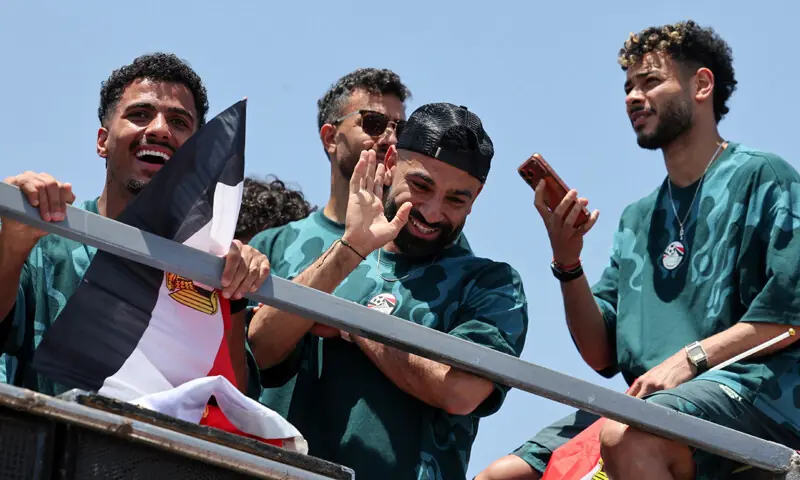
‘You made us proud’: Egypt gives heroes’ welcome to team
15 minutes ago