Gianni Infantino’s Trumpification of Fifa will have repercussions well beyond this stained World Cup

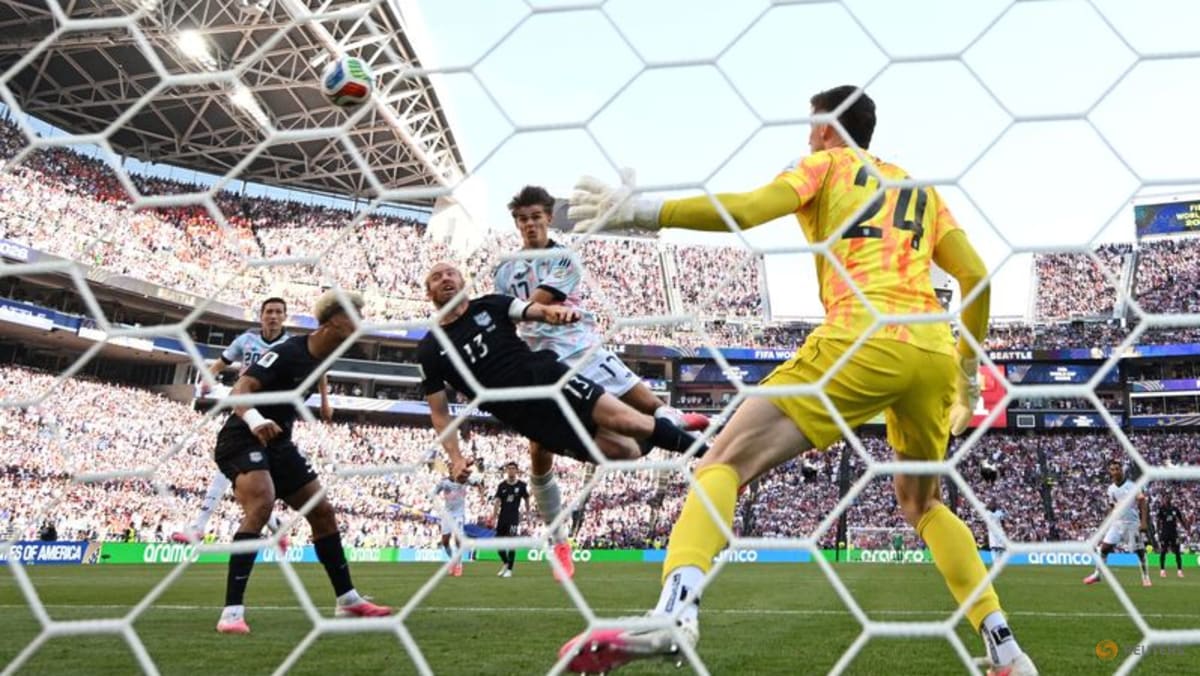
There’s an axiom in American politics that has formed the title of a bestselling book: “Everything Trump touches dies.”US Soccer duly saw the ultimate pride before a fall. After Donald Trump had boasted about his intervention in the Folarin Balogun case, it only ended up informing – and infusing – a humiliating defeat for the USA.There’s an argument that the 4-1 defeat to Belgium might actually have been the best thing for Fifa, given the crisis that was engulfing the body over the previous 36 hours, and that’s probably true in the short term. Belgium don’t have the incentive to pursue action in the same way as if Balogun had scored the winner in a US victory.In the medium to long term, though, Gianni Infantino’s Fifa may have opened football up to a world of needless difficulty and legal problems.This is where his relationship with Trump might be reaching its next, more complicated stage.It is remarkable to think now how reticent Fifa was about revealing any details of the Balogun case over Sunday, to the point that all new reports were naturally treated as the uncovering of sensational secret processes.And then, the next morning, Trump goes and just blabs it all anyway, while landing Infantino in it.“So, yes, I asked for a review by Fifa,” Trump said. “I spoke to a man who is highly respected and, by the way, whose level of respect has gone up tenfold.”Why tenfold, Mr President?As supine as Infantino may be towards Trump, the Fifa president couldn’t help but be aghast at what was coming out.You could sense the panic in the flurry of statements that Fifa was suddenly releasing, having previously been so quiet.As one source said: “There was no reason for the case at all. This is completely contrived, and Trump is spilling all the beans.”And it might yet prise open a can of worms.One phrase that Fifa kept insisting on was that the disciplinary committee was “independent” – despite one high-profile insider stressing that the idea that such judicial bodies or ethics committees in Fifa are independent is one of the biggest falsehoods of all – but that is also to evade the point.The core issue is the idea that this would not have happened without White House intervention.In other words, political interference. You only have to imagine what the discussion might have been if something like this happened in any other football setting, especially outside the West.One outcome has already been seen. Federations, driven by a national will that only the World Cup can bring, are now considering challenging every decision.The French federation wants Michael Olise’s yellow card overturned. The Football Association is considering all options regarding Jarell Quansah’s red card.As Thomas Tuchel said: “Where does this end?”Probably not at this World Cup.It is precisely why the precedent that Fifa has set, at such a high-profile moment, is so ill-thought-out and could be one it comes to really regret.As a Swiss federation statement, all the more conspicuous for being the country that houses Fifa, said: “This decision raises questions and creates uncertainty, particularly regarding the authority of referees’ decisions.”In other words, it doesn’t stop on the pitch, but maybe at the court of law.This is all the more crucial since a recent theme of the world’s most popular club competition, the Premier League, has been “lawfare”.It’s widely felt that the competition isn’t too far away from a day when a refereeing decision is challenged in court.Well, as with the extortionate ticket prices that Premier League club owners have long craved, Fifa has now ushered this through.That is exactly why Uefa and so many of its associations are, in the words of many involved, “outraged”.They immediately see the implications in a way that Infantino either doesn’t or just doesn’t care about.It opens Fifa up to pushback in multiple unrelated cases. It’s also an entirely self-inflicted problem in another sense, at least for Infantino’s iteration of Fifa. Because, prior to this week, his great calculation had paid off.The focus had been on the glory of the football. All of the negative build-up, from the issues around the hosts to Infantino’s very Peace Prize-smoothed relationship with Trump, had faded into the background. There was even a good feeling about an entertaining US team.That’s now gone. By Monday morning, there was far more international media attention on the Balogun case than on the epic matches.You could say Fifa is now back to where it started with this World Cup, but this has gone much further.Although all of the issues around this World Cup and Infantino’s presidency – right up to the nature of governance and even the way Saudi Arabia got to host 2034 – remained huge issues despite the success of this World Cup, it’s still true that none of that really resonates for the average fan.What absolutely does resonate, though, is when that affects what happens on the pitch.As with the precedent of December’s Cristiano Ronaldo case, it is attuning the wider world to questions of sporting integrity and Fifa’s legitimacy.As well as fury, this has led to a lot of descriptions within football.This entire story is the most apt parallel possible for how football is now following a Trump-shaped world in which the rules-based international order is increasingly being challenged.As a corollary, you only have to look at how incorrect implied criticisms of referee Raphael Claus, as well as this myth about the incorrect use of slow-motion, were put out to distort the public discussion.Another description, of course, is of the “Trumpification” of Fifa. A body now too used to doing what it wants, of a president almost governing by fiat without challenge.Well, challenges might now be rising. There’s growing dissent and almost universal outrage.Norway has been loud in that, and the fact that they are England’s next opponents has only further exposed the lack of comment by the Football Association.The precedent may be crucial in other ways. The next two World Cups involve hosts, in Morocco and Saudi Arabia, where there are very strong regimes at the top.As one insider said: “This may not be a one-off.”It certainly doesn’t feel like a one-off for Trump, going by the tenor of US politics.His involvement – and Infantino’s facilitation – may have actually helped kill the US team’s hopes and may well have a poisonous effect on the game’s future.

Most Popular
Afghanistan mourns passing of Shapoor Zadran
3 hours ago