‘Bring even more people into the conversation’ - The TikTok World Cup: How creators are changing the way North America watches soccer
.png)
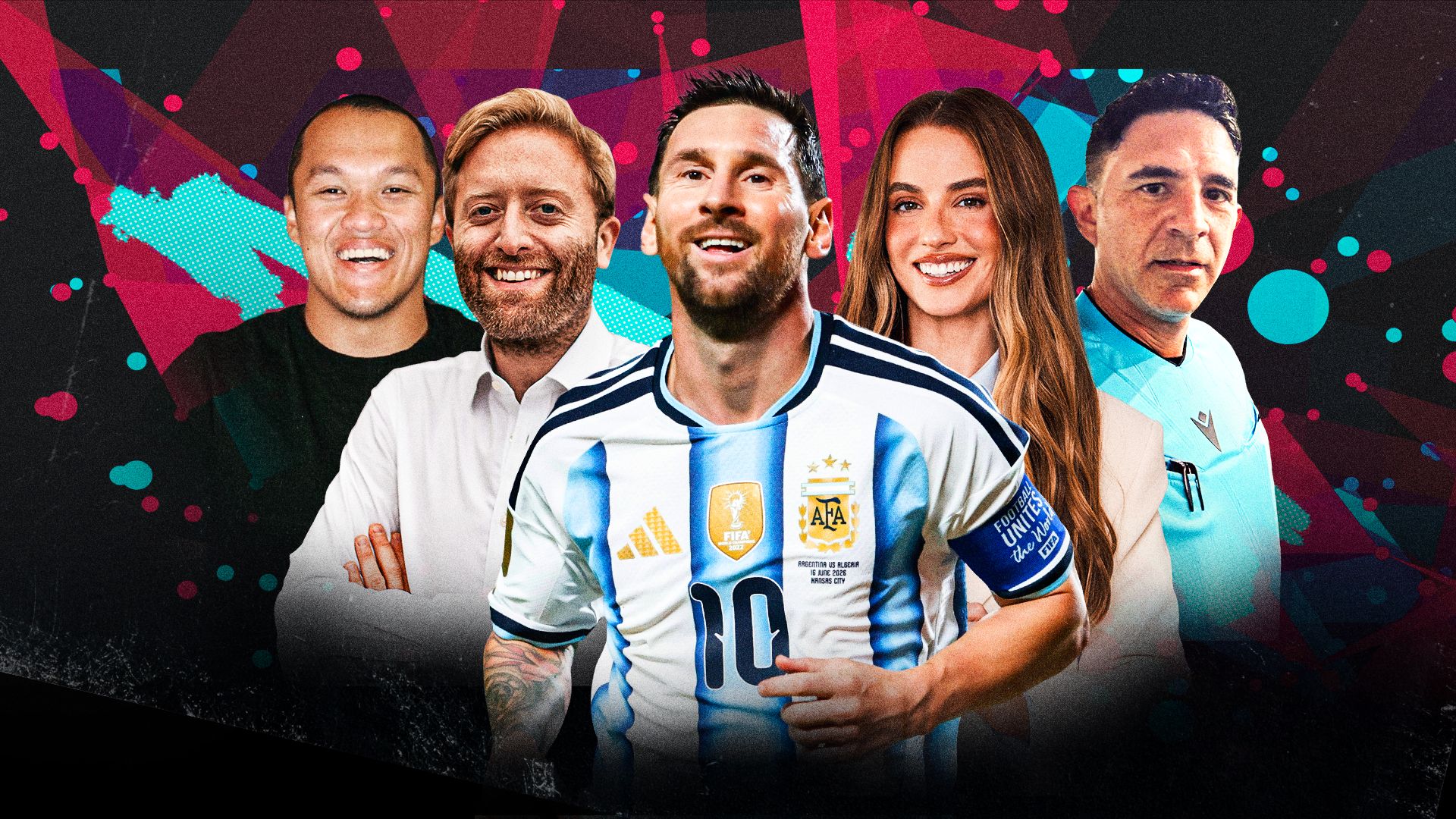
World Cup access can be hard to come by. And there is, no doubt, traditionally, something of a clash between traditional print and broadcast media, and the 60-second-or-less snippets that TikTok creators tend to stick to. Traditionally, that contrast has played out in press boxes, pitchside, and on the internet, too. These days, though, the lines have become more blurred.“The tides are turning, and we're even seeing it with some big media outlets. They're looking to creators to see what they're doing because we do have a pulse on kind of not only the sport itself, but also what the fans are saying, and I think that's what you need,” DeMita said.That is especially relevant in a North American World Cup. The sport is still niche in two of the three host nations, Canada and the U.S. Partnering with TikTok was a strategic venture for FIFA - which is not paying the creators directly for making content. Want to bring new fans into the game? Give them something they can digest pretty easily.“Football is incredibly visual and emotional. A spectacular goal, an incredible save or a memorable celebration can tell a complete story in just a few seconds, which makes it naturally engaging in a short-form environment,” Goldstaub said.Yet interestingly, more in-depth analysis has also cut through.“What's really driving growth is that people aren't only watching highlights. They're watching reactions, tactical breakdowns, behind-the-scenes access, creator commentary and fan perspectives from around the world. Those different entry points make the sport more accessible, particularly for newer or more casual fans,” Goldstaub added.Referees get a bad rap online. This is one of the drawbacks of social media. Everyone has an opinion, but very few tend to understand what they are seeing. And this World Cup has been no different. There aren’t necessarily more contentious refereeing decisions here. But the ones that do generate more content. Anger gets platformed.That’s what David Gerson - TikTok handle refsneedlovetoo - is out to change a little bit. A FIFA-licensed referee, his handle is built around content that explains decisions.“My platform's mission is not to convince people that referees are correct. My platform's mission is to create a positive and supportive environment for everyone who loves the beautiful game. You know, part of the group that I'm closest to is referees, but I've been a coach, I've been a player. I've been a spectator,” Gerson said.In fact, he has found that explanation, rather than anger, has cultivated a bit more of a positive environment around the way the game is being consumed. Scroll through his comment sections, and trolls get called out for making things personal.“I never insult. I never say anything negative. Even if I disagree with the referee's opinion, I'm not going to say they're a bad person. I'll help explain what happened: here's their perspective, these are the considerations, this is why they may have made a decision like this,” Gerson said. “I just help people come to a better understanding.”Of course, that does also leave him pretty open to personal attacks. In the early days, it was rough. While he got some encouraging DMs, he also received some pretty hateful ones, too.“I did have someone, relatively early on in my time on social media, where someone messaged me, said that they knew where I lived, and they were going to come curb-stop me in front of my family at my house, and so I have had to file a couple police reports early on,” he admitted.These days, though, Gerson is doing well for himself. And things are a lot more positive. The channel has nearly 400,000 followers on TikTok. He has consulted three times for U.S. Soccer. He has taken on referee abuse.In a world full of social media haters, Gerson is pretty legit - and balanced, too. And this summer, he has spent his time going to stadiums dressed as a referee and asking fans about officiating. Any contentious decisions that come up get addressed on his channel.“A couple of years ago, one World Cup ticket might have been a success. Now, you're really truly changing the culture of a culture and making the beautiful game beautiful for everyone,” he said.Cody Nguyen - known to his 400,000-plus followers as matchday.fc - started three years ago by posting rage-bait. He tried to dive into the conversation around soccer in any way he could. That meant, at times, going negative, he admitted.But with post-after-post, the Chelsea fan started to realize that wasn’t him. Nguyen is a positive guy who has a soft spot for feel-good stories. And he found that those tended to hit. But he had always had a soft spot for jerseys. On March 23, he posted a video about Curacao’s home kit, explaining the link between the jersey and the bright colors of Willemstad, the capital.It racked up the views, and he realized that doing deep dives, but clipping them up into less than 90 seconds, could be of real interest. He followed that with a story about Eloy Room, Curacao’s record-breaking goalkeeper who tallied 15 saves in a fixture against Ecuador. That, too, did well.“Mainstream media obviously covers the Messis, the Ronaldos, the players with a lot of PR backing. But I just like telling stories about the players who are there. They're heroes. They're really good at what they do. They're professionals,” Nguyen said.His World Cup has snowballed from there. Vozinha keeping a clean sheet, Qatar getting a point, even a deep dive into USMNT star Alex Freeman’s NFL ties have all been big hits.And so have looks behind the scenes. Anyone can make content from their sofa. Nguyen found that a lane of explaining what it is like to interview famous athletes could bring about success.The great irony? He had never met a footballer before.“I try to humanize them. You really see what they're like, and like these guys could be my friends outside of like football. That's how I try to view them,” Nguyen said.Gerson and Nguyen have championed soccer for a while. But there are others here whose style of content can translate from one sport to another. DeMita is a pretty interesting example. Traditionally a creator who honed in on basketball - she played the sport in college and covered the NBA Finals - DeMita switched to soccer in advance of the World Cup. She was familiar with the big names. She had attended her fair share of MLS games. But she also knew that her style of content could switch from sport to sport. All it took was a bit of tweaking.“I love to use fun voiceover videos of me on the field. I'm very into my outfits as well. Like there's a lot of planning that goes into that because that's just something I love - getting different kits and even jerseys for different events and things. So it's really about that authentic voice,” she explained.But it has also come with learning to change a bit. DeMita was given access to players for post-match interviews, something relatively new to her in the soccer space. But unlike some of her peers, she had a traditional media background. That meant it just took a little bit of research.More specifically, she realized that whatever she could get from players fed the fan appetite for information.“All of these guys are so incredibly just like famous, and they play on different club teams outside of the World Cup, and so their fans are constantly looking for whatever content that they can get,” she explained.And that blend of personal voice and the access that relatively few tend to get these days has made for a successful summer - even if there’s a perception that she’s relatively new to the sport.“I understand that I've been granted access that people who've been working in media for 50 years could only ever dream about having,” she said. “I understand the gravity of that. But at the same time, I feel the responsibility to make sure that I'm delivering really fun content for everybody who's tapped into it.”Of course, this all comes with some criticisms. There is a perception that short-form content fails to capture the essence of soccer in full. Distilling 90 minutes - plus two hydration breaks - into 90 seconds, perhaps takes something away from a game that can be best understood in full.Goldstaub believes that the two can coexist.“Fans come to TikTok because they want to deepen their connection to the sport, not replace the live match,” he said. “The broadcast remains the centerpiece of the experience. What TikTok adds is everything around it: the anticipation before kickoff, the conversation and analysis during the game, reactions and celebration afterwards.“For many fans, TikTok is the second screen that makes watching football more engaging. It creates shared experiences with friends, creators and supporters around the world while introducing new audiences to the sport.”FIFA has done its bit, too, making the first 10 minutes of every match free to stream through TikTok before users have to sign up to view elsewhere. That flow - from one platform to another - aims to not only bring people into the sport, but also perhaps combat that criticism.Besides, the aim here is not to clip up bicycle kicks, saves or highlights. FIFA’s official channel does that. Instead, this is a platform to allow for the marketplace of ideas to take shape.“[Fans] share reactions, teach skills, relive iconic moments and create their own traditions around the tournament. That creates a virtuous cycle where the passion of the community helps bring even more people into the conversation,” Goldstaub added.DeMita did not get hit with a free-kick, in the end. She moved a few feet away, and instead racked up 300,000 views (and counting) on a video of Ronaldo pinging shots at the goalie.Others have had similar success. She, Nguyen, Gerson and 27 more have all seen their channels grow this summer. They are not being paid by FIFA on a per-video basis. This is not a massive money-making venture.Instead, they are being handed a novel sort of responsibility that was sort of always coming anyway. A social media-ified World Cup was always going to have its detractors. And the traditionalists might not be wholly won over. But the power of the platform, when leveraged, is clear to see. Perhaps this is simply just the new frontier of football content.Maybe that’s not such a bad thing.“I’m an OG in this space. I've been kind of like owning the internet for the past 10 years or so,” DeMita said. “And I feel like I’ve been earning more respect lately.”



Most Popular