World Cup 2026: How miners from Cornwall brought football to Mexico
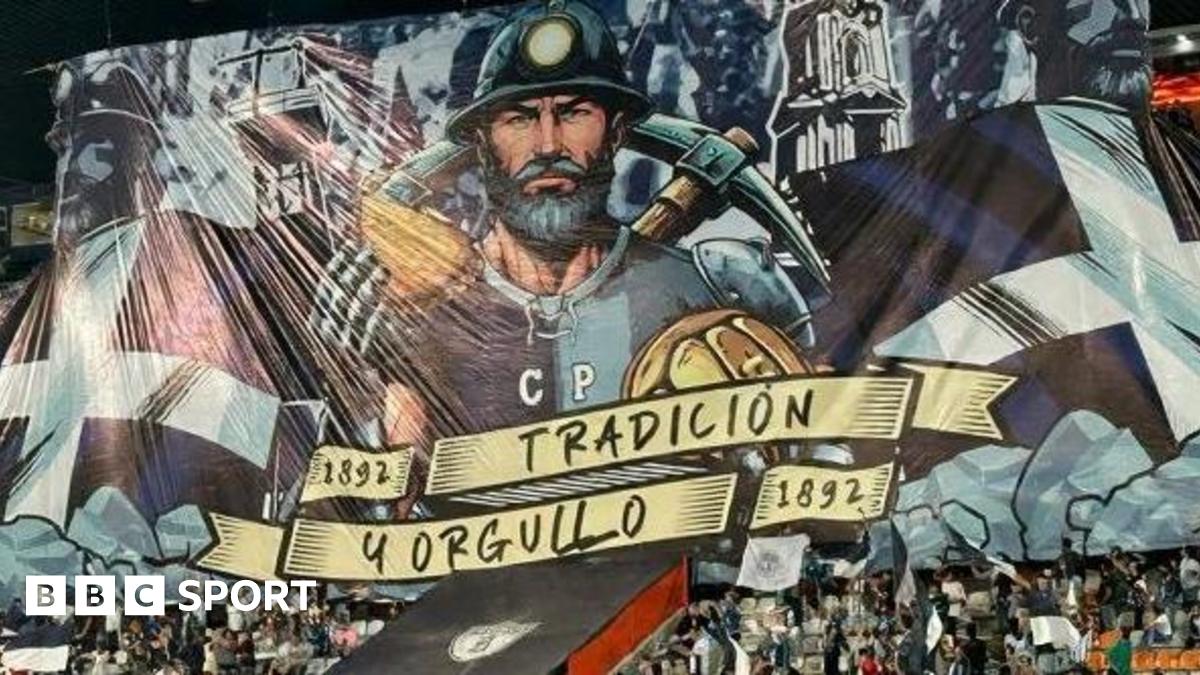
Inside the 25,000-seater Estadio Hidalgo in east-central Mexico, fans unfurl a tifo featuring a miner.In one hand he wields a pickaxe and the other a pastry with a distinctly crimped edge.He is flanked by two flags, both the same - black with a white cross.To anyone with a knowledge of the United Kingdom's southernmost county, this figure is instantly recognisable as Cornish.The fans of CF Pachuca, widely recognised as Mexico's first football club, are paying tribute to their roots.They are celebrating the story of how miners from Cornwall played their part in introducing the game to what has become one of the world's most passionate footballing nations, and one of this year's World Cup co-hosts.The transatlantic connection between Hidalgo and Cornwall starts all the way back in 1824.Mexico's mining sector, which had been the bedrock of the country's economic success, was in ruins after a decade-long war that resulted in independence from Spain.Its plight caught the eye of a mining engineer called John Taylor, who had been investing in Cornish mining with great success, particularly in the village of Gwennap."He had taken a group of failing and flooded mines and turned them into a success and he looked at the mines of Real del Monte and thought, 'I can do the same there'," Cornish mining migration specialist Dr Sharron Schwartz tells BBC Sport.His involvement led to hundreds of Cornishmen going back and forth between Cornwall and Hidalgo in the coming decades.With this migration came a sharing of ideas, culture - and, of course, sport.The first mention of a football team in Pachuca came in 1892, with a local newspaper article reporting on a reorganisation of the team due to a "schism"."There had been a rift between those in Pachuca and 'the mountain men', meaning those in Real del Monte."When I read this I laughed, I thought 'how Cornish'. The Cornish love a schism."They were told to get their acts together and make their team stronger."In 1895, there was a meeting held by Rule that led to the decision to amalgamate the Pachuca Cricket Club, the Pachuca Football Club and the Velasco Cricket Club to create a stronger entity.Thus was formed Pachuca Athletic Club.Rule donated a piece of land near his hacienda for the club to host games, on the condition that games would not be played on a Sunday because of his Methodist beliefs.By 1902, other clubs had started to pop up in areas such as Orizaba in Veracruz.To this day Orizaba contest the view that Pachuca were the first club in Mexico, and claim that title as their own.These two clubs, as well three others, came together to create the first recognised football league in Mexico, the Liga Mexicana de Football Amateur Association.Orizaba won the first league title in 1902, with Pachuca having some success of their own in the early seasons, winning the title in 1904-05.It was not just the mining men enjoying the football on the pitch - Cornish women were also a key part of the matchday spectacle."They loved to turn out [for matches] and often wore the club colours," says Dr Schwartz."The first reference to pasties being consumed [in Mexico] was when play stopped in a cricket match. I can imagine those were cooked by the Cornish ladies."Pasties were an essential for miners at the time, with their thick crust acting as a 'handle' for dirty hands and pastry tough enough to survive being dropped down a mineshaft.The constant stream of people going between Hidalgo and Cornwall led to a bizarre shared culture thousands of miles apart, with Dr Schwartz saying it was common to hear Spanish spoken as widely as English in bars in Redruth and Camborne.Antony Martin, whose great uncle William Bray was one of Pachuca's prominent players in the early 1900s, says Bray's siblings brought some Mexican customs back to England with them."They used to have bread with every meal, which is a Mexican thing, and put cayenne pepper on everything. Absolutely everything. They both still spoke Spanish," says Martin."But I remember my grandmother and great aunt were so proud of Cornwall and everything to do with Cornwall, yet until they were teenagers they'd spent their whole lives in Mexico in Pachuca."Pachuca welcomed their first Mexican player to the squad in 1908, with David Islas invited to join the side by the son of a Cornish miner from St Blazey named Alf Crowle.Crowle, who became player-manager, was hailed for breaking down ethnic and social barriers, with Dr Schwarz adding: "He's probably Cornish-Pachuca's most famous son, as far as football goes."In the early 1920s, many people in Pachuca, including Crowle, moved away in the aftermath of the Mexican Revolution, causing the football club to lose many of its players.Pachuca played their last tournament in the 'amateur era' of the Mexican game in 1922, with the original club folding soon after.A new version of the club was reformed in 1950, before folding once more and then reforming again in 1960.The club have since gone on to do big things, including winning seven Mexican league titles and the Copa Sudamericana in 2006.Pachuca fan Eduardo Hernandez says the club's heritage is important to fans."The club is very proud of it. We were founded by miners and they brought the football to us. People are aware of that."Back in Cornwall, while grassroots football is part of the weekly agenda, the county is not best known for its footballing exports.But Kernow FA, who are a 'football alliance' that represent Cornwall at international level, want to put on a game between their Cornish team and Pachuca in Mexico to inspire the county's football going forward.Mexico, meanwhile, will this summer become the first nation to have hosted a men's World Cup on three separate occasions."In every World Cup, we're the fans who bring the most colour and energy to the tournament, and being at home it has to be even better," Mexico's second all-time leading goalscorer and former Pachuca striker Jared Borgetti says."We want the world to realise what we Mexicans are like."If there's one thing the transatlantic cousins of Cornwall and Hidalgo will have in common this summer, it's that they'll be enjoying the World Cup with a pasty - or paste - in hand.




Most Popular