
Grassroots to the Olympics: the past, present and hoped-for future of rugby in Singapore
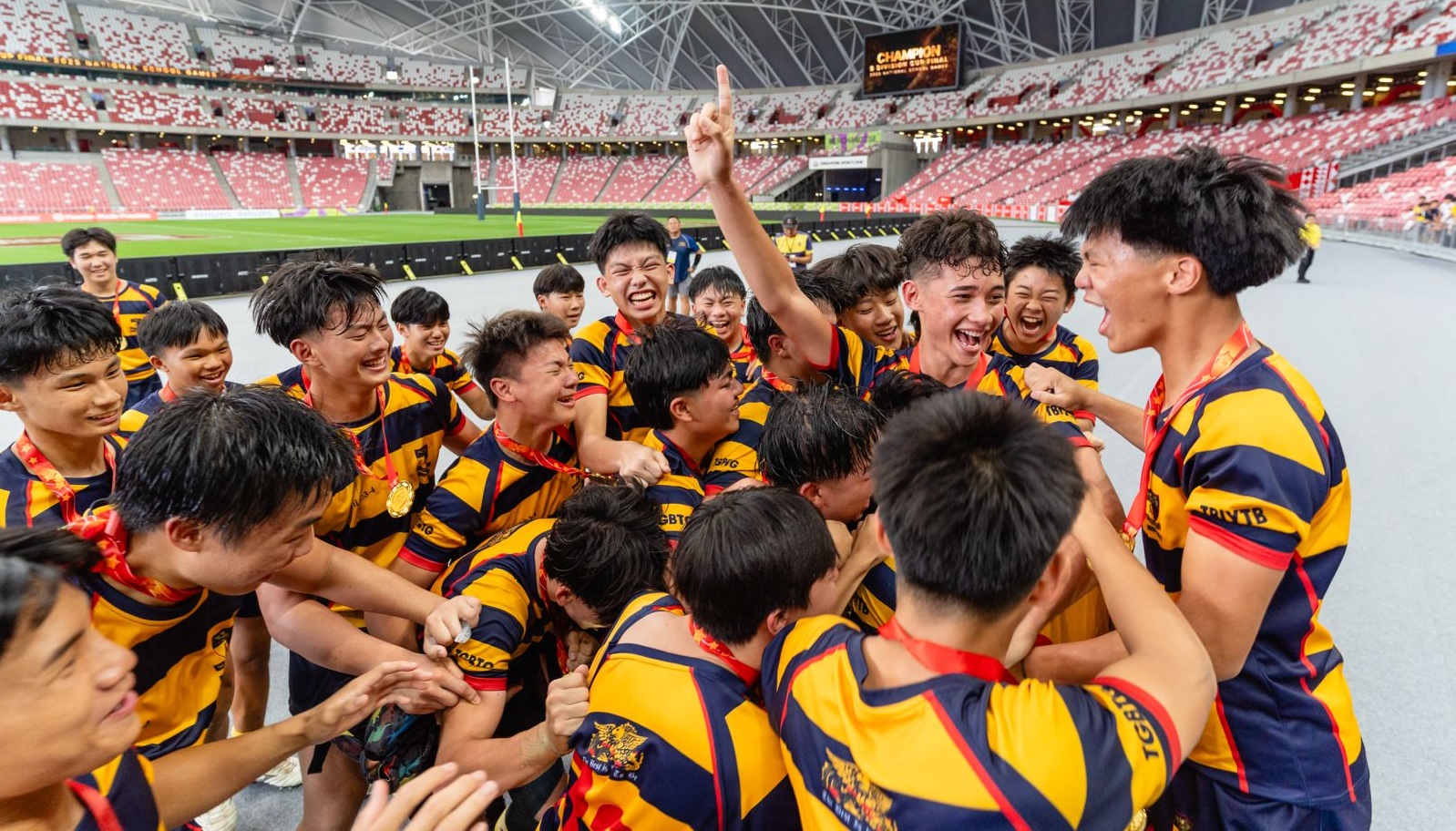
The day after commentating on last year’s HSBC SVNS tournament in Singapore, I was back at the National Stadium for a very different rugby occasion. The crowd, this time, was not there for international stars, but for unknown schoolboys playing in an Under-17 XVs final.My nephew, Oliver, was among them, representing Anglo-Chinese School Independent (ACS) against long-time rivals St Andrew’s. It was one of those classic school sporting afternoons which brings home why grassroots rugby matters so much to so many.Granted a rare afternoon off the famously exacting Singapore school day, hundreds of classmates, along with family and friends, filled an entire lower tier on one side of the stadium.The stands rippled with colour: the blue-and-gold hoops of ACS Independent on one side of the half-way line, the blue-and-white of St Andrew’s on the other. Drums, horns and choreographed chants echoed round the stadium throughout the afternoon, and the St Andrew’s team performed a haka-style challenge before kick-off.The match lived up to the atmosphere. It was a tough, skilful, closely-fought final with some excellent tries scored. It ended in heartbreak for St Andrew’s and jubilation for ACS, with raucous celebrations in the stands and, unsurprisingly, some very proud parents — plus the odd uncle!Singapore, humid and urban, is not synonymous with rugby, but schools rugby in the city-state, as the thrumming National Stadium demonstrated, is in rude health – perhaps more so than in traditional rugby countries like England and Scotland.The historic schoolboy game is the annual ‘Kiwi Cup’ between St Andrew’s and Raffles, a fixture ongoingly sponsored by the New Zealand High Commission.It was founded in 1968 by a former New Zealand diplomat, in an attempt to grow a rugby brotherhood between Singapore and New Zealand, and appears to have succeeded admirably. The schools season runs from February to June, with fierce competition in both Fifteens and Sevens.Beyond schools, Singapore’s junior rugby ecosystem is supported by a network of busy clubs that foster young talent, such as Centaurs, Oldham, Tanglin and Singapore Irish.Many students play for both their school and club team in the same season, and tours to rugby-playing neighbours like Malaysia and Hong Kong are all part of the Singapore junior rugby experience.Several members of the ACS team who won the Under-17 Fifteens final, also claimed the title at the Singapore Cricket Club (SCC) Sevens, an event in its 76th year.Held on the historic Padang in the heart of the city, the tournament brings together junior, school, club, and international teams, and is, by any standards, a great rugby event.Harlequins and England star Marcus Smith was playing junior rugby for the Centaurs club in Singapore before he moved to Brighton College in the UK, and then launched into the professional scene.More recently, another standout has emerged: Iestyn John, who was the star performer then aged only 15, for ACS in the schools final. He scored a stellar solo try, kicked goals from long range, and has since taken up a scholarship at Clifton College in Bristol. With dual Singaporean and Welsh heritage, his future options are well and truly open.But for every Marcus Smith or Iestyn John, there are many others whose rugby journeys stall. Which raises a question: what happens to the hundreds of talented, well-coached players who do not make the leap overseas, to elite rugby schools or one day academies?Few are better placed to answer this than Adrian Chong, who has been Head of Rugby at ACS for 27 years.Chong has overseen generations of players and believes much of the drop-off is driven by structural and cultural realities rather than lack of passion or ability. “Singaporean parents,” he said, “will always say education comes first, and that’s a given here. On top of that, we have mandatory National Service. Those two years between 18 and 20, or 19 to 21, are crucial for any sportsperson.”Compounding the issue is that rugby is no longer an official sport in the Armed Services. Where once players undertaking National Service trained almost daily in the military, competing at a high level, today they can only turn out for local clubs if time, permission and army commitments allow.“When I was in the army, rugby was almost semi‑professional,” Chong recalled. “We trained nearly every day and played against strong teams, including New Zealand forces sides. When you play New Zealand teams regularly, you grow very fast.”Chong also believes the sport is still missing crucial uptake among local Singaporeans. At junior levels, rugby participation remains dominated by immigrant families. “It’s probably 60/40 or even 70/30 in favour of expats,” he said. “Local kids often start rugby at 10 or 11, which means they can be four or five years behind kids from Australia or England who started much younger.”Examining the broader picture is Sidney Kumar, a former national Sevens and XVs player who is now general manager of the Singapore Rugby Union.Coached by Chong in his youth, Kumar understands both the promise and the problems of the Singapore rugby system. “We’re at a crossroads,” he said. “We need to better connect the vibrancy of schools rugby with the structure of our clubs and junior development pathways.”While some schools, like St Andrew’s, are connected to senior alumni clubs, Kumar notes that adult rugby in Singapore often retains an amateur culture.The challenge, he says, is clarity: “From a player’s perspective, is there a clear pathway? If I finish with my junior club, can I move into senior rugby and realistically push for national selection, even with National Service obligations?”Funding pressures, as everywhere, from the USA to England to Fiji, are also an issue. As many countries do, Singapore directs a lion’s share of government support towards Olympic sports, which means sevens enjoys greater backing than XVs.This has allowed the SRU to invest strategically, including appointing Paul Tietjens (son of New Zealand Sevens legend Sir Gordon) as a full‑time national coach. A great boon for Sevens, which the longer game has yet to mirror.“We have short and medium‑term plans [for Sevens],” Kumar said. “That’s why we brought in and invested in someone like Paul. Our goal is to be top-two in Southeast Asia. At the most recent SEA Games, our men finished second, and our women third.“Rugby Asia is a tough region, and we’re currently around seventh or eighth, but we want to climb.”“We then have a target to win the SEA Games gold medal in 2029, when we host the tournament.”This weekend, during the HSBC SVNS at Singapore’s spectacular National Stadium, Olympic athletes will light up the field, and hundreds of bright young rugby players will watch from the stands, dreaming of one day being out there themselves.In Singapore, schoolboy rugby is thriving. The challenge lies not in starting players on their rugby journey, but in creating the structure and opportunities to keep them on it.



Most Popular




)