Australia could face a trial by spin... in South Africa
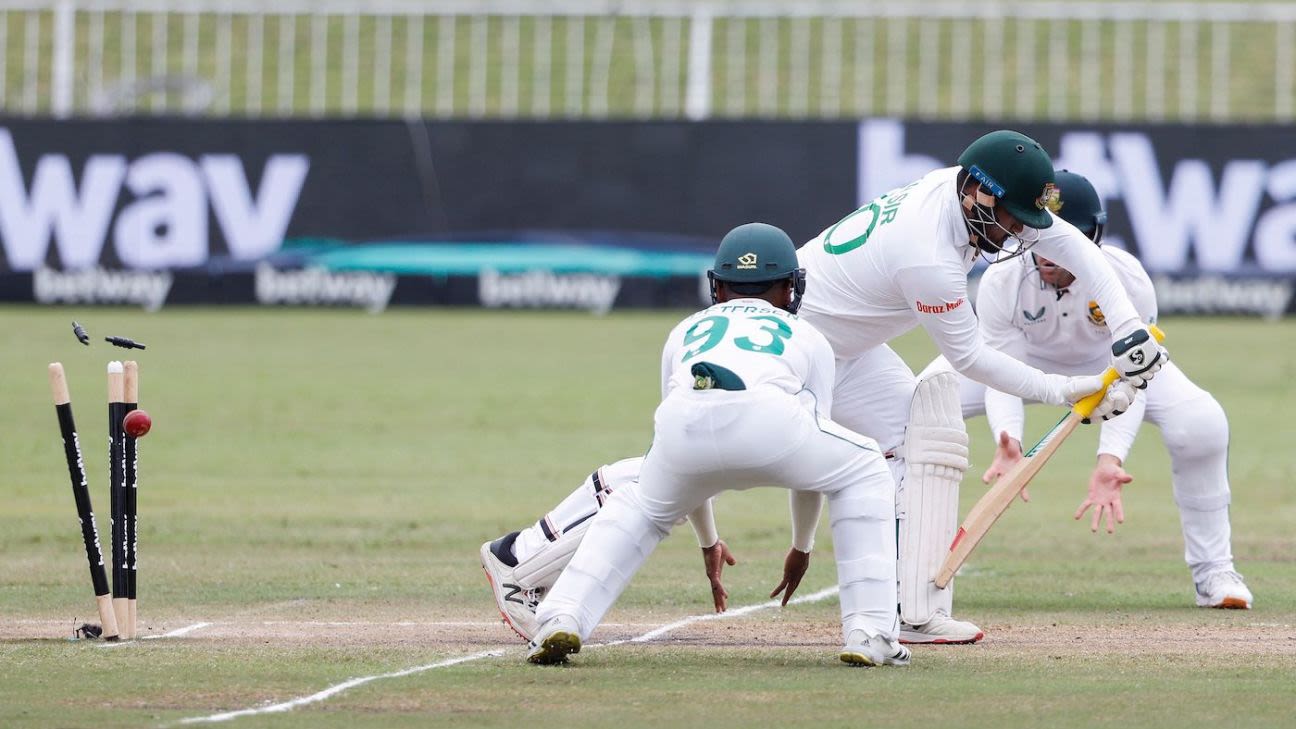
Recent Tests in Durban and Gqeberha have shown a tendency to bring slow bowlers into playAndrew McGlashanPublished: Sep 25, 2026, 12:42 PM (3 hrs ago)1:34Connolly: We didn't need to attack the spinners as much as we didAustralia's huge run of Test cricket over the coming months was always likely to feature a trial by spin, but it could come earlier than some may have expected.The five-Test series in India next January and February will no doubt include plenty of spin, yet it could also be a significant aspect of the opening Test against South Africa in Durban, and potentially beyond that.Keshav Maharaj and Bjorn Fortuin shared six wickets in the opening ODI at Kingsmead and were the key reason the home side were able to quell Australia's power-packed start. The 67-run loss follows Australia's poor record against left-arm spin ODIs: since the last World Cup they have the worst average against that style of bowling (21.57) out of a list of 20 teams. It is a weakness that will need addressing ahead of next year's World Cup.However, with an eye on the upcoming Tests, it wasn't so much the wickets themselves that were significant; of Maharaj's four, Mitchell Marsh, Jack Edwards and Adam Zampa won't be part of that series and Cameron Green played a shot he would be unlikely to do in a red-ball game, while the same could apply to Fortuin's dismissals of Cooper Connolly and Josh Inglis although they are both in the Test squad. It was more the assistance on offer for the spinners, which suggested there is at least a chance that the Test surface early next month could also aid them.Since Australia last played a Test in Durban in 2018 - a contest where Maharaj took nine wickets but reverse swing was the decisive aspect for Australia - there have only been three more at the venue, but spin has had some significant moments.In 2019, left-armer Lasith Embuldeniya took a five-wicket haul in Sri Lanka's epic one-wicket win. In 2022, Maharaj and Simon Harmer shared all ten second-innings wickets against Bangladesh (and were the only bowlers used) with Harmer having also taken four in the first innings.On the flip side, the venue's most recent Test in 2024, also against Sri Lanka, was dominated by the quicks with Marco Jansen taking 7 for 13 when the visitors were skittled for 42.There is a thought, too, that spin could play a substantial role in Gqeberha (formerly Port Elizabeth) during the second Test. While South Africa is synonymous with pace and bounce, the coastal venues have long had varying characteristics from those on the Highveld.In the 2022 series against Bangladesh, Maharaj and Harmer repeated their trick of taking all 10 in the second innings in Gqeberha after Durban. In 2019, Dom Bess and Joe Root had been key to England's victory. The ground's most recent Test, featuring Sri Lanka in 2024, saw Maharaj and Prabath Jayasuriya trade five-wicket hauls.Since the start of 2020, among venues to host at least 10 first-class matches in South Africa, Kingsmead has the lowest average for spin of the established Test grounds (27.62) while Gqeberha is a close second on 27.85.Australia won't be taken by surprise if conditions do aid spin next month. They have delved into the numbers and it's why Matt Kuhnemann has been included in the squad. While it would take extreme conditions for him to partner Nathan Lyon, it provides specialist back-up if needed."There has been some recent history where there have been spinning conditions," head coach Andrew McDonald told cricket.com.au. "We feel as though we've got good coverage. If we got caught in a two-spinner conversation, we'd probably want one going either way. That's where Matty Kuhnemann got the nod."Beyond an unlikely pairing of Lyon with Kuhnemann in South Africa, if Australia do want to bolster their spin options it could bring Connolly into the frame with his left-arm spin after overcoming a back injury which prevented him bowling earlier this year. Connolly was an eye-catching selection in the Test squad and could be an alternative for Beau Webster at No. 7, or even higher up the order if significant changes are made. However, in 13 first-class matches he has just five wickets at 68.60.RelatedWhat's wrong with cricket in October in South Africa? How about: everything?Labuschagne's retention highlights Australia's biggest concernMaharaj stars as Australia collapse to spin after Breetzke hundred"There's still a couple of weeks to the first Test, I'll just concentrate on the next two games, but obviously it's nice to see a wicket turning," Connolly, who played his previous Test in Sri Lanka in early 2025, said after the first ODI where he was only given a single over. "It helps me, I guess, put my best foot forward to playing in that team. But we've still got two one-dayers to go."However, none of the Tests referenced above were played in October, a month with precious little previous data in the format. In 2016, New Zealand toured for a two-match series in August (held in Durban and Centurion) but since readmission only five other Tests have been played in South Africa before November. This is a very early-season contest and brings a degree of uncertainty for everyone. The spin-dominated Bangladesh series, for example, was played in late March and early April at the very tail end of the summer.Something else worth noting is that South Africa are also dealing with a lengthy list of injuries among their quicks with Kagsio Rabada and Lungi Ngidi the main Test bowlers under a cloud. But, while that may suggest it would make sense to provide conditions to favour Maharaj and Harmer, this South African management team are not known for involving themselves in pitch preparations and leaving it to groundstaff to prepare what suits their venue the best.There are a multitude of factors that will play a part in how events play out next month. Spin may not emerge a decisive factor, but if it does prove to be it shouldn't be a shock.Inputs from by Firdose MoondaAndrew McGlashan is a deputy editor at Cricinfo



Most Popular