
Marta Kostyuk: Foundation of support
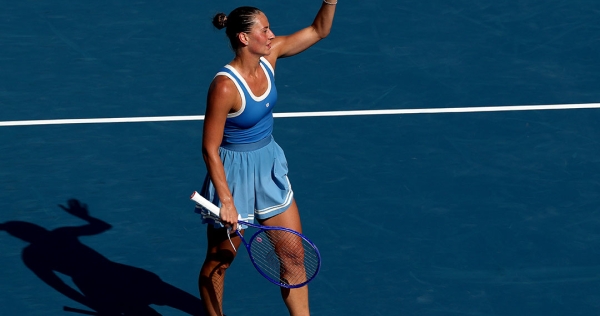
This article first appeared in the June/July 2026 issue of Australian Tennis Magazine. To order your copy, visit tennismag.com.au.In the all-too-often insular world of professional sport, one which underpins a single-minded drive for a competitive edge, Marta Kostyuk has developed a more balanced understanding.Aware of the need to align her mind and body to live up to her early-touted potential, the former junior champion at Melbourne Park is in the most fruitful stretch of her career.More than eight years since she reached the AO third round on debut, she swept back-to-back titles on clay including a maiden WTA 1000 title in Madrid. After a first Grand Slam semifinal run at Roland Garros, she peaked at world No.12.While the spotlight continues to narrow on her, Kostyuk – mature beyond her 23 years – remains unaffected. She has never been the type to make it all about herself.Despite inevitable challenges and more recent peaks, Kostyuk has never deviated from using her platform as a passionate advocate for those struggling through the horrors of occupation since conflict gripped her nation, Ukraine, four years ago.Success this season came early when Kostyuk beat three straight top-20 opponents – Amanda Anisimova, Mirra Andreeva and Jessica Pegula – before she fell to world No.1 Aryna Sabalenka in the Brisbane International final.Afterwards she paid tribute to the “incredibly moving” show of support for Ukraine from the crowd throughout the week.“I play every day with a pain in my heart and there are thousands of people who are without light and warm water right now,” she said, her voice cracking with emotion as she addressed the Pat Rafter Arena crowd. “It’s minus 20 degrees outside, so it’s very, very painful [for them] to live this reality every day.”The plight of those in the throes of the conflict is never far from mind. Their wellbeing remains an at times overwhelming concern for Kostyuk and her compatriots on tour.A return to Ukraine in the off-season brought it all home. Kostyuk’s visit to Superhumans Centre Lviv, which specialises in the rehabilitation of Ukrainians who have lost limbs in the war, has had a profound impact.“It was incredible. I went through the whole process of how they create the prosthetics,” Kostyuk told Australian Tennis Magazine in Brisbane. “They were telling us a story about one boy and he lost a leg in a shelling. They said that by the time he grows up he needs to change around 100 prosthetics because as you grow your limb changes, your weight changes.“So as you grow, they need to change it. It’s a very expensive process and very mentally demanding because you need to learn how to live your life with this. It was a very strong experience for me.“I met a lot of people there with prosthetics who do rehab there, and a lot of them have gone on to work there after to help people who are coming in.“It’s amazing that this kind of centre exists because it gives opportunity for a lot of people, you know, who are suffering from lost limbs in the war, or just civilians from missile shellings or drone shellings. It was crazy.”Kostyuk’s support has not been isolated to Superhumans. In 2023, she and her parents established her eponymously named foundation, which aims to inspire Ukrainian youth to grow through tennis. The foundation has recently focused on bringing the sport back into physical education curriculums across Ukraine, despite the backdrop of war, through the School Match Point program.The need for children to sustain some form of exercise has only become more acute and the project brings tennis into public schools to help address the issue, providing equipment and training teachers to run the lessons.“I just feel like with the war the physical activity in kids drastically dropped,” she said. “You know, if you don’t have any physical activities your mental health suffers a lot. Your physicality, your wellbeing just suffers. So we thought, how can we implement tennis? We decided to go by region and Lviv was the first as it is close to the [Polish] border on the safer side and a lot of kids moved there. We started in 15 schools, so it's a good start.”The program makes tennis accessible to children even with limited infrastructure, so classes can be held in standard gymnasiums without the need for specialised courts.According to a study from the Kateryna Biloruska Foundation in 2023 titled ‘How the health of children has changed during the war’, 46 per cent of Ukrainian children have not attended physical education classes since the beginning of the full-scale invasion. Before the war, this figure was only 15 per cent. It had likely climbed higher since.“We live in a time when children move less, attend school less regularly, and have little access to sports,” Kostyuk wrote on her foundation's website. “Tennis is not about elitism, it’s about health, discipline and development … This year alone, we plan to involve 15 schools and introduce over 5000 children to tennis, opening up new opportunities for physical development, social integration and a healthy lifestyle.”The homecoming late last year also afforded time to give back via a full-day kids tennis workshop, which former men’s professional Alexandr Dolgopolov helped organise.While Kostyuk had assisted children at her mother’s coaching clinics in the past, none came close to the breadth and scope of this. None carried such weight.“At first when I woke up that day, I was like, ‘OK, I need to like brace myself because, you know, we need to accommodate 150 people and we need to basically work all day’,” she said. “But then as it ended, I was so happy and so fulfilled. “It was a great atmosphere and everyone was happy to be there. It was a little bit of a day of celebration of tennis, I would say, so it was important for people in Kyiv.”Involvement in such initiatives, providing relief and support for her countrymen and women under such trying circumstances, naturally takes a toll. The human impact can be raw and confronting, and Kostyuk and her team recognise the need to keep her own wellbeing in check.“People who never experienced war can never comprehend what it is,” she told Open Tennis. “Great suffering comes with it. My goal is to have as much balance as I can. At some point I felt that if I wasn’t anxious about the war, I would betray my family, but it interfered with my daily life.“I had to change. Last year I decided I’m not going to have news notifications. You cannot expose yourself to that all the time when you’re not in it.”It is a different story for Kostyuk’s parents, Oleg and Talina, who still live and work in Kyiv. The foundation has helped the family maintain a particularly tight bond even if Kostyuk is unable to return to her home city often. Both parents are heavily involved in its operation.“Everyone is involved and I’m really happy that I get to do this with my family, who has been raising me in tennis, who have all been in tennis their whole life and that we can bring this change,” Kostyuk said.“I think it’s important work to do and if you have an opportunity and possibilities to do it, I think why not make this place better?”Ahead of a return to the Ukraine BJK Cup team, in which spearhead Elina Svitolina helped secure a 4-0 result against neighbouring Poland, Kostyuk took the rare chance to make the trip home to Kyiv to prepare for the claycourt season.A return to the team had added significance, with Kostyuk and compatriots eager to lift Ukraine back into the BJK Cup Finals for the second straight year. The tie delivered a beacon of hope for a nation that has endured years of conflict.“This was the first time that I was properly playing tennis in Ukraine since full-scale war began,” Kostyuk said. “It was the weirdest experience of my life to be practising when the air raid alarms went off.“We kept playing because we just had to finish the practice, but we heard explosions in the distance. Because I am not familiar with this, I was trying to look up at all the people around to see how they were handling it.



Most Popular





England alter squad for second Test against Pakistan
10 hours ago