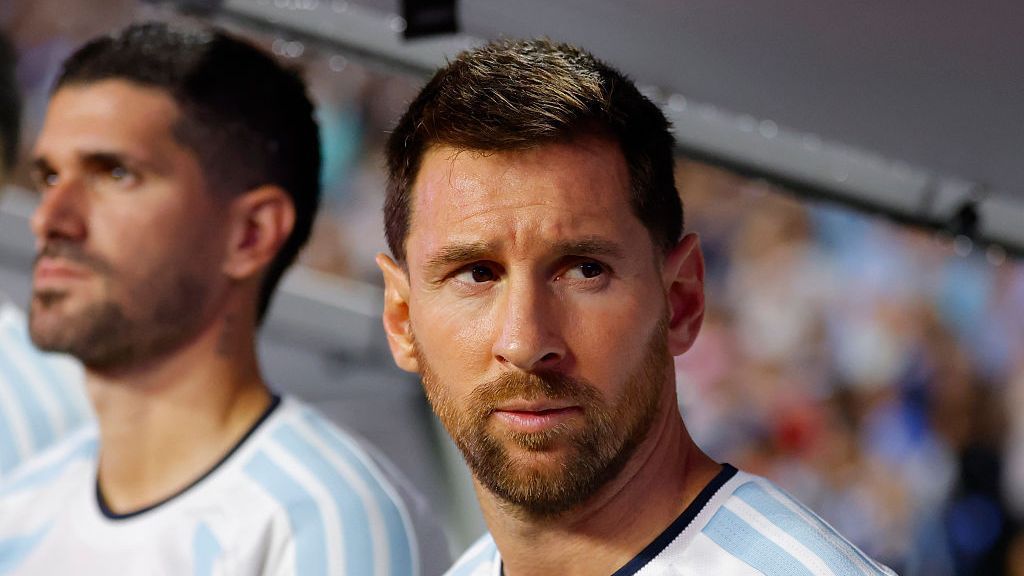
Scaloni Running Out of Superlatives as Messi Continues to Break Records
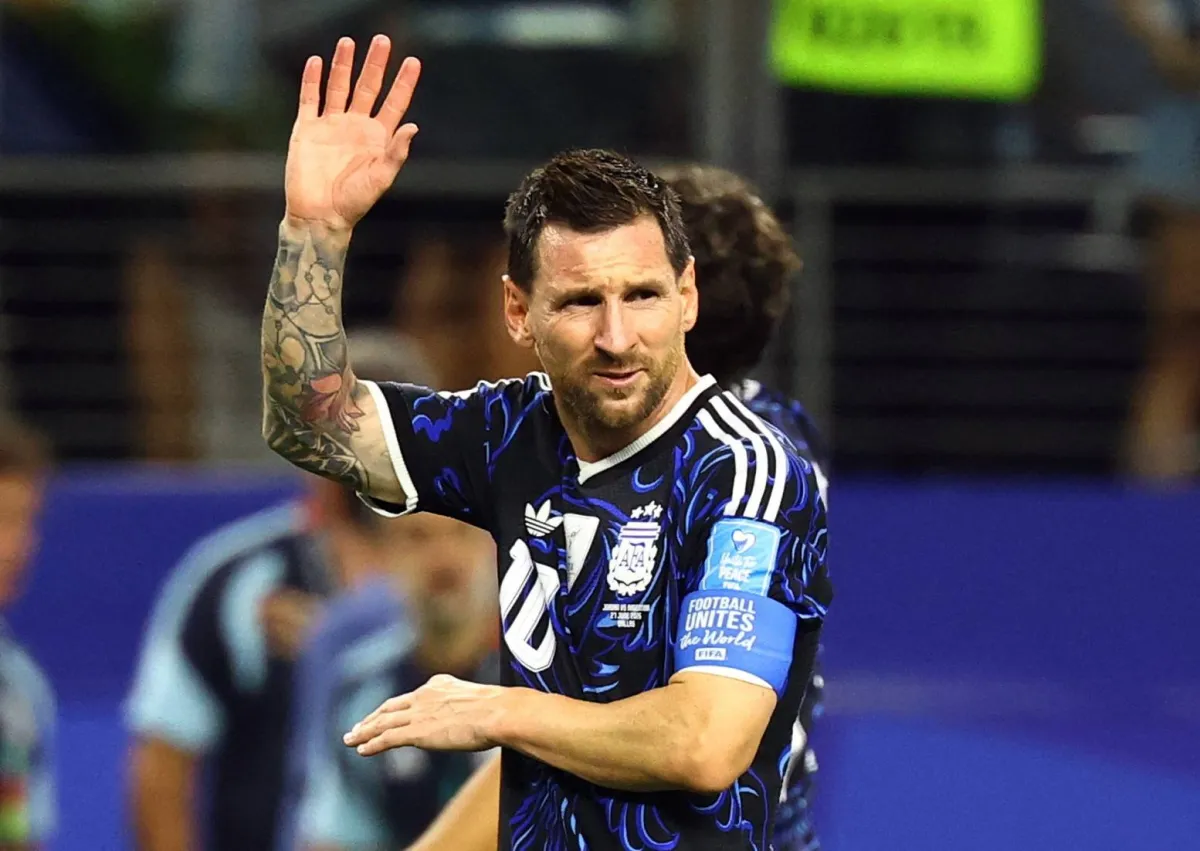
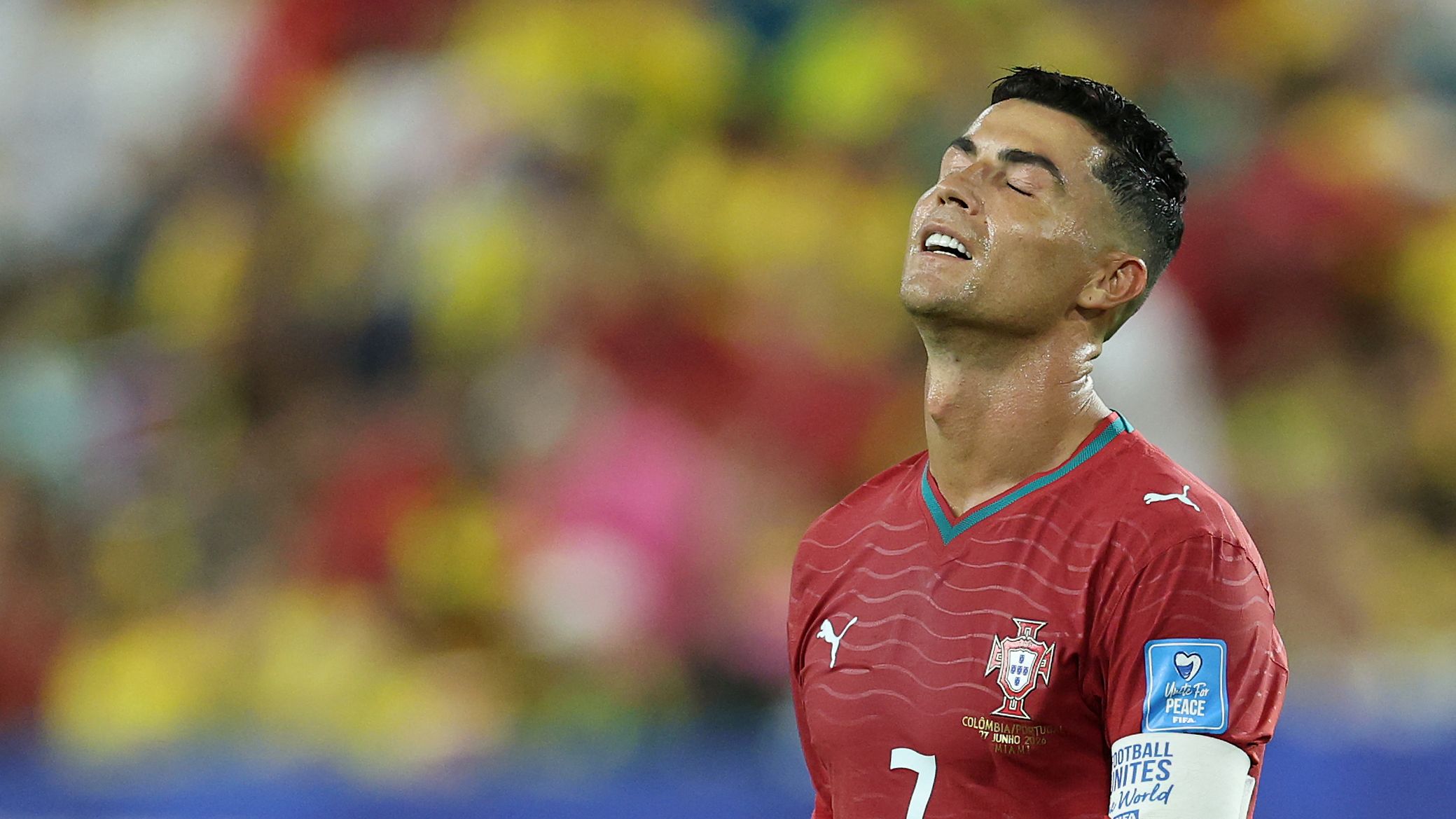
Austria and Algeria played out a thrilling 3-3 draw on Saturday, a result that perfectly suited both sides, sending them into the World Cup last 32 and ending Iran's hopes of reaching the knockout stage as one of the best third-placed teams.The prospect of a mutually beneficial result dominated the build-up, with both sides kicking off with three points and needing only a draw to advance. But there was nothing routine about a Group J finale that exploded into life in stoppage time with two goals and a frantic finish.The drama reached its peak deep in added time when Algeria captain Riyad Mahrez sparked wild celebrations with what he thought was the winner, only for Austria to launch one final attack and level through Sasa Kalajdzic's header in the 96th minute, seconds after he came off the bench, Reuters reported.Journey's "Don't Stop Believin'" fittingly blared over the Kansas City Stadium loudspeakers after the final whistle as players from both teams celebrated qualification."To be honest, I have no words right now for what happened in the last 90 seconds," Austria coach Ralf Rangnick said."I don’t think I’ve ever experienced anything like it, and probably most others haven’t either — being 3–2 down. Regulation time was basically already over and then, with the substitution, we somehow got back into the game. Incredible."A second-string Argentina side beat Jordan 3-1 having already topped the group, while Austria finished second and will face Spain in the knockout stage. Algeria advanced as one of the best third-placed sides and will meet Switzerland.The match also carried echoes of one of the World Cup's most notorious controversies, coming 44 years after the "Disgrace of Gijon", when Austria's 1-0 win over West Germany in 1982 eliminated Algeria and changed the tournament forever.However, few could argue that the two teams were playing for a draw in Saturday's back-and-forth thriller.Austria opened the scoring through Marko Arnautovic in the 28th minute with the game's first shot on target.The 37-year-old timed his run perfectly to meet a pinpoint long pass from David Alaba and, although his first touch was sloppy, Algeria goalkeeper Oussama Benbot was hesitant off his line, allowing Arnautovic to steer the ball home.Algeria's Fares Chaibi clattered a shot off the post late in the first half before the North Africans finally equalized in spectacular fashion through Rafik Belghali just before halftime.After Mahrez kept the ball alive near the byline, Belghali made a dazzling run past three defenders before unleashing a shot into the top corner, which Alexander Schlager had little chance of stopping, for his second international goal.Rangnick's men reclaimed the lead through Marcel Sabitzer in the 55th minute when Konrad Laimer headed the ball down to his feet before cutting a bass back to Sabitzer, who fired home with his first touch from 18 meters for his 27th international goal.The Austria fans were still celebrating when Vladimir Petkovic's Algeria hit back five minutes later.Houssem Aouar was the architect, surging down the left before cutting the ball back to Mahrez in space, the captain curling a clinical finish into the top corner beyond the helpless Schlager.As the clock ticked into the final minutes, whistles and jeers rang around the stadium and some frustrated fans headed to the exits fearing the match was drifting towards the kind of mutually convenient stalemate both teams said would not happen.That set the stage for a spectacular finish, with Mahrez and Kalajdzic exchanging goals in dramatic fashion."You concede the 3-2 in the 94th minute and you think it’s over — what more can happen?" Sabitzer said. "But then we still get a first clear chance. And we still believe. We send a long ball up to the two big guys and then header, header — and 3-3. It’s unbelievable."Mahrez said Algeria would gladly take the point."Yeah, we’re happy," he said. "We’re through to the next round — that’s what we’ll remember, that’s the most important thing. We put in a serious, disciplined performance, we were solid. In the end, we could have won, but it’s a draw. The most important thing is to go through."Jordan will be better off for the experience from their maiden World Cup despite exiting the tournament in the group phase following three defeats, coach Jamal Sellami said after a 3-1 loss to Argentina in Dallas on Saturday.Jordan scored in every game and were competitive, but errors due to inexperience cost them and will be the major takeaway from their debut on the global stage, Sellami told a press conference after the loss to the reigning world champions.“The most important thing we can come away with is for the players to have experienced firsthand what they have trained for all these years. They will be better for it,” Reuters quoted him as saying.“I was telling my players to develop themselves and improve their fitness as they will be up against high level teams, which requires a higher level of fitness. We worked on improving their skills and they will now be much better equipped to deal with such competitions in the future.”“They played three matches and were able to score goals in every one of them. But small errors were very costly and it was due to this that we conceded goals. When you face the world champions, errors will cost you.”“Argentina are one of the strongest teams and have excellent players. We were the only team to score against them (in the group phase). We knew how to play against them.”“We are out of the competition but proud of what we have achieved as a first experience. We went in wanting to learn as many lessons as possible and we did that.”As Portugal and Colombia squared up for their final World Cup group game, top spot in Group K was on the line and the intensity on display from both teams matched the stakes in an entertaining but ultimately goalless draw.Both sides approached the match with a competitive edge that produced an open, transitional game at times resembling basketball in its relentless back-and-forth rhythm.The atmosphere in a full house at Miami Stadium tilted heavily in Colombia's favor, their supporters vastly outnumbering the Portuguese contingent as they imposed themselves, greeting every spell of Portuguese possession with a chorus of whistles that turned the stadium into a temporary home venue, as Portugal boss Roberto Martinez had predicted.On the pitch, what stood out for Colombia was the collective understanding between the players, their movement co-ordinated without appearing rehearsed, each player creating space for the next pass.Portugal's pressing structure was repeatedly bypassed, not through brute force but through Colombia's well-drilled timing, imagination and technical quality.Such was the flair and confidence they played with, and there were moments when the team in yellow shirts and blue shorts evoked memories of the great Brazil sides of yesteryear.But Portugal found greater balance after the hydration break. Bruno Fernandes forced Camilo Vargas into an excellent reflex save from close range, while Joao Felix went close as the match opened up.The improved spell highlighted Portugal's attacking potential, even if it also exposed their vulnerabilities whenever they lost possession.Colombia, meanwhile, lacked precision in front of goal rather than opportunities. Goalkeeper Diogo Costa, who was named man of the match, responded whenever required while Ruben Neves's goalline clearance prevented what appeared a certain opener.The issue for Colombia was not chance creation but conversion and at the centre of nearly everything positive was Jhon Arias.His energy and willingness to carry the ball forward disrupted Portugal's reshuffled midfield. Martinez's alterations struggled to contain him and Colombia's attacking fluency frequently flowed through the Palmeiras midfielder.The withdrawal of Ruben Neves at the interval reflected Portugal's broader difficulties in controlling midfield spaces while the introduction of his namesake Joao Neves was an attempt to restore order."We gave Colombia the match they wanted," Martinez rued. "This was a very open match, probably more so than we would have liked."Portugal, however, remained dangerous in transition. Cristiano Ronaldo and Felix combined for what was their clearest second-half opportunity, only for the move to end with both a missed finish and an offside flag.Colombia responded immediately when Richard Rios failed to convert, underlining how quickly momentum shifted from one end to the other.Perhaps the most impressive aspect of the evening was the refusal of either side to relent in the oppressive heat with qualification already secured."Facing an opponent like that, with this style of football, our fans and this heat -- it felt like we were in Barranquilla," Reuters quoted Colombia coach Nestor Lorenzo as saying.The intensity of the game never dropped even in added time when Colombian fans erupted after Davinson Sanchez headed home, only for the offside flag to go up when VAR ruled him offside by a toe.The final whistle was met by another huge roar from the 64,478 spectators, appreciation for the effort of the teams not simply in appreciation of a spectacle but for players who had run their hearts out in stifling conditions.

.png)

Most Popular

Alex Eala ramps up preparations for Wimbledon
10 hours ago