Ken Early: The World Cup is an epic battle between prudent precision and superhuman instinct

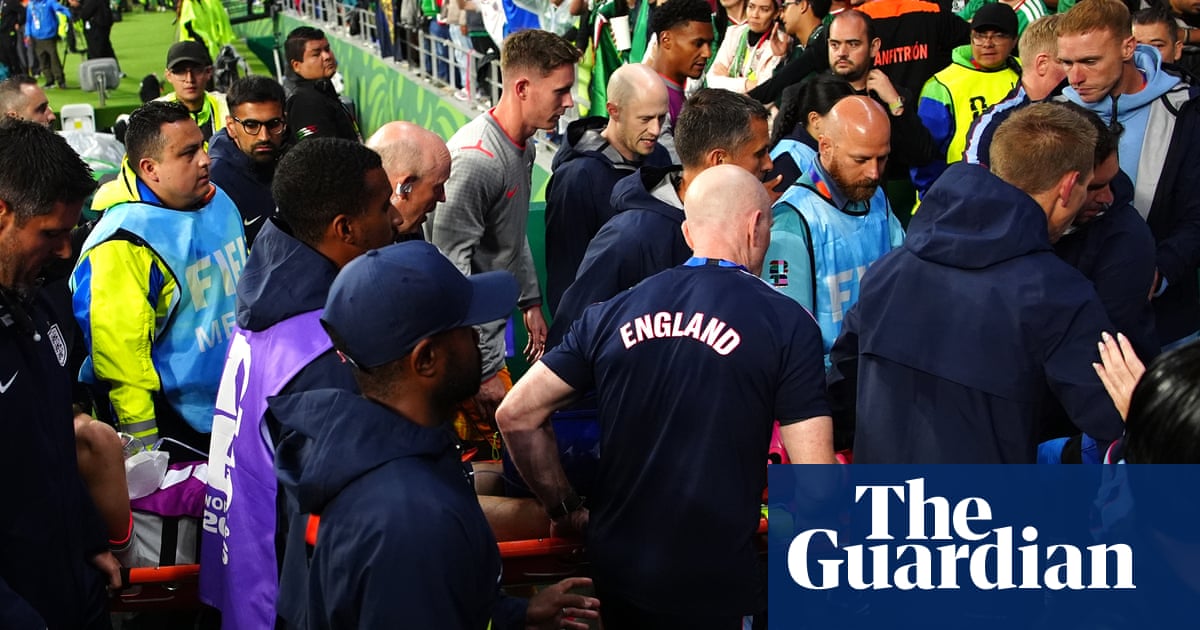
Here is part one of this column: Travelling around the US for World Cup, it is clear why many Americans distrust politicsOn Saturday we were talking about how, 250 years after its founding, the United States of America’s republic of freedom doesn’t feel very free.The steady erosion of the sense of individual human freedom preoccupied 20th century thinkers from Max Weber to Ted Kaczynski, the “Unabomber”. Take Dwight MacDonald, writing in 1945: “Modern society has become so tightly organised, so rationalised and routinised that it has the character of a mechanism which grinds on without human consciousness or control. The individual, be he ‘leader’ or ‘mass-man’, is reduced to powerlessness vis-a-vis the mechanism. More and more, things happen TO people.”One architect of this rationalised world was Frederick Taylor, “the first management consultant”, who wrote in 1911: “In the past the man has been first; in the future the system must be first.”From Monday to Saturday morning, the lives of Europe’s industrial workers were organised according to Taylor’s principles of scientific management.Saturday afternoon was football, and football was colour, crowds, songs, wind, rain, sun – everything the darkly regimented mines and assembly lines were not.Football was the place of freedom and forgetting, a place where things didn’t only happen TO people, where they still had the power to create their own reality. In football at least, we still had authentic heroes: Di Stefano, Pelé, Charlton, Best.But the wealthier football became, the more inevitably it would attract the cold analytical gaze of Taylorism.Arsenal just won the Premier League title in May ahead of Manchester City, the previous system-team par excellence, with a formidable new iteration of machine football incorporating ideas taken from militaristic organisation-sports such as American football and rugby.Not everyone liked what they saw. The main recurring debate throughout the season was some variation of: “Has football become robotic/boring?”The debate has carried forward into the World Cup, where it takes the form of “these sexy passionate free-spirited South Americans are much better than the dullard Euroclankers”.Paraguay coach Gustavo Alfaro said after his men had knocked out Germany: “The rivals we had in front of us, with all due respect, had been trained in the best academies in Europe. We, on the other hand, come from the red clay. Our jersey bears the colours of that clay where many began playing barefoot.”Earth and fire, heart and guts versus bloodless system-brained college boys … most will agree this is irresistible stuff.Someone who’s written extensively on this theme is the Argentinian journalist Roberto Parrottino, who comes from a tradition of poetical Argentinian football writing that includes the likes of 1986 World Cup winner Jorge Valdano and El País journalist Diego Torres. (The novelist Eduardo Galeano is Uruguayan, but his writing on football has the same kind of flair).In a recent column for Cenital titled A Response to the Eurocentric Gaze, Parrottino again made the case for the Argentinian alternative to the Europeans’ “we-know-best” arrogance.Parrottino cites Argentinian sociologist Daniel Schteingart, who asks: “So why are South Americans so good at football?” He goes on to identify “a murmur that can be heard, but cannot be captured, a residue that no explanation can fully account for, part of what makes it legendary”.Parrottino contrasts the sinuous and intuitive Argentinian style with the European “hegemonic football [which] relies on high pressing, ‘fixed’ wingers and strong, tall, athletic players for transitions into open play. Argentina ignores this and chooses a different path.”“One must heighten one’s sensory and perceptive attention,” he says, “The Argentine national team demands this because that is how it interprets and interacts with the game.“With the ball in its possession, with the calm before the storm. Passes like lightning and thunder. Pauses that deceive with the sensation that nothing is going to happen. Moves like explorations, built from the outside in [eight of Lionel Messi’s 12 attempts to break through the lines against Austria were down the central channel]. Until the game unleashes itself in that collective journey of the team towards the goal.“Without the ball – unable to defend with it due to fatigue or the opponent’s dominance – they drop back without clinging to the crossbar and keep the opposition at bay. They defend, as in boxing, by throwing jabs.”It’s possible to appreciate an argument well-made while also being alert to signs of the Argentinians being high on their own supply.Much as they might like to believe it, they’re not some last lonely rearguard standing against the disenchantment of the world. For centuries, Europeans have been mourning the retreat of magic before modernity.When the poet Keats, in 1820, wrote that science would “unweave a rainbow”, or Friedrich Schiller, in 1788, lamented the departure of the old gods from the world – “all that is beautiful, all that is noble they have taken with them, all colours, all music of life; to us is left the soulless word” – they were thinking about the same thing.So please, Argentina, don’t teach granny how to suck eggs.Parrottino’s account of Argentinian intuition versus mechanised European football-by-numbers echoes Victor Hugo, in Les Misérables, on the contrasting natures of Napoleon and Wellington at the Battle of Waterloo (The Irish Times has quoted this before in one of its periodic lashings-out at France’s manager Didier Deschamps, but will do so again because it’s so good).“On one side, precision, foresight, geometry, prudence, an assured retreat, reserves spared, with an obstinate coolness, an imperturbable method, strategy, which takes advantage of the ground, tactics, which preserve the equilibrium of battalions, carnage, executed according to rule, war regulated, watch in hand, nothing voluntarily left to chance, the ancient classic courage, absolute regularity;“On the other, intuition, divination, military oddity, superhuman instinct, a flaming glance, an indescribable something which gazes like an eagle and which strikes like the lightning, a prodigious art in disdainful impetuosity, all the mysteries of a profound soul, associated with destiny; the stream, the plain, the forest, the hill, summoned, and in a manner, forced to obey, the despot going even so far as to tyrannise over the field of battle; faith in a star mingled with strategic science, elevating but perturbing it.“Wellington was the Barême of war; Napoleon was its Michelangelo; and on this occasion, genius was vanquished by calculation.”Messi is the Napoleon of football, but dualities are never as clean in reality as in the imagination.As Napoleon’s “indescribable something” owed much to his mastery of Wellingtonian “geometry” at the French military academy, so the clipped efficiency of Messi’s genius was sharpened in the Catalan-Dutch school of system-football. La Masia made him the minimalist Maradona.On Friday night, Argentina beat Cape Verde 3-2 with a minimalist Messi masterpiece and then two set-piece goals from their centre-backs that would have had Mikel Arteta wiping a tear from his replicant eye.There are Argentinians who think in the “European” way, such as the coaching renegade Marcelo Bielsa, discussed at length here recently.Last Tuesday Bielsa conducted a public World Cup debrief in which he revealed that the Uruguay players had repeatedly begged him to stop coaching them so much.Bielsa, an obsessive watcher of videos and compiler of notes in different-coloured pens, said he had always done video analysis sessions with players: what you did right, what you did wrong, how you can improve. In his view, the willingness to do this work was a basic element of professionalism.So why did Uruguay’s players resent it? Many concluded it was because they were too dumb to concentrate on anything longer than a TikTok video. True maybe of some but not most of the players.More likely the problem was that once certain important players had decided they “weren’t having” Bielsa, the rest just followed along – the way a classroom turns against a teacher seen as weak.Why were those ringleaders “not having” Bielsa in the first place? Is it possible that something within them rebelled against the idea that they would be going out on the pitch in the World Cup finals to serve as the instruments of somebody else’s will? They didn’t want to be told every last detail of what to do. At least not by him.Some players do want to be told what to do. Look at the England players running to Thomas Tuchel during a first-half injury stoppage when they were losing 1-0 to DR Congo. “What do we do, boss?”By reputation Tuchel is one of the foremost theorists of the Euroclanker school. Unlike most coaches at this tournament, he designed his ideal England team on the drawing board then picked the players whose characteristics suited the system’s precise requirements. This is how he ended up leaving talents such as Cole Palmer, Trent Alexander-Arnold and Adam Wharton out of his World Cup squad.But to give him his due, judging by what we actually see of him talking to his players, he seems much more concerned with managing their emotional state than with tactical instructions. People first, then system.People before system is the basic principle of Argentina’s way. For head coach Lionel Scaloni the feeling in the group is paramount. Creating and maintaining this positive feeling is his priority, more important than the details of any tactical plan. As Argentina’s national team analyst Matías Manna has said: “One barbecue is worth 20 video meetings.”If Bielsa’s idea could be summed up as “the team that makes an honest effort to follow these objective rules on the pitch will play good football”, then Scaloni’s could be “only the team that feels good about itself can play good football”.In a recent documentary, The Scaloni Method, the Argentinian players describe their coach’s shambolic yet strangely effective team talk before the 2022 World Cup final.Emiliano Martinez remembers Scaloni starting off with some tactical points. “Blah blah, Fideo [Ángel di María], you’ll give this bloke, Koundé, a nightmare down the left, take on all the shots… You know – it was rubbish! He was playing a video, talking for two minutes. And then, well, I don’t know, he starts crying.”Scaloni begins to weep, so much he can’t get the words out. “I want to tell you… [sobs] … and every time he tried to speak, it just got worse and worse.”Scaloni appeals to his assistant Pablo Aimar – “Pablo, you speak.” But he too chokes up. Aimar turns to a coach, Walter Samuel, a former hardman with Inter. “But he was even worse than Scaloni.”Eventually the analyst, Manna, manages to say: “Well, we should all be really proud.”Rodrigo de Paul says: “It was the worst team talk in the world. But it was a team talk in his own way; he certainly got his message across. Sometimes you don’t need to say much for us to understand.”We remember how Argentina played on the night.The divide here is not as simple as “collectivism versus individualism”. Everybody knows football is a team sport and that for a team to win the players have to work together.But work together how? Is it better to follow a top-down plan laid out by the coach (who may or may not be a genius) or to build the connections between players so they get better at creating solutions in the moment?Which kind of leader would you prefer? Bielsa, staring at the ground, intoning a masterplan forged by half a century of obsessive thought and study? Or Scaloni gazing at you through tears of love, chin wobbling, too emotional to express coherent instructions?Circumstances vary, probably neither extreme is ideal. In the end, whatever the personal style, whatever the chosen path to victory, the best leaders are the ones who can make you believe your destiny lies in your own hands.



Most Popular