Tatiana Prozorova Forced to Withdraw From Singapore Semifinal After Being Hit in the Face During Doubles Match

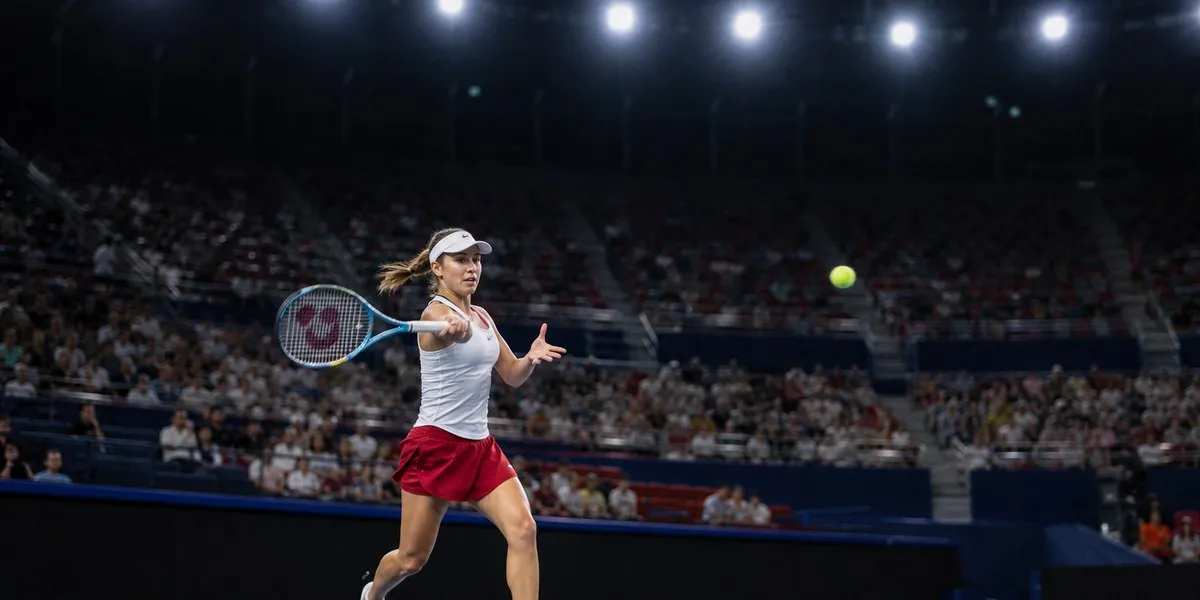
In a shocking turn of events, Tatiana Prozorova has been forced to withdraw from her semifinal match at the WTA 500 event in Singapore under the Tour's concussion protocol.The Russian player, who was arguably playing the best tennis of her career so far this week, will now miss out on a major opportunity after an incident in which a ball hit her near her face during a doubles match earlier Friday.AdvertisementTatiana Prozorova Forced Out After Doubles IncidentProzorova had already secured her place in the Singapore singles semifinals when she took to the court for her doubles match. However, disaster struck near the end of the contest when one of her opponents, Miyu Kato, hit an overhead shot that struck Prozorova near her face.The match was immediately stopped as tournament officials and the medical team rushed to tend to Prozorova, who was lying on the court. Thankfully, the player appeared to recover shortly afterward and remained fully conscious following the heavy blow.Unfortunately, due to the incident and the WTA Tour's concussion protocol, Prozorova was automatically forced to withdraw from one of the biggest matches of her career. She had been scheduled to face Talia Gibson in the singles semifinal Saturday, a decision that has left the Russian player deeply disappointed.Tatiana Prozorova Expresses Frustration Over WTA Concussion ProtocolProzorova was left absolutely stunned by the decision, which has also jeopardized her participation in next week's WTA 1000 event in Beijing. Under the concussion protocol, players are required to observe a minimum six-day no-contact period after an incident that places them under the protocol.AdvertisementTaking to social media, Prozorova, who remains ranked outside the world's Top 100, shared her frustration with the decision:"Guys, unfortunately, the organizers withdrew me from the WTA Singapore Open 500 qualifying match. Today, during the doubles match, one of the opponents hit a smash in my direction; it grazed my cheek and hit my shoulder. Things like that happen sometimes. The physio called to the court insisted on taking me off-court to run a specific test. Unfortunately, I didn't know I could refuse. The test wasn't easy. Given that I'd spent over three hours on court each of the last three days, I was fatigued, and I struggled with some of the exercises—like standing on one leg with my eyes closed. To be honest, even when I'm fresh and well-rested, I find that difficult anyway. I explained this to the physio, too. Of all the exercises, that was the only one they weren't happy with, even though I passed all the others. The physio also pressured me, implying I couldn't make my own decisions and needed at least six days (!!!) of rest from tennis—which sounds crazy, considering I was perfectly fine. After our doubles match ended, I completed my recovery routine and had dinner; I felt great. But unfortunately, the physio was following a specific WTA protocol and pressuring the organizers regarding my condition. My team and I had a long discussion with the organizers; throughout the process, the physio pressured everyone present and even claimed I wasn't capable of taking responsibility for my own life. The organizers' decision really upset me. My dream week came to an end today…"WTA Concussion Protocol Raises Questions After Prozorova WithdrawalThe decision has sparked discussion about whether the WTA's concussion protocol is appropriately applied in every situation. While the Tour plays an important role in protecting players who experience significant trauma or head injuries, Prozorova's case raises questions about how individual incidents should be assessed.AdvertisementThe protocol is designed to prevent players from returning to competition before they have had sufficient time to recover and receive appropriate medical clearance. However, incidents involving potential head injuries can vary significantly, which raises the question of whether a more individualized assessment could be considered in certain circumstances.Prozorova's incident has brought attention to the balance between player safety, medical decision-making, and athletes' ability to participate in matches after an on-court incident.The Last WordFor Prozorova, this comes as an unfortunate blow. Not only has the incident ended her run in Singapore, but it could also sideline her for other events while she completes the required six-day no-contact period. The Russian player has stated that she felt ready to return to competition as soon as tomorrow. However, the concussion protocol means that her participation in next week's Beijing tournament could now be in doubt.AdvertisementMedical professionals' assessments should be taken seriously, particularly when player safety is involved. At the same time, Prozorova's case highlights the importance of clear communication between medical teams, tournament organizers, and players throughout the assessment process.As the WTA continues to refine its approach to concussion management, incidents such as this could prompt further discussion about how protocols are implemented while maintaining the highest possible standards of player safety.Main Photo Credit: Danielle Parhizkaran-USA TODAY Sports



Most Popular