
The Wimbledon final that will never be repeated: Pat Rafter, Goran Ivanišević and the rain

The Athletic has live coverage of the 2026 Wimbledon men’s final.THE ALL ENGLAND CLUB, London — In sports as in life, it is rare that something will categorically never happen again.A Wimbledon men’s final held over to Monday from the tournament’s second Sunday because of rain, and therefore opened up to the public?That will never happen again.The construction of roofs on Centre Court and No. 1 Court, the two biggest stadiums at the All England Club in southwest London, means that even the wettest Wimbledon on record will be able to stay on schedule — and that the 2001 men’s singles final between Goran Ivanišević and Pat Rafter will forever have an untouchable place in tennis history.The strangeness of the occasion, and the wild atmosphere provoked by something Wimbledon had never seen before, was a fitting environment for statistically the most unlikely champion in the tournament’s history. Goran Ivanišević, the Croatian world No. 125 and the only wild card to have won the event, finally lifted the trophy after losing in three previous finals, at a time when he was both wretchedly out of form and managing a shoulder injury.For the man on the other side of the net, there is only one way to remember such a monumental, confounding occasion.“Chaos. Total. Bloody. Chaos,” Pat Rafter, who was on the wrong end of Ivanišević’s miracle in the final, said of the 6-3, 3-6, 6-3, 2-6, 9-7 roller coaster during a video interview last year.Australia’s Rafter was 28 at the time, a year younger than Ivanišević, and had also suffered previous Wimbledon heartbreak. He lost the 2000 final to Pete Sampras, having been up a set and 4-1 in the second-set tiebreak. By then, Rafter had won two U.S. Opens and had very briefly been the world No. 1, but for an Australian in the late 1990s and early 2000s, Wimbledon was seen as the Holy Grail — even more so than the Australian Open.Temperamentally, Rafter couldn’t have been more different from the volatile Ivanišević. His vibe was very much laid-back Aussie surfer dude — an activity that takes up much of his time now — and he was known for his sportsmanship and ability not to take life or himself too seriously.Where Rafter was similar to Ivanišević was how popular he was at Wimbledon, and for the 2001 final, he had an army of Australian fans wearing green and gold cheering him on. There were even members of his country’s men’s cricket team in attendance, taking a break from an Ashes series against England.Ivanišević had plenty of neutrals on side, as well as a host of fans waving Croatian flags.In a conversation at Wimbledon last year, both men recalled the thrumming atmosphere.“Probably the best ever in history,” Ivanišević said.The noise was deafening throughout, with cheers between first and second serves and even during points, as well as soccer-style chants for the players. Because of incessant rain that meant Ivanišević’s semifinal against Tim Henman took three days and wasn’t completed until Sunday, the final was played on Monday with 10,000 tickets available on a first-come, first-served basis to anyone who could pitch up to Wimbledon and get in an overnight queue on the Sunday night.This reporter was one of the people in that queue, aged 14. My brother, a friend and I packed a tent and got a lift from my dad to the All England Club pretty much as soon as the ticketing information was announced on television.Even objectively speaking, there will never be a final like Ivanišević against Rafter. A crowd filled almost exclusively with people who were desperate to be there and had camped overnight for the privilege of watching the most unlikely champion in the tournament’s history.Ivanišević always wore his heart on his sleeve, and so the Wimbledon supporters knew just how crushed he’d been by his three previous final losses. First, he was beaten in five sets in 1992 by Andre Agassi, who somehow won from the baseline in an era when just about everyone served and volleyed on grass.Two years later, Ivanišević lost to Sampras in three sets, when he was bageled 6-0 in the third after losing the first two sets on tiebreaks.Then came the most devastating of the three — losing to Sampras again in 1998, this time in five sets. Ivanišević couldn’t contain his despair during the trophy presentation, and felt like his chance might have gone forever.It certainly seemed that way in 2001. Ivanišević’s ranking plummeted to outside the world’s top 100 thanks to an ongoing shoulder injury. The All England Club still gave him a wild card into Wimbledon, but Ivanišević lost 6-3, 6-4 to the world No. 194 Cristiano Caratti at Queen’s, the annual pre-Wimbledon tuneup, in what he considers to be one of the worst performances of his career.He was so down that the following week, he changed his racket. “Usually it takes a couple of months trying, but I said to myself, ‘I cannot play worse. It is impossible, so why not?’ ” Ivanišević told The Times of London last month.“To be honest, through to this day, if you ask me what happened (at Wimbledon) I cannot explain. It’s not normal.”Ivanišević was a 150-1 outsider to win the tournament, but his wickedly effective lefty serve always gave him a chance on grass, especially in the dying embers of the period when the conditions were still quick enough to serve-and-volley every point.Propelled by that serve and a sense of destiny, he started to work his way through the draw, beating former and future Grand Slam champions Carlos Moyá and Andy Roddick in the second and third round, before taking out home hope and former world No. 4 Greg Rusedski in the fourth round.“The All England Club shouldn’t have given him a wild card because he killed British hopes,” Rusedski joked in a mixed zone interview at Wimbledon this week.And however much destiny may have been at work, Ivanišević was leaving nothing to chance. He had brought his own priest, Father Josip, to Wimbledon five years earlier, and was so superstitious that he changed nothing about his routine throughout the 2001 tournament — including watching the BBC preschoolers’ show “Teletubbies” every day.“When I saw this show, ‘Teletubbies’, I started to laugh so much and I watched for 45 minutes,” Ivanišević said to Rafter last year. “I was like, ‘Wow.’ And I felt good. So I had to watch every day.”In the video interview, Rafter said of hearing this: “I was just sitting there going, ‘My God, what is wrong with you? You are batshit crazy. You seriously are.’”Rafter also found it funny that when he and Ivanišević met, his opponent from more than two decades earlier could remember everything about the tournament, whereas for him, apart from the final, his memories were very hazy. That might partly be explained by his relatively serene path to facing Ivanišević, apart from the semifinals, when Agassi served for the match but Rafter prevailed 8-6 in the fifth.Despite it being a thriller, that semifinal was soon overshadowed by the three-day epic between Ivanišević and Henman that followed. Like the eventual finalists, Henman had endured more than his fair share of nearly moments at Wimbledon. This was his third semifinal, and with seven-time champion and the winner of he previous four editions Pete Sampras out of the way, it was the best opportunity he’d ever had. Sampras had lost in the fourth round to a 19-year-old called Roger Federer, who in turn was beaten by Henman in the quarters.Ivanišević’s victory over Henman is almost as famous as the final. After losing the first set, Henman, who had won their four previous meetings, won the second and third. The latter was a 15-minute 6-0 blitz.Henman looked well on his way to the final, but leading 2-1 on serve in the fourth, the rain began to fall and Ivanišević earned a reprieve. Asked last month on “Served”, Andy Roddick’s podcast, whether he thought he’d have won had it not rained, Henman deadpanned: “I don’t think, I know.”When play resumed on the Saturday, Ivanišević pinched the tiebreak 7-5, and the match was stopped again with him leading 3-2 on serve in the fifth. Soon after the Sunday resumption, Ivanišević broke for 5-3 and that was all he needed to finally end the match almost 48 hours after it had started. He felt that a higher power was on his side. “God wants me to win,” Ivanišević said after the match. “He sent the rain on Friday.”While Ivanišević slugged it out for three days on Centre Court, Rafter was chilling out, watching cricket and rugby union, in which Australia were up against the British and Irish Lions.It was unreserved seating on Centre Court, so when the gates opened the fans ran in and picked the best seats available. A friend of this reporter in attendance could run the 100 meters in 11 seconds, so off he went to snag a perfect view, opposite the umpire’s chair.After all the buildup, Rafter started nervously and was broken in his first service game. “I wasn’t really prepared,” Rafter said. “I mean maybe Goran’s a bit crazier. Well, he certainly is crazier than me. But in terms of him dealing with craziness, he handled it a lot better. But there are moments in sport which you’re part of that are pretty cool.”After losing the first set, Rafter rebounded to take the second, and he did likewise in the fourth after Ivanišević had won the third. Both men have been fairly down on the quality of the match, but it was more a case that it wasn’t until the fifth set that both played well at the same time.Going into the fifth set, Rafter had all the momentum and Ivanišević appeared to be in meltdown. When a second serve of his was called out to go down 4-2 in the fourth — this was pre-electronic line calling, and even the famous challenge system — Ivanišević raged at the umpire and kicked the net in frustration. He’d spoken earlier in the tournament of having three personalities: “Good Goran”, “Bad Goran” and “Emergency Goran”, to mediate between the two.“You had dropped your bundle a little bit,” was how Rafter described that implosion to Ivanišević last year.“I was hoping that was a really big turning point. Because you were someone that could go off the rails a little bit and that momentum swing was with me.“But you stuck in there. I mean, you hung tough.”“I knew, ‘OK, you have to stay calm. This is your last chance. OK, you lose the set, it’s finished. Now you have to focus on the fifth set,’” Ivanišević said.The final set went with serve all the way up until Ivanišević was serving to stay in the match for a third time, down 7-6. When Rafter got to 0-30, he was two points from the title, with the crowd getting louder and louder, and screaming after and during every point. His memory from the rest of the tournament may be limited, but Rafter remembers this game perfectly.“Oh mate,” he said in the video interview.“It’s not the last game I think about, it was the one at 7-6. He had two second serves from 0-30 and he went big lefty kicker out wide on the first one, and I went, ‘Bloody hell.’ And then the second one, he hits the line down the middle on the second serve.“I was there for both, but they sort of checked on me, he had an easy volley, then I missed a return. I was like, ‘Goran, you’re inches away from being down 15-40 or 0-40.’“But he took it on. So you have got to take your hat off to him. He showed some serious balls and he went to some really big plays. It was those Sliding Doors moments, I had the wrong grip and things like that and he picked the right way, so good on him.”Ivanišević held on, and broke in the next game for 8-7, giving him the chance to serve for a Grand Slam title for the first time in his career. What followed was one of the nerviest games ever in a major final.By the end, Ivanišević was so emotional that he was fighting back tears as he went to serve. He even slipped when serving in the first point of the game, before snatching at a volley that was going out, double-faulting and then hitting a second serve ace.When finally up championship point, he had tears in his eyes and prayed as he walked back to the baseline and asked to use the same ball he’d just served two aces with.Then he double-faulted again.He earned a second one.He double-faulted again.“One can only guess at the turmoil raging in the mind of Goran Ivanišević at this moment,” John Barrett said in commentary for the BBC.Before the third, Ivanišević bent down and said another prayer, only for Rafter to then hoist up an inch-perfect backhand lob.“I hit maybe one of the best volleys of the whole match and you hit probably the best lob,” Ivanišević told Rafter last year. “And I’m watching the ball and I’m saying, ‘No, no, this is not happening.’”On the fourth match point, the ever-superstitious Ivanišević had a sudden thought. “I was thinking this is the sign,” he said to Rafter last year. “Fourth final, fourth match point. In that moment, when I saw the ball in the net, it was unreal.”The pair embraced at the net, with Ivanišević almost collapsing with emotional exhaustion, as players hugged and Rafter ruffled his hair fondly. A weeping Ivanišević clambered into the crowd to embrace his father and the rest of his team.It was easy to assume that because of how differently they were wired emotionally that the defeat wouldn’t hurt Rafter as much as it would have done Ivanišević. But it was still a crushing loss for him to process.“To me, Wimbledon’s the greatest event there is. I wanted to be part of that winning circle. So yeah, it meant a lot to me,” he said during the interview, adding that he no longer thought about the final.“Not now,” he said, before saying with a smile: “It took about 20 years, but not now.”The defeat was the beginning of the end for Rafter, and after persistent injuries, he didn’t play again after 2001. He formally retired at the start of 2003, and the 2001 final was his last match at Wimbledon. His meet-up with Ivanišević is the only time he’s been back since.Rafter spent the night as he always did after a Grand Slam final, putting a load of money behind the bar for whoever wanted to join. So there he was with a few hundred people at the Dog and Fox in Wimbledon Village.“I was dancing and cheering with everyone and singing songs, and all the Aussies and everyone’s s–––faced drunk and laughing. Then you finish up there and you make your way home. I mean, what are you gonna do?”Ivanišević meanwhile headed back to Croatia for one of the all-time homecomings. Nearly 200,000 people flooded the streets of Split to celebrate his victory.Injuries meant he didn’t return to Wimbledon until 2004, winning a couple of matches before losing in the third round to 2002 champion Lleyton Hewitt.He’s since remained involved in tennis, including coaching compatriot Marin Čilić to the U.S. Open title and then Novak Djokovic to 12 Grand Slams. He is currently working with exciting young Frenchman Arthur Fils.Rafter by contrast has stayed away, save for a role as a vice-captain at the Laver Cup last year, which he began last year and will reprise in September.It’s tough to get him away from the waves of Broken Head, south of Byron Bay, on the Australian east coast.“My local beach is a few minutes’ drive away, so I surf there, come back to do a bit of work on the property and then play a bit of padel. Life’s good, mate,” he said.Still, for both men, nothing will ever top that frenzied day in July a quarter of a century ago.

Most Popular


South Sydney outside back set for departure, new club
31 minutes ago


BCCI plays down Agarkar's absence
25 minutes ago
.png?w=1120&h=630)
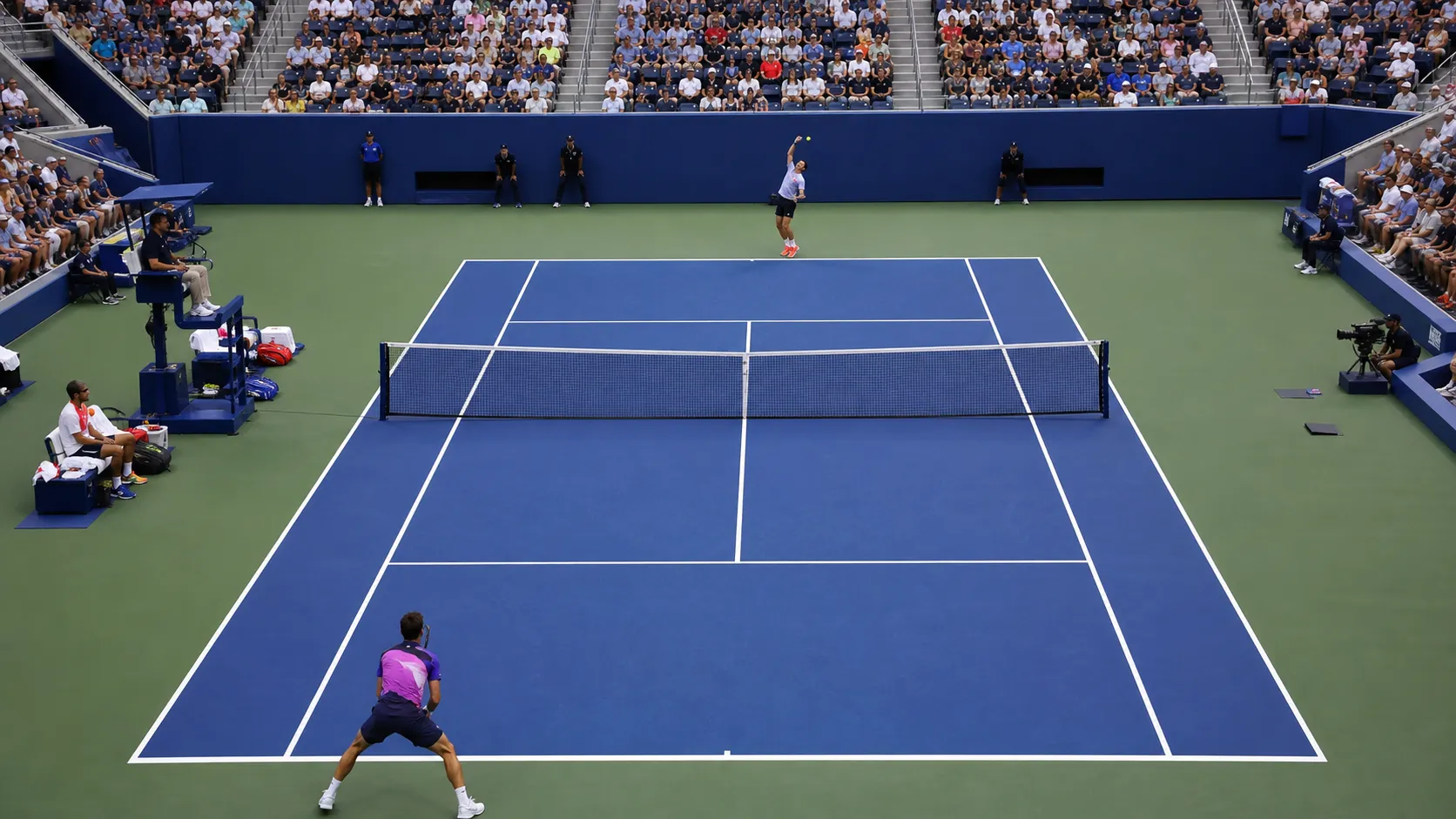
Alex de Minaur eliminated from US Open in second round
59 seconds ago