Back to the future - 1976: Panatta, a “one hit wonder”
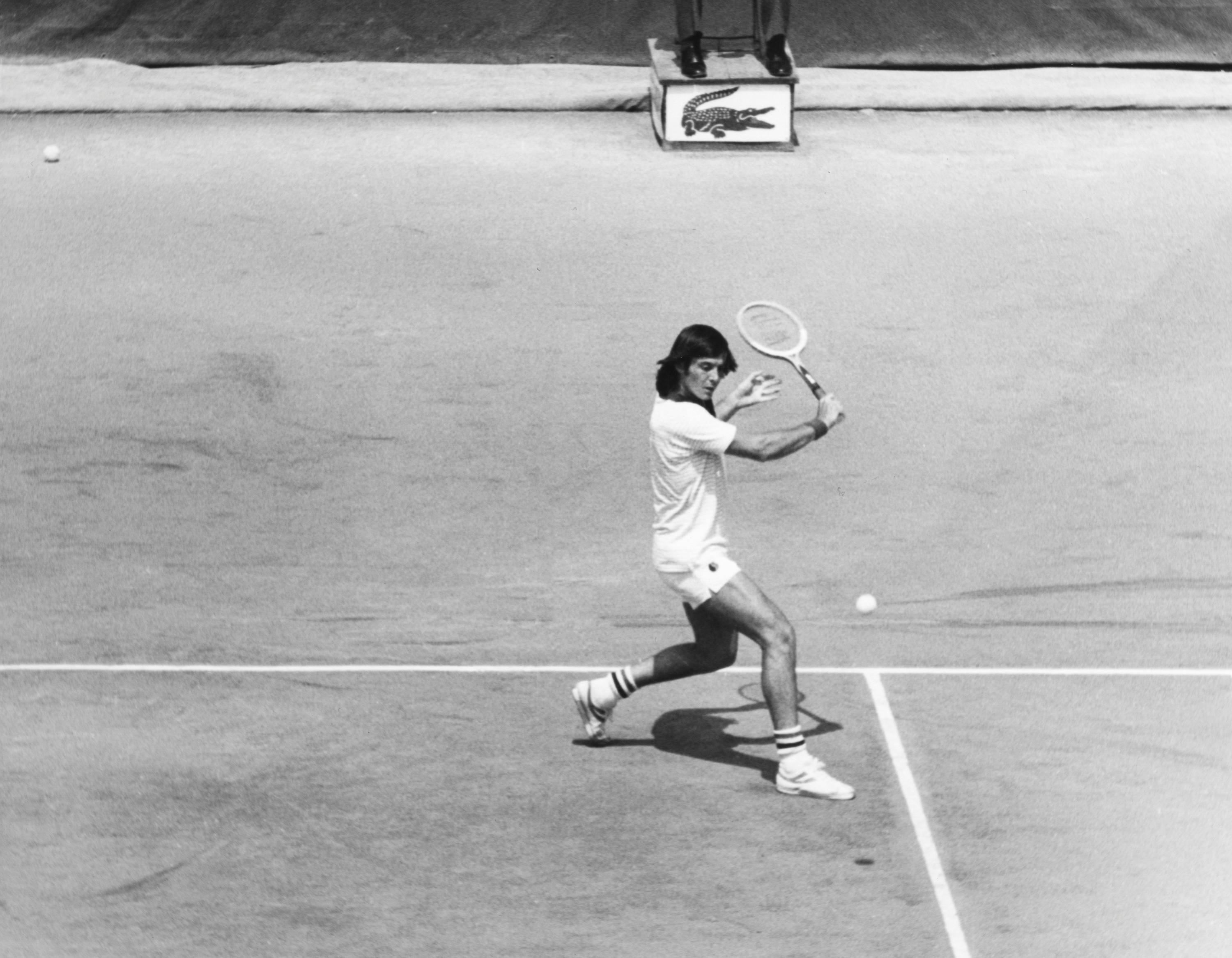
RomanticRoland-Garros 1976 and 25-year-old Adriano Panatta’s triumph was, indeed, the stuff of fantasies. The swashbuckling player from Rome caused quite a stir in Paris with his attacking game, silky touch and fiery temperament. Even before he defeated Harold Solomon in the final, Panatta’s campaign had gone down in tennis history for two good reasons.First, there was the aforementioned match point, which he miraculously saved in the first round against Czech player Pavel Hutka. Arriving in Paris exhausted, just two days after winning the title in Rome - where he had already saved an astonishing 11 match points in the first round against Kim Warwik - Panatta once again found himself backed into a corner. Down 9-10 in the fifth set, he managed to save match point with a desperate dive, which he transformed into a winning backhand volley.It was a legendary shot, as well as becoming historic, because two weeks later, Panatta became the first man in the Open era to win Roland-Garros after being one point away from defeat. Rod Laver had experienced a similar miracle back in 1962, and it was not until Gustavo Kuerten, in 2001, that we would see anything like this again.The second high point was in the quarterfinals against two-time defending champion Björn Borg. Panatta won the match in four sets (6-3 6-3 2-6 7-6), putting a temporary end to the Swede’s reign. Struggling with his mindset after a long fourth-round match against France’s François Jauffret (10-8 in the fifth set), Borg nevertheless held on to the very end, fighting back from 5-3 to 5-5 in the fourth set and saving three match points along the way, only to concede defeat in the tie-break.Panatta proved to be a formidable opponent for Borg, beating him on a total of six occasions, the first being three years earlier in 1973 (in the Round of 16), which was Borg’s first ever appearance at Roland-Garros, when he was just 17 years old. The Italian is the only player ever to have beaten Borg at the Porte d'Auteuil. Not once, but twice.Elsewhere in the draw - in a tournament marked by the absence of World No.1 Jimmy Connors, who had been banned from playing due to his association with the World Team Tennis league - the quarterfinals featured another upset when Guillermo Vilas was defeated by Harold Solomon (seed no.7), also in four sets (6-1 0-6 7-6 6-1).Panatta and Solomon came up against one another a few days later in the final, and the atmosphere was rather frosty between the two, even before their match. They had just played each another in the quarterfinals in Rome, a heated encounter in which the American, convinced that the umpire was favouring the home player, decided to walk away from the match...even though he was serving for the win at 5-4 in the third set!In the locker room, before the final, the Italian looked defiantly down at his opponent, who was more than 15 cm shorter (5’6” compared with Panatta’s 6’). “I said to him, ‘Look at you, you’re so small, how could you ever beat me?’” he later recounted. This taunting might also have been a way of releasing some stress, as Panatta had hurt his hand by trapping it in a car door that morning.The final, which took place in glorious sunshine, was a close one. The Italian’s aggressive playing style could not have been more different to that of the American, who was known for his moonballing and two-handed backhand. At first, Panatta looked like he was heading for an easy victory when he secured a two-set lead with a break in the third. But his opponent stayed true to his reputation and refused to throw in the towel.Solomon rallied in the third set and staged a comeback in the fourth, securing a 6-5 lead. The Italian faltered but did not break. He closed the gap and finally came through in the tie-break to clinch a 6-1 6-4 4-6 7-6 win. Long before Jannik Sinner was even born, he became the second ever Italian man to win a Major, after Nicola Pietrangeli, who won two consecutive titles in Paris, in 1959 and 1960.

Most Popular