Winter Olympics 2026: Niklas Edin, the Swedish ice master whose mother “tricked” him into a stellar curling career
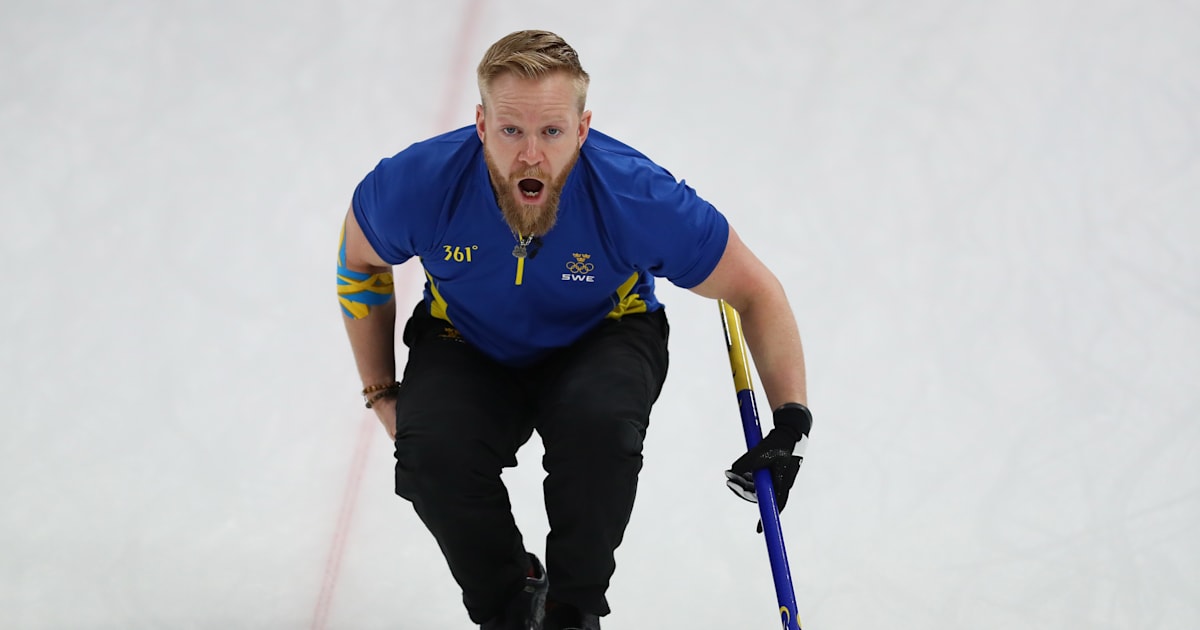
Niklas Edin’s face is set in confident concentration as he lines up a crucial shot.Blond hair and beard framing an ice-cold stare in his eyes – it’s a look that anyone who has watched Olympic curling since Vancouver 2010 will recognise.Angles measured, Edin makes his play.The cue ball strikes cleanly into the Swede’s last remaining solid, doubling back down the table into the pocket and leaving him with a shot on the black to win.We’re in a pool hall in Edin’s adopted home town of Karlstad, on the northern shore of Sweden’s biggest lake, Vänern.It’s here that the 40-year-old winds down with a friend after his training on Karlstad’s curling rink, where the Swedish men’s Olympic gold defence is being plotted.“Especially when we were the world number one in 2018 and we were the team to beat … we knew it was going to be tight, but not winning was definitely heartbreaking,” Edin says of that PyeongChang 2018 defeat to the USA.“It was tough for probably a year after, we were still kind of upset not winning that Olympic final.“It felt like maybe we won't get the chance again.”They did get the chance, and took it, beating Great Britain to gold four years ago – making the buildup to Milano Cortina 2026 very different to Beijing 2022.“That took a lot of weight off our shoulders,” Edin says after we sit down for an interview at his gym in Karlstad.“And now we're still at that level, probably better than we were back then, but we don't have the same pressure – especially from within.“So it's a lot more enjoyable to go into these Olympic Games.”'The beard helps'Partly because of his prowess, partly because of his Viking looks, Edin has become the recognisable face of the sport for casual Olympic curling watchers. “The beard definitely helps,” he says.But the man who leads a team of Oskar Eriksson, Rasmus Wranå, Christoffer Sundgren, and Simon Olofsson onto the ice in Cortina would probably never have thrown a single rock if it wasn’t for the Swedish women of Nagano 1998 – and his mum.“I don't think I even knew there was a sport called curling before that Olympics,” says Edin, who was a 12-year-old growing up on a dairy farm near the town of Örnsköldsvik at the time.“I was watching it, and the Swedish women won a bronze medal. And so the curling club of Örnsköldsvik had an open house.“My mom thought I should try it. And I was like, ‘That doesn't look like a sport for me.’ ”Fortunately for the curling world, Mrs. Edin had the power of FOMO up her sleeve.“I was into tennis and soccer and hockey and a lot of other more physical sports,” Edin says.“So she phoned up three of my friends from the soccer team and was like, ‘OK, I'm going to drive them to the curling rink. You can come if you want to.’ And I was like, ‘You did what, now?’“So she basically tricked me, I guess.”From there it was love at first stone.Natural advantages“It was way more challenging and way more fun than we thought it was going to be. So we actually formed a team right away the following season.“We had a lot of advantages coming from other sports … when we looked at other people trying curling, it was very, very difficult for them.“With the other sports as a background, we got into it really quickly and learned the game quicker than most.”The physicality was also something Edin took into international curling as his first Olympic team of Sebastian Kraupp, Fredrik Lindberg and Viktor Kjäll geared up for Vancouver 2010 – when Sweden’s women won their second of three golds.There was to be no medal for the men on that occasion – and only bronze four years later in Sochi – but Edin says his Swedes had something that had previously been absent from the sport.Bicep curling“We raised the bar with the physical training, what we did in the gym and on the running track.“Just having a higher physical ability than most other teams might have been a little bit intimidating for them.“We had more margin for error – we could make up for not perfect throws by being better athletes, better sweepers, recovering faster between games.“After we got to the top, a lot of other teams started to train and work out harder. And that obviously makes it tougher for us to stay on top.”The buildup to these Olympics has been mixed. The Swedes won the 2024 world title but didn’t medal at all last year – although they bounced back with victory in the European Championships in November, when Sweden’s women also won.

Most Popular
Trump pardons 5 former NFL players
5 hours ago