The Premier League has the money but Europe’s elite are leaving it behind

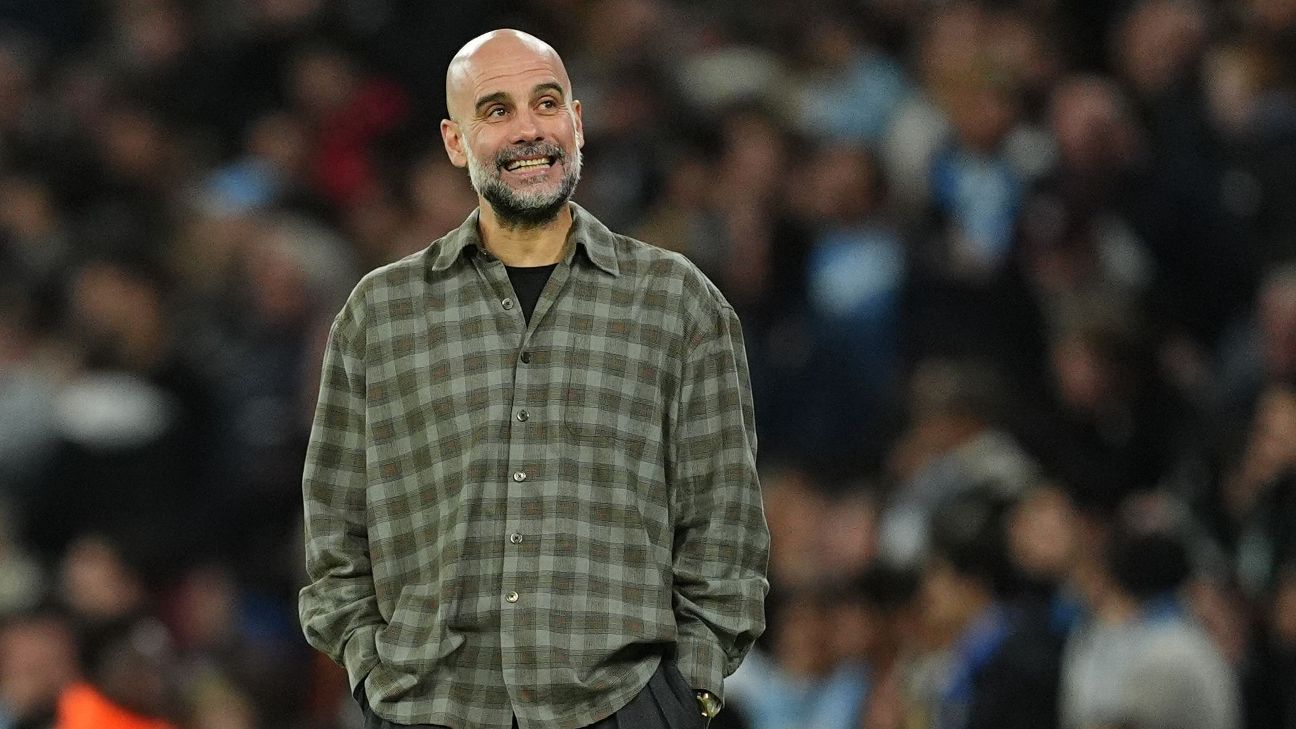
And then there were four, three of them hanging by a thread.At the Etihad Stadium, an evening that began with pyrotechnics and a light show ended with Manchester City knocked out of the Champions League by Real Madrid for the third consecutive season. This time it was a 5-1 aggregate defeat — and if you think that sounds humbling, consider that Chelsea, by far the biggest spenders in world football over the past four years, were booed off at Stamford Bridge after being thrashed 8-2 over two legs by Paris Saint-Germain.At least Arsenal made it through, easing their way past Bayer Leverkusen. But how many English clubs will join them in the quarter-finals? Liverpool will expect to overturn a 1-0 first-leg deficit at home to Galatasaray tonight, but their inconsistencies this season offer their Turkish opponents hope.Newcastle United deserved better than a 1-1 draw at home against Barcelona last week, but tonight’s second leg at Camp Nou looks daunting. Tottenham Hotspur, the Premier League’s butt of derision lately, have a mountain to climb — entirely of their own making, naturally — after losing 5-2 to Atletico Madrid last week.It has been a strange week for English football. But then again it has been a strange season. A mood of attrition has taken hold of the Premier League, the free-spirited, fast-paced football of recent years replaced by a more abrasive style.That didn’t seem to do them much harm in the first phase of the Champions League, where English teams took five of the first eight places, inflicting notable victories over Bayern Munich (Arsenal), Barcelona (Chelsea), Real Madrid (Liverpool and Manchester City) and others. But the knockout stage has brought some swift and brutal reality checks. The league that boasts six of the 10 richest clubs in world football — and an unprecedented six teams in this season’s Champions League — has been left with much to ponder.Tiredness? The competitiveness of the Premier League undoubtedly takes a toll, as does a fixture schedule that leaves so little breathing space for those teams competing on three or even four fronts throughout the winter months. As Liverpool coach Arne Slot pointed out last week, “it’s not helpful for English clubs not to have a winter break”.But that point has been made for years, going back to Sir Alex Ferguson and Arsene Wenger in the early 2000s when their Manchester United and Arsenal teams, dominant on the domestic front, kept falling at the quarter-final stage in the Champions League, beaten by Spanish, German and Italian teams who seemed that little bit smarter both with and without the ball.And it’s funny how those calls for a winter break and “more help from the Premier League” invariably die down during those periods when English clubs are in the ascendancy (from to the mid to the late 2000s and then again from the late 2010s to the early 2020s). Naturally they come back again when performances drop (as happened during an extended period from the early to late 2010s and, Arsenal aside, is at risk of happening again now).There has also been an element of misfortune to this. Chelsea were unlucky, having finished sixth in the 32-team group phase, to face PSG in the round of 16. Manchester City, having finished eighth, could have hoped for a gentler opponent than Real Madrid.Even Tottenham, having finished fourth, could feel aggrieved that they ended up with Atletico when, for example, Portuguese club Sporting CP finished seventh and were paired with the Norwegian underdogs of Bodo/Glimt. For several of the English clubs, the draw was not kind.But ultimately it comes down to whether clubs are in a position to be among Europe’s elite.Manchester City? They are in the midst of an extensive (and expensive) rebuild, having moved on from so many key players from the team that won four consecutive Premier League titles and the Champions League in 2023.Liverpool? Also rebuilding, perhaps a year further back in that process and afflicted by an alarming malaise for most of this season.Chelsea? Forever rebuilding; never has a club spent so much money and had so few reliable performers to show for it.Newcastle? Rocked by Alexander Isak’s transfer request last summer and responded by recruiting poorly, reflecting shortcomings at executive level.Tottenham? Where do you even start?What is extraordinary is the number of goals the English clubs have conceded. Over the course of two-legged ties, Manchester City and Chelsea shipped 13 goals between them. These are the teams with the second and joint-third best defensive records in the Premier League.But one undeniably troubling feature of this season’s Premier League, which has been geared towards set pieces rather than expansive play, is that so few creative and attacking talents have sparkled. To see the way City and Chelsea failed to get to grips with players like Federico Valverde, Vinicius Junior, Bradley Barcola and Khvicha Kvaratskhelia called to mind the struggles of English teams in the early days of the Champions League, torn apart by Barcelona’s Romario and Hristo Stoichkov or Fiorentina’s Gabriel Batistuta.Pep Guardiola spoke effusively about his Manchester City side after their second-leg defeat. He called them “an extraordinary team”, saying how proud he felt of the way they had played in both legs and how, after the start they made last night, he was confident they could overturn a 3-0 deficit until the double-whammy of conceding a penalty and losing Bernardo Silva to a red card for handling Vinicius Jr’s shot on the line. “I would love to play 11 vs 11,” the manager kept saying.But although there were periods early on in both games when his team played boldly, and although Abdukodir Khusanov, Jeremy Doku and Rayan Cherki showed real promise, the fact is they were soundly beaten by a Real Madrid team which, by general consensus, is flakier and less reliable than previous iterations.Guardiola’s team are nine points adrift of Arsenal in the Premier League, having finished 13 points adrift of Liverpool last season. To lose 5-1 on aggregate was harsh, but for long periods of Guardiola’s tenure they have held a convincing claim to be the best team in Europe. They are a long way off that now.Chelsea are even further off. Anyone who imagined their Club World Cup success last summer was a reflection of their progress under this ownership must by now be coming to terms with another year of drift.It is no disgrace to lose to a brilliant PSG team, who knocked out City, Liverpool, Aston Villa and Arsenal en route to winning last season’s Champions League. But to lose 8-2 on aggregate is another indictment of a recruitment strategy in which assembling a vast portfolio of young players has seemed like a distraction from the business of building a team.“That is a real leveller of where this club is at compared to Paris,” former Chelsea forward Joe Cole said during TNT Sport’s coverage from Stamford Bridge. “PSG are the gold standard, they’re champions of Europe, but it showed that Chelsea are a million miles away over the course of two legs. There’s a lot of money being spent and we need to really think about what we’re doing and how we’re doing it. It’s simply not good enough.”Chelsea are an extreme case, not just in the amount of money spent but in the age profile and the number of players they have signed. But the Premier League is defined by financial excess, by clubs generating huge revenues but still, in many cases, making huge losses due to overspending on many players.Eleven of the 13 highest spenders in the global transfer market this season are all English clubs: Liverpool, Chelsea, Manchester City, Arsenal, Newcastle, Tottenham, Manchester United, Nottingham Forest, Sunderland, West Ham United and Bournemouth.Of those 11, only Arsenal, Manchester United, Sunderland and arguably Manchester City can claim to be stronger for last summer’s intake. Tottenham, Forest and West Ham are all battling relegation. In wages, too, Premier League clubs dominate the list of biggest spenders.This is not the point to say “Best league in the world, huh?” On the contrary, it gives an indication of the strength of a league where even smaller clubs can outspend all but a handful of those in Spain, Italy and Germany. That financial strength has inevitably brought a greater competitive intensity than exists elsewhere. And as playing styles have begun to move away from the Guardiola model, with a much greater emphasis this season on physicality, it has added to the feeling that almost every game is a scrap.But equally, Manchester City, Liverpool, Chelsea and Newcastle have all been far from their best this season — and Tottenham most certainly haven’t. All have had periods in recent years when they have looked much stronger than now, when, for differing reasons, they find themselves in a state of flux.Arsenal are the exception, approaching what looks like a peak of performance as they look to land that elusive first Champions League title. The last two seasons have seen them reach a first quarter-final since 2009-10 and a first semi-final since 2008-09. It was striking that Guardiola, in his post-match news conference, looked ahead to Sunday’s Carabao Cup final and called them “the best team in Europe”.PSG, it seems, will have something to say about that. So will Bayern Munich and perhaps Barcelona. So will Real Madrid if, as their coach Alvaro Arbeloa said, they can maintain the standards they set over the two games against City.Liverpool and Newcastle will still hope to progress tonight, but it seemed telling that, when Arbeloa was contemplating Madrid’s potential route throughout the knock-out bracket, he mentioned the likelihood of facing Bayern in the quarter-finals and PSG — rather than Liverpool or Galatasaray — in a semi-final beyond.That is how the Champions League landscape looks right now. Even if Liverpool and Newcastle find a way through their last 16 second legs, it is hard to imagine them progressing much further. Tuesday brought a couple of stark reminders of the need to step up in the spring when the nights get warmer, the stakes get higher and the opponents seem to become quicker to punish mistakes.The Premier League clubs have made far too many of those in the knockout stage. Two are out and four remain, but another difficult evening lies ahead.



Most Popular