
7469 runs, 385 wickets: India’s rare all-rounder whose legacy was tainted by World Cup humiliation, spat with Kapil Dev
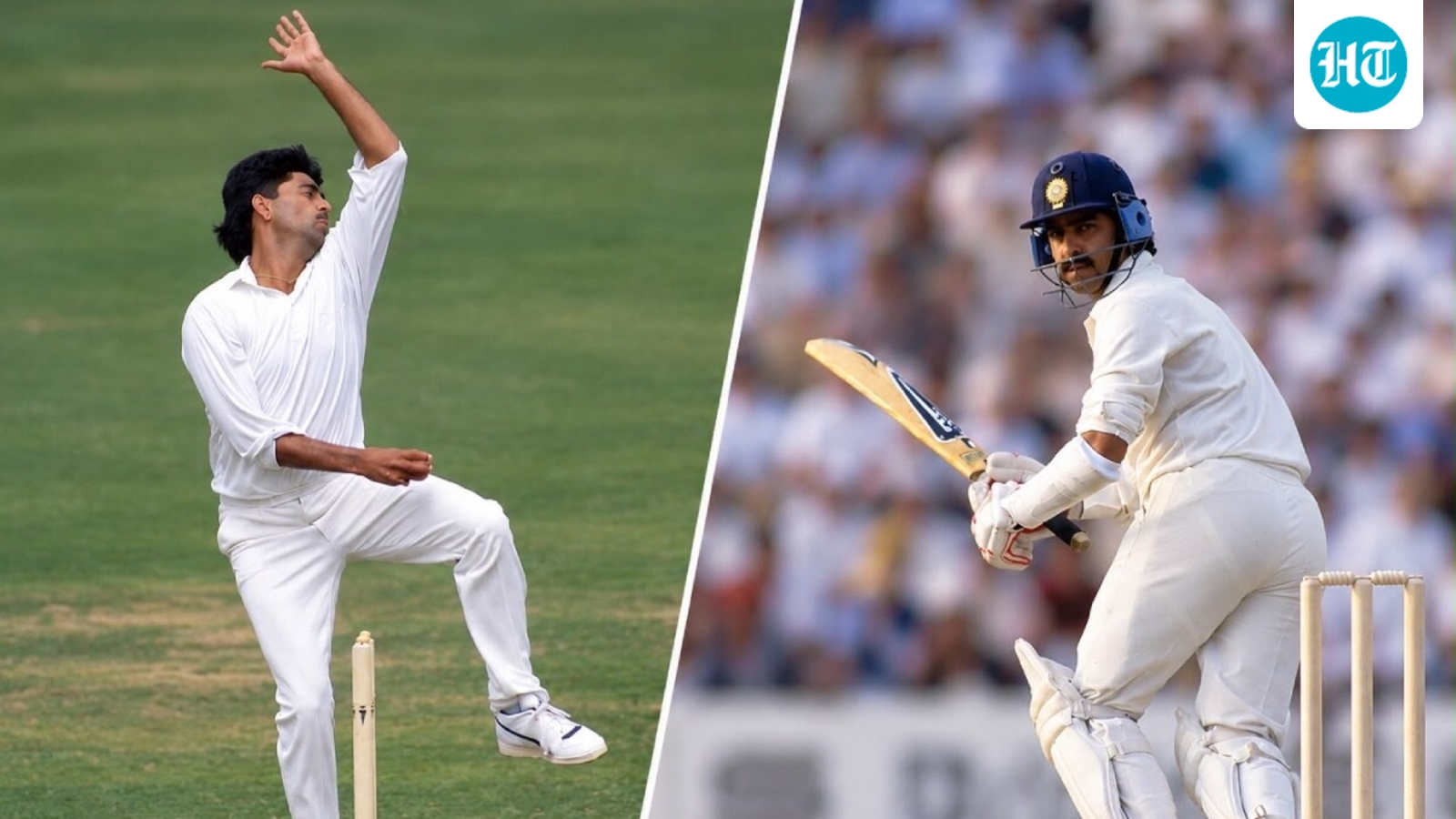
There was a time when India asked one cricketer to perform perhaps the most exhausting double act available in international cricket. He would take the new ball, spend over after over trying to make it swing, and then, when India's turn came to bat, walk straight back out to face the opposition's freshest fast bowlers. It was not an occasional experiment either. Across his career, he opened both the batting and bowling in 20 Tests and 45 ODIs.His journey to that unusual role was hardly straightforward. After making his international debut in 1984, he spent years drifting around the fringes of the Indian side. When the selectors eventually looked his way again, it was because he had produced a domestic season that was almost impossible to ignore: 532 runs at an average of 76 and 39 wickets as Delhi lifted the 1988-89 Ranji Trophy.Even before that breakthrough season, there had been clues. In the 1983-84 Ranji Trophy final against Bombay, facing a side featuring Sunil Gavaskar and Dilip Vengsarkar, he was promoted to open and responded with 122 in Delhi's second innings. Five days after the final ended, he made his ODI debut against Sri Lanka and returned figures of 2/16 from 10 overs. The ability to affect games with either discipline was already there.The man was Manoj Prabhakar, one of the more unusual all-rounders India have produced and a player whose career would eventually contain almost everything: a spectacular comeback, hundreds as an opener, new-ball spells in Pakistan, World Cup humiliation and, after retirement, a match-fixing controversy that transformed how his name was remembered.His response came through domestic cricket. During Delhi's title-winning 1988-89 Ranji Trophy campaign, Prabhakar scored 532 runs at 76 and finished as the competition's leading wicket-taker with 39. Among those runs was a career-best 229 not out against Himachal Pradesh. In the quarter-final against Orissa, he took 6/65 and 4/42, completing a ten-wicket match haul. In the final against Bengal, another four-wicket burst helped Delhi dominate.For a player attempting to force his way back into the national side, there could scarcely have been a stronger case. India recalled him for the 1989 tour of Pakistan, the series remembered primarily as Sachin Tendulkar's arrival in international cricket. Prabhakar was rebuilding a career of his own.He took 5/104 in Karachi and followed it with 6/132 at Faisalabad. Against Pakistan, in their own conditions and in an era dominated by Imran Khan, Wasim Akram and the emerging Waqar Younis, Prabhakar had suddenly established himself as India's new-ball spearhead. His game was built less around raw speed than movement and intelligence. He swung the new ball, used cutters and changes of pace and later developed an ability to reverse the older ball. That skillset allowed him to survive internationally despite never possessing the intimidating pace of many contemporaries.What made him even more valuable was what happened after his bowling spell ended. Prabhakar gradually became a genuine opening option with the bat. In New Zealand in 1990, with Richard Hadlee operating in home conditions, he occupied the crease for 268 deliveries while making 95 at Napier. At Auckland later in the series, he remained unbeaten on 63 and shared an unbroken 149-run opening partnership with WV Raman as India saved the Test. He was not an opener designed to overwhelm attacks. Often, his function was precisely the opposite. He absorbed the hardest overs, blunted the new ball and created breathing room for India's more accomplished middle order.And there were days when resistance became something bigger. Prabhakar had already scored an ODI century against Pakistan in Jamshedpur in 1987, making 106 from 121 balls and winning Player of the Match despite India's defeat. His lone Test hundred came against the West Indies at Mohali in 1994, when he scored 120.By the time his international career neared its end, he had accumulated 1,600 Test runs at 32.65 and 96 wickets. In ODIs, there were 1,858 runs and 157 wickets. His first-class record better reflected the scale of his all-round ability: 7,469 runs at 41.49 alongside 385 wickets.Also Read: 75 innings, 17 fifties, 0 centuries: How Sachin Tendulkar's ODI numbers changed forever after 9th September, 1994The closing stages became infamous and were scrutinised years later during investigations into corruption in Indian cricket. The match was never established as fixed, but the strange nature of the chase ensured it remained attached to Prabhakar's career.Then came the 1996 World Cup. Against Sri Lanka in Delhi, Sachin Tendulkar's 137 lifted India to 271/3. Prabhakar, opening alongside him, struggled to seven from 36 balls.With the ball, things became worse. Sanath Jayasuriya and Romesh Kaluwitharana attacked India's seamers brutally. Prabhakar's first four overs disappeared for 47 runs. When he was brought back later, the man who had spent years opening the bowling for India resorted to bowling off-spin as Sri Lanka cruised towards victory.It became his final international appearance. The image was almost cruel in its symbolism. A bowler who had once taken five and six wickets in successive Tests in Pakistan, and who had carried India's new ball for years, finished his India career abandoning his primary craft in an attempt simply to survive.



Most Popular



Darnold (hip) questionable to return vs. Patriots
45 minutes ago


