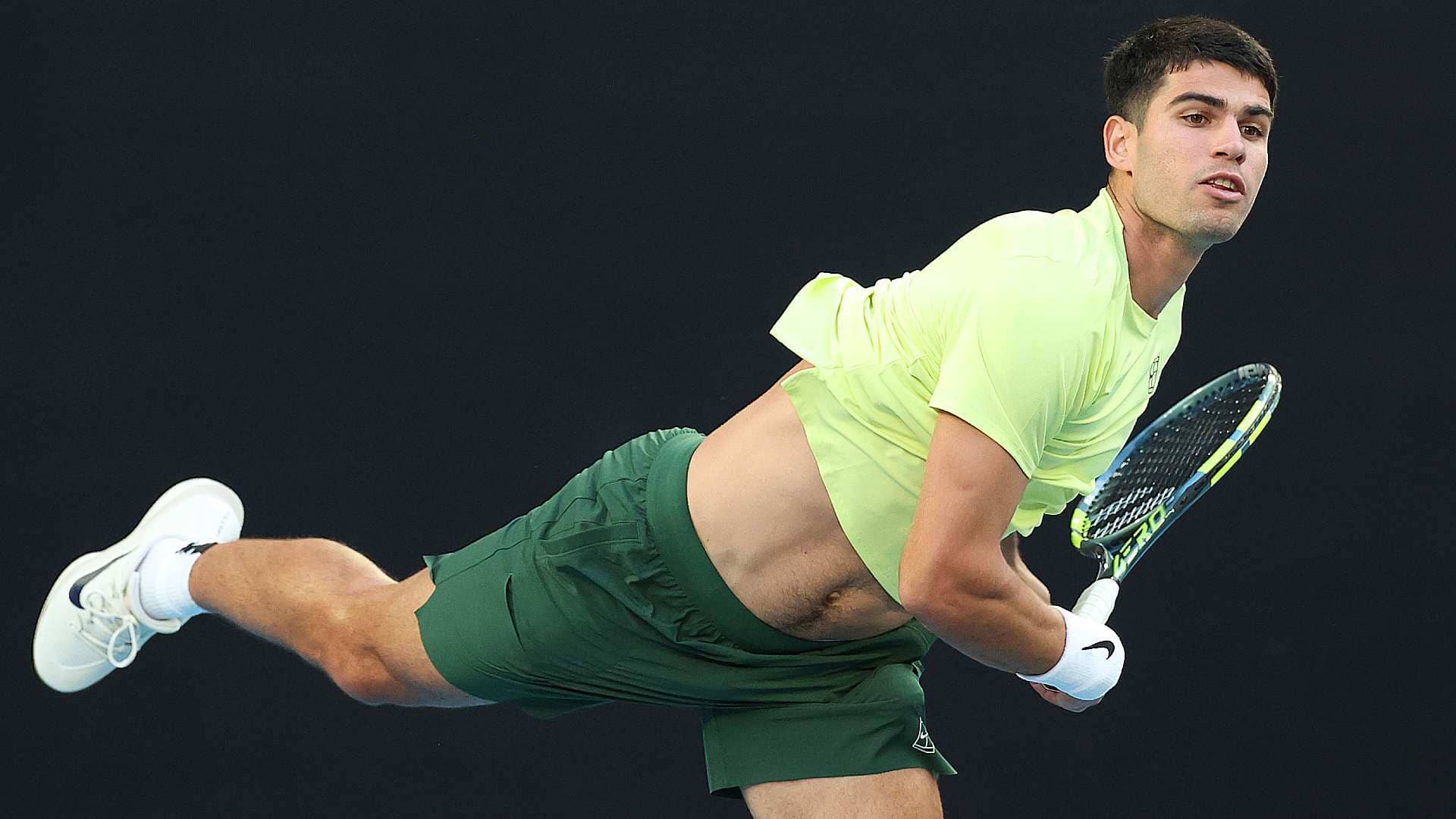
Loved and unloved: Behind the relationship between Djokovic and Australia

, register or subscribe to save articles for later.Save articles for laterAdd articles to your saved list and come back to them any time.To win the Australian Open for the 11th time and become the first to reach 25 grand slam singles titles, Novak Djokovic will likely have to surpass the young duo who lately surpassed him in Carlos Alcaraz and Jannik Sinner.In 2025, Djokovic, then a sprightly 37, summoned peak Novak to conquer Alcaraz in four sets at Melbourne Park, only to forfeit to Alexander Zverev in the semi-final due to a muscle tear he’d carried into that semi.He did not know then if 2025 would be his final Australian Open. “There is a chance. Who knows?”Djokovic made it back to the fatal shores, of course, to the delight of Tennis Australia and will enter this Australian Open as probably the next most fancied man, outside of Sinner and Alcaraz, having fallen to the former twice (Roland-Garros and Wimbledon) and the latter once (US Open) in the semis during 2025.And he will have, as ever, a legion of fans in his corner, and a chunk of the public that will be barracking against him; this has long been the Novak equation, the forceful Serb having the misfortune to be the trust buster, the player who broke up the duopoly of the more-adored Roger Federer and Rafael Nadal, but a disrupter to popular rule rather than underdog.The 20-year relationship between the most successful (male) player in tennis history, and the Australian public, has been complicated.AdvertisementPaul McNamee, the former tournament director of the Australian Open, is one of those in the pro-Djokovic camp, but who also recognises – and is willing to take a stab at diagnosing – the origins of the anti-Novak cohort within the country that has been his premier partner on the measure of grand slam victories.McNamee’s view is that Djokovic is the subject of “cultural differences” between him and a sizeable portion of the Australian public.Noting Djokovic’s “compassion” for others and unseen charity work, McNamee told this masthead: “He just rubs some Australians the wrong way because he’s a little bit over-theatrical and overdramatic.“And it just doesn’t sit with the Aussie palate.”Specifically, McNamee felt that there was an Anglo-centric media bias for western Europeans and against those from the east. “I think there is a bias towards Western Europe compared to Eastern Europe,” he said. “The Anglo-Saxon media tends to have a bias, I think, to the west... that’s just the way it is.Advertisement“He comes from a country that wasn’t popular at the time.”But it would be an erroneous overreach, as one well-connected tennis insider noted off the record, to suggest that Djokovic is unpopular with the Australian tennis public; he is merely less favoured than Federer and Nadal.Loading“He’s not as popular as Federer,” said John Alexander, the Australian tennis great, commentator and former federal MP. “Name me someone who is? And Nadal?”Djokovic’s relations with Australia and its citizenry were dented by the events of December 2021-January 2022, when he was sent packing – deported, no less, by the Morrison government – for his unwillingness to meet the COVID vaccine mandate.Alexander, who was the Liberal member for John Howard’s old seat (Bennelong) then, dissented from his government’s tough position, which saw Djokovic – at first granted an exemption to the vaccine (on the grounds that he had been infected with COVID-19 and therefore didn’t need vaccination) but was subsequently forced to leave the country for non-compliance.Advertisement“I was critical of Scott Morrison at that time,” said Alexander. “Part of the thinking was, initially, he [Morrison] was for Djokovic being able to play, and I forget what his comments were at the time, but it was quite strong... and then I had the cynical view that they did sort of public opinion tests to see what would ride well with the electorate, and I think it gave Novak the thumbs down and that’s the decision-making process.”McNamee went a step further in defence of Djokovic, who was reportedly pictured at events in Belgrade around the time of his COVID-19 positive test but was eventually confined to a Melbourne detention centre and whose turn back was the most scrutinised here, perhaps, since the Tampa.“To me, that was a disgrace that we kicked out the fittest and healthiest guy in the world. But it is what it is,” he said.McNamee, who says he knows Djokovic “pretty well,” added: “But he’s far more authentic than people give him credit for, and I think people are starting to see this. We mightn’t agree with him, but he is true to himself.”Tennis Australia had been uncomfortably wedged between the government – on which it relied for funding and much more – and its most successful player and greatest drawcard.Four years ago, when the Australian government punted him, Djokovic found vociferous support from Serbia’s President Aleksandar Vucic, who unloaded on Australia for “torturing and tormenting” the 10-time Australian Open champion and treating him like “a mass killer” before he was deported.AdvertisementIn a Serbian-language video posted to Instagram, Vucic slammed then-prime minister Morrison for “harassing” the tennis great, vowed Serbia would “fight for Novak Djokovic” and asked, “Is all this necessary to win the elections and please your public?”But if the authoritarian Serbian president was on Team Novak then, Vucic and his government have flipped to a hostile view of Djokovic since late 2024 over the player’s support for the mass student-led anti-corruption protests that have engulfed Serbia.State-backed media outlets which once feted Djokovic labelled him a “disgrace” and “false patriot” after he recently moved to Greece. The animosity is also believed to have led to the relocation of the Belgrade Open – an ATP 250 event owned and run by the Djokovic family – to Greek capital Athens as the Hellenic Championship in 2025 (Djokovic won the inaugural tournament).Further, the Serbian government has cut the budget of the Serbian Tennis Federation, whose president is Novak’s uncle Goran Djokovic.Djokovic’s willingness to make a stand, even at risk of his own popularity, standing or position, is a defining trait, as much as his capacity to win the most critical points in majors (none more so, as Alexander highlighted, than the 2019 Wimbledon final when he saved match points against Federer’s serve and won).AdvertisementBeloved by his own followers, disliked by a sizeable number but respected, even with gritted teeth, for his drive and mental strength nonpareil, Djokovic’s popularity seems, as with most greats, poised to spike in his twilight.LoadingChampions who courted controversy – from Serena Williams and Andre Agassi, to Jimmy Connors, Lleyton Hewitt and even the game’s foremost outlaw John McEnroe – tend to gain public sentiment in those latter years, in recognition that we will not see their likes again. “They’re going to miss him when he’s gone,” said Alexander.So, what’s the final verdict on Australia’s mutually successful, yet tumultuous relationship with Novak Djokovic (from whom this masthead sought comment via Tennis Australia, unsuccessfully)?“If it isn’t great, he deserves better,” said Alexander. “He’s not Roger Federer and he’s not Nadal. He’s Novak Djokovic, the greatest Australian Open champion of all-time.”Follow our live Australian Open blog each day from January 18 for results, news, analysis and interviews.News, results and expert analysis from the weekend of sport sent every Monday. Sign up for our Sport newsletter.


Most Popular