The art of scoring a World Cup buzzer-beater: ‘Your life is leading up to this moment’

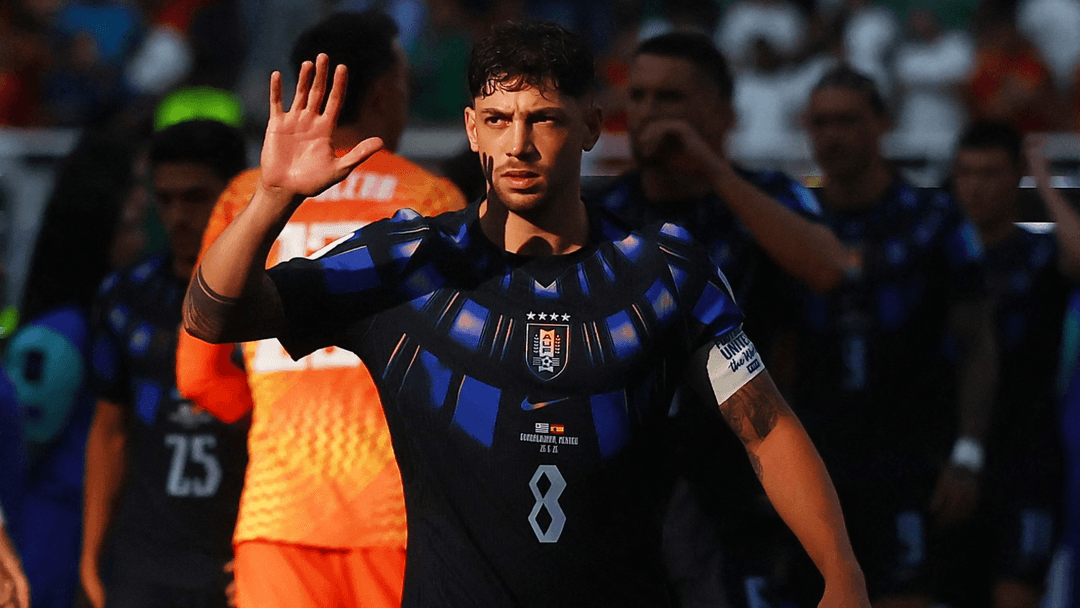
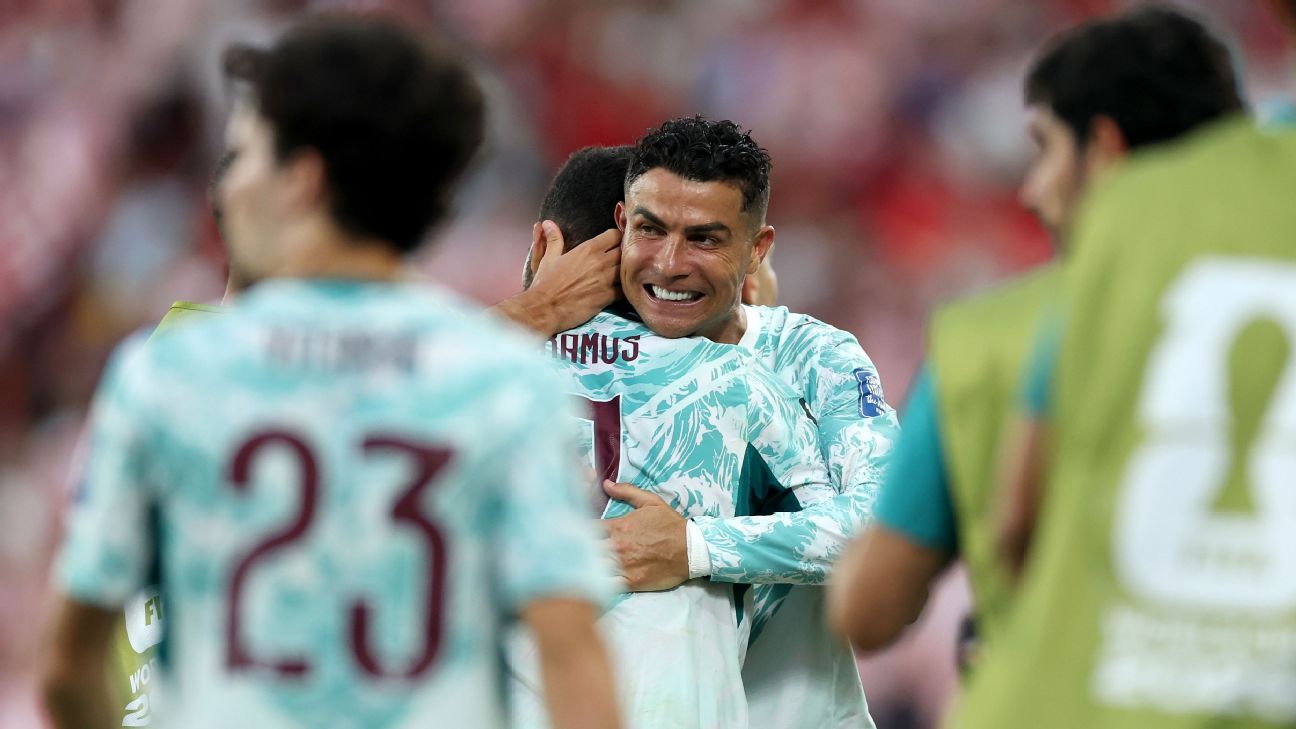
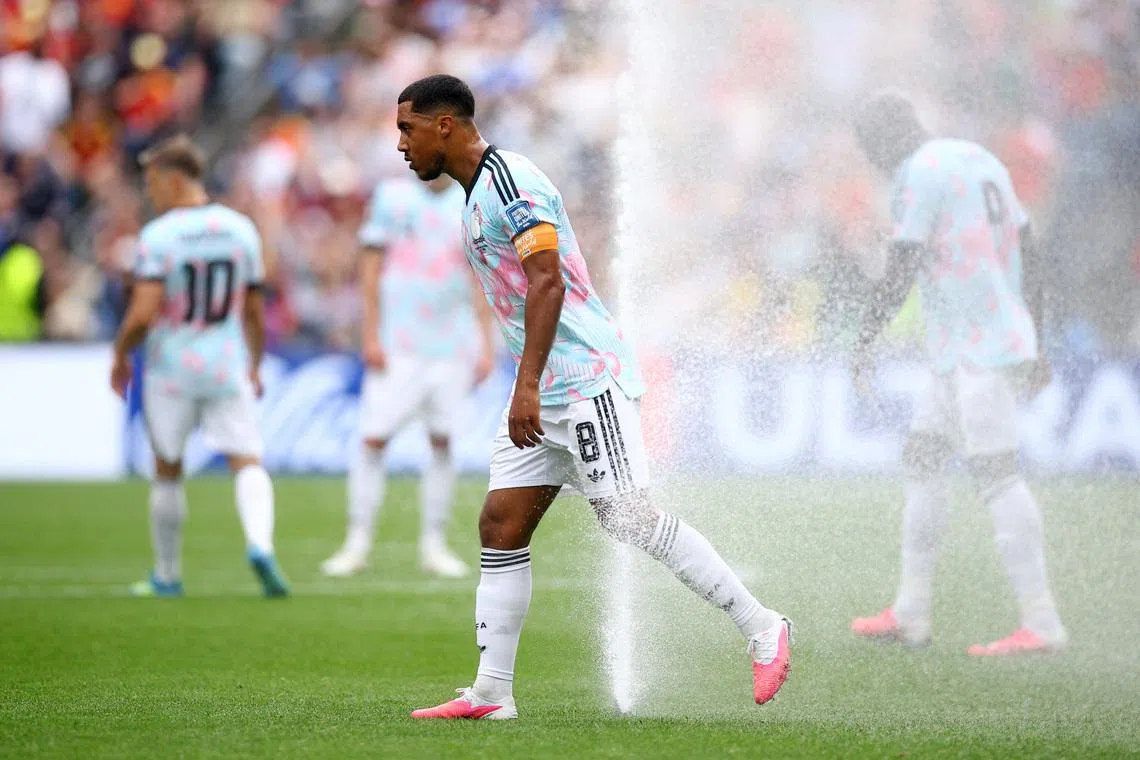
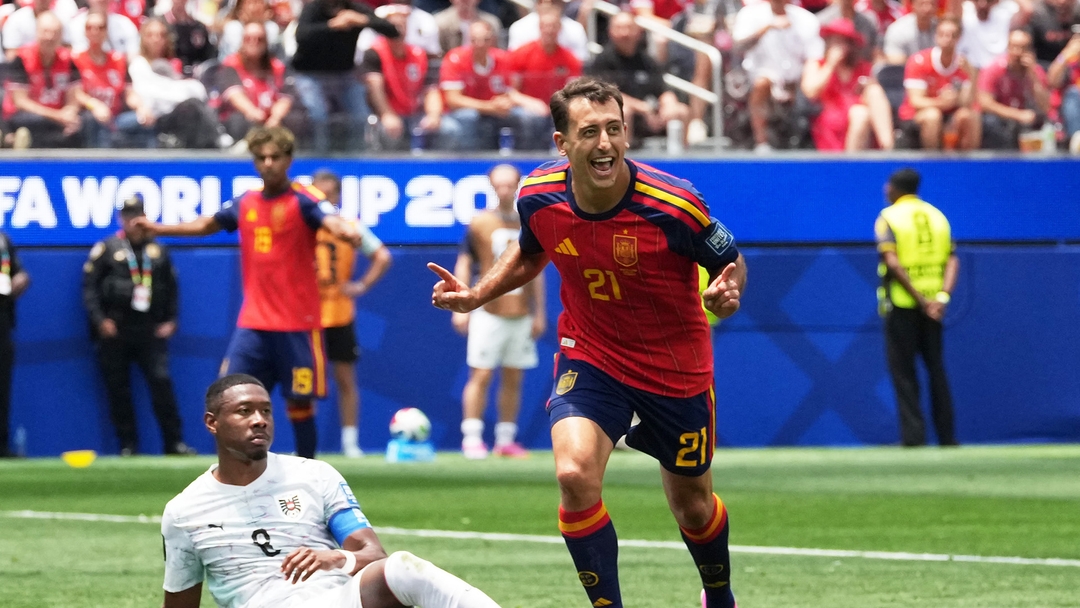
Landon Donovan said that it changed his life forever. Nacer Chadli felt like he was in a movie when it happened. Fabio Grosso was screaming “Non ci credo!” – “I don’t believe it” – to anyone and everyone who would listen to him.As for Ahn Jung-hwan, he admitted he would swap his whole career for a goal that made him a national hero at home, only to get sacked by his employer the following day.We are talking about football’s equivalent of the buzzer-beater – the late, late World Cup winner that delivers an adrenaline rush like no other to the goalscorer and his team-mates and a dagger to the heart of the opposition.“I don’t even have a way to explain what I’m feeling right now,” an emotional Gabriel Martinelli said on Monday after he scored in the sixth and final minute of added time for Brazil against Japan.Twenty-four hours earlier, Canada’s Stephen Eustaquio did the same against South Africa, this time in the 92nd minute. On Wednesday, Youri Tielemans repeated the trick for Belgium against Senegal, registering the latest goal ever scored in a World Cup (the 125th minute, in additional time of extra time). Incredibly, on Thursday, Goncalo Ramos added his name to the list with a 94th-minute winner for Portugal against Croatia.In fact, in eight of the first 12 last-32 matches to take place at the World Cup, the winning goal was scored in or after the 86th minute. Even more extraordinarily, it was the 29th goal scored in the 90th minute or later, according to football statistics company Opta.And, yes, while ‘buzzer-beaters’ are technically shots scored right at the moment the clock runs down to zero, the sheer volume of late, late goals at this World Cup does suggest there is something in the water here – literally, given the hydration breaks are making games longer.But what goes through the minds of the players in the seconds just before those match-defining moments?Some talk about time standing still or, at the very least, feeling as though they are playing the game in slow motion. “You experience everything with a delay,” Chadli explained to the Belgium Football Association, when reflecting on the dramatic goal he scored against Japan at the 2018 World Cup, finishing off a glorious counter-attack in the dying seconds of a thrilling game.Others talk about instinct taking over, almost as if the greatest moment of their career is no different from reaching for the light switch in a darkened room or pulling the door behind you when you go out to work in the morning.“There’s no great plan for a moment like that,” David Platt said in an interview with the English Football Association in 2020, 30 years after scoring a spectacular volley to eliminate Belgium in the dying seconds of a last-16 tie at Italia 90. “It’s just instinctive, and for it to happen in a game that meant so much to the country was obviously an incredible feeling. It was also a goal that changed my life.”Donovan used the same words as Platt to describe the personal impact of the 91st-minute goal that he scored against Algeria to take the USMNT into the knockout stage at the 2010 World Cup. Heavily involved in the build-up, Donovan was in the right place at the right time to ram home a loose ball. Cue pandemonium. “Go, go, USA!” Ian Darke, the television commentator for ESPN, famously said at the time.“It was just fast enough, so I didn’t have to think about it,” Donovan told The Athletic. “If it was any slower, you really start to think about it. It was in that zone where it’s really just instinct rather than debating where you want to put it. It was right in that sweet spot.”In Dennis Bergkamp’s case and that of the Netherlands, it was much more complicated. In 1998, Bergkamp scored one of the most iconic World Cup goals in history, in the 90th minute of a quarter-final in Marseille, to eliminate Argentina.Bergkamp took three perfect touches of the ball across 2.11 seconds. But the amount of information he processed during that time was astonishing, starting with the fact that he had two options in his mind when Frank de Boer delivered what the football writer and author Cris Freddi beautifully described as a “stretch-limo of a pass”.“One: let it bounce and control it on the floor. That will be easier, but by then you are at the corner flag,” Bergkamp explains in his autobiography Stillness and Speed. “So you have to jump up to meet the ball and, at the same time, control the ball. Control it dead. There’s a little bit of calculation at that moment. But it’s experience.”“A little bit of calculation” is like Michelangelo saying he had a bit of decorating to do at the Sistine Chapel one afternoon. Bergkamp’s touch was magical.The Dutchman goes on to say that “everything can still go wrong” after bringing the ball down from the sky, which is obviously true. Except it didn’t go wrong, other than the ball landing smack in the middle of his feet after he stepped inside Roberto Ayala with his second touch. Nobody would have noticed it to this day if Bergkamp hadn’t mentioned it. That gave him another decision to make – and bear in mind, we still haven’t reached 2.11 seconds.With no angle to strike the ball with his left foot, Bergkamp opted to use the outside of his right. But he also allowed himself a final thought between the last two touches: “Your life is leading up to this moment.”If that sounds a bit deep, that’s because all of this is deep. Where else do you get that unfiltered explosion of joy and ecstasy that you experience in the seconds immediately after your team, or your country, in this case, scores a last-gasp goal that kills the game and takes you through to the next round?That moment becomes even more special when it’s an unlikely goalscorer – step forward Fabio Grosso, a full-back who had started in the lower leagues in Italy and wouldn’t have been playing in the 2006 World Cup semi-final against Germany but for an injury to Gianluca Zambrotta.In the 119th minute, and with penalties beckoning, Andrea Pirlo delivered an exquisite no-look pass that picked out Grosso, who for entirely different reasons also didn’t raise his eyes before striking the ball. “I aimed for the corner without looking at the goal, imagining where the corner was,” he told the Italian newspaper La Repubblica. “Luckily, I pictured it correctly, in the right place.”Grosso was wonderfully out of control in the moments that followed, almost like he was going through an out-of-body experience. In his words, he was “drunk with joy”, which captures it perfectly.But Pirlo’s role in that goal is every bit as noteworthy because it highlights that rare skill that elite sportspeople possess – an ability to think clearly and calmly when the clock is winding down, and the tension is close to unbearable, but also to act selflessly in those moments too.It would have been easy for Lionel Messi to shoot when he broke through against Switzerland in a last-16 tie at the 2014 World Cup, with only two minutes of extra-time remaining. Instead, as the Swiss players converged on him, Messi released Angel Di Maria, whose composed finish, on a day when he played poorly, was every bit as impressive.Bruno Guimaraes was in a not dissimilar position against Japan this week, when nobody, other than possibly Martinelli, was expecting the ball to be passed. It only travelled about eight yards but it was such a clever ball by Guimaraes, bamboozling the Japan defence.“We have an excellent understanding of each other,” Martinelli said. “We discuss these types of movements inside the box; I know how great he is in tight spaces and that he is capable of delivering a pass of any difficulty there.”There’s a possibility that Martinelli could end up doing the same thing against England in the quarter-finals if both nations get through the next stage. Should that happen, it’s a safe bet that Arsenal won’t hold it against the Brazilian in the same way that Perugia did with Ahn Jung-hwan in 2002.The South Korean scored a ‘golden goal’ (a rule change that was briefly introduced and meant any goal in extra-time signified the end of the game) to eliminate Italy, where he was playing his club football for Perugia at the time.Luciano Gaucci, Perugia’s president, was furious.“He was a phenomenon only when he played against Italy,” Gaucci told Gazzetta dello Sport. “I am a nationalist and I regard such behaviour not only as an affront to Italian pride but also an offence to a country which two years ago opened its doors to him. I have no intention of paying a salary to someone who has ruined Italian football.”



Most Popular