End of an era? South Korea’s sun sets in the Premier League but Japan rise
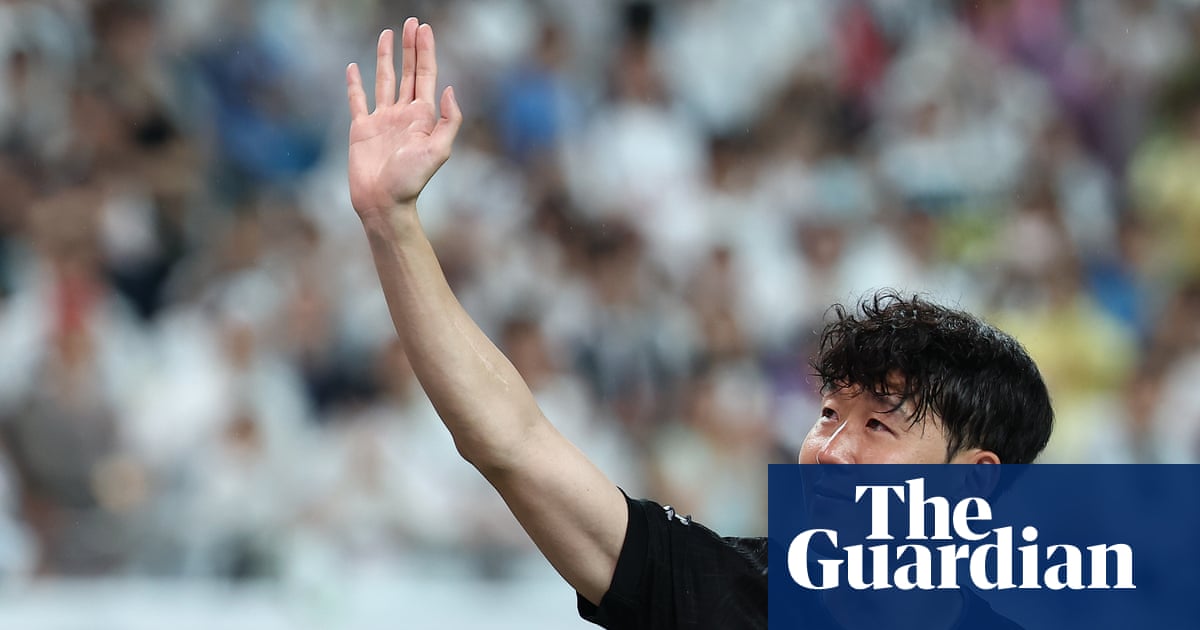
It has been a cruel summer for South Korea. The national team crashed and burned at the World Cup, the police are investigating the football association, reports have emerged about bribes paid to foreign referees in 2011 and 2012 and there is a real prospect of the the English Premier League being Korean-free for the first time since 2005.That was when Park Ji-sung signed for Manchester United, to start a love affair between the Land of the Morning Calm and England’s top tier that has continued ever since. Park won four titles and his mantle was taken over in 2015 by Son Heung-min at Spurs.Son ended his successful decade, during which he became a club captain, by lifting the Europa League in 2025. There are other Taegeuk Warriors who are fondly remembered such as Ki Sung-yueng, Lee Young-pyo and Lee Chung-yong, and then those that would be tougher quiz questions. Cho Won-hee, Yun Suk-young and Park Chu-young barely featured for Wigan, QPR and Arsenal respectively.Others have cult hero status. Ji Dong-won’s last-minute winner against Manchester City will never be forgotten by Sunderland supporters while Lee Dong-gook, who had a long and successful career, could not hit a barn door with Middlesbrough. While there have inevitably hits and misses, overall, the exports have been a source of pride.Now, though, those who stayed up late or got up early to watch their compatriots are going to have more free time. After Son left London for Los Angeles, Hwang Hee-chan was the sole participant, but the forward went down with Wolves. There are three Koreans on Premier League books, but Yang Min-hyeok of Spurs, Brentford’s Kim Ji-soo and Park Seung-soo of Newcastle are likely to be once again loaned out.There was talk of Lee Kang-in leaving Paris Saint-Germain for England, but in July the 25-year-old attacker joined Atlético Madrid to take Antoine Griezmann’s No 7 shirt. The former child TV reality star, introduced to the nation at the age of six and at Valencia’s academy four years later, is now perhaps Asia’s biggest name, but is going to play in England only in Champions League games. At the moment, there are not many other Koreans who look capable of becoming established Premier League players.That is not the case for Japan, with the Land of the Rising Sun taking the mantle from its eastern neighbour. Last season, Kaoru Mitoma shone with Brighton while there was also Daichi Kamada at Crystal Palace, joined at Selhurst by Takehiro Tomiyasu, Ao Tanaka at Leeds and Wataru Endo with Liverpool.The new season will see more. As Lee was signing for Madrid, Hull snapped up Hidemasa Morita, last seen in England playing for Sporting Lisbon in the Champions League quarter-final against Arsenal in March. Shortly after, Daizen Maeda became Ipswich’s first Japanese player. The forward, who joins after a successful Celtic spell with five league titles, was last in action for Japan against Brazil at the World Cup.While that game, with the five-time champions coming from behind to win in the 96th minute, was a frustrating one for the Samurai Blue, the team at least did OK. Korea’s World Cup campaign was, however, a disaster with a 2-1 win against Czechia followed by a 1-0 loss by Mexico and a truly dismal defeat by the same scoreline to South Africa. The head coach of the national team and the president of the FA have resigned and Park Ji-sung has been roped in head a new “reform football committee”. It’s a mess.Park has talked of the need to follow Japan’s long-term philosophy to close the gap with what is clearly Asia’s best team. Increasingly, Japanese players, who have historically headed to Germany first, want to play in England. It is perhaps not a coincidence that two of the promoted Premier League teams have recruited Samurai Blue as there are plenty who have impressed in the Championship in recent years.It all leads to growing Japanese interest in the Premier League and the opposite in Korea. In 2022, AIA, Tottenham’s shirt sponsor, commissioned a report that claimed there were 12 million fans of the club in the country. Even given Son’s undoubted popularity, wild European claims of fan numbers in Asia have been a feature since before Park arrived at Old Trafford 21 years ago. There are certainly nowhere near 12 million now, with one Korean TV executive saying viewing figures for Spurs games are nowhere near what they were.That is hardly surprising as widespread Premier League interest in Korea, like Japan, not a historic lover of English football, is still largely player driven. During his time in London, Son’s smiling face would appear in the top corner of the television screen when he was on the pitch to keep casual viewers from turning over. In Park’s time, Manchester United games were often the only one shown all weekend.



Most Popular