Sage's remarkable rise from non-league to Crystal Palace
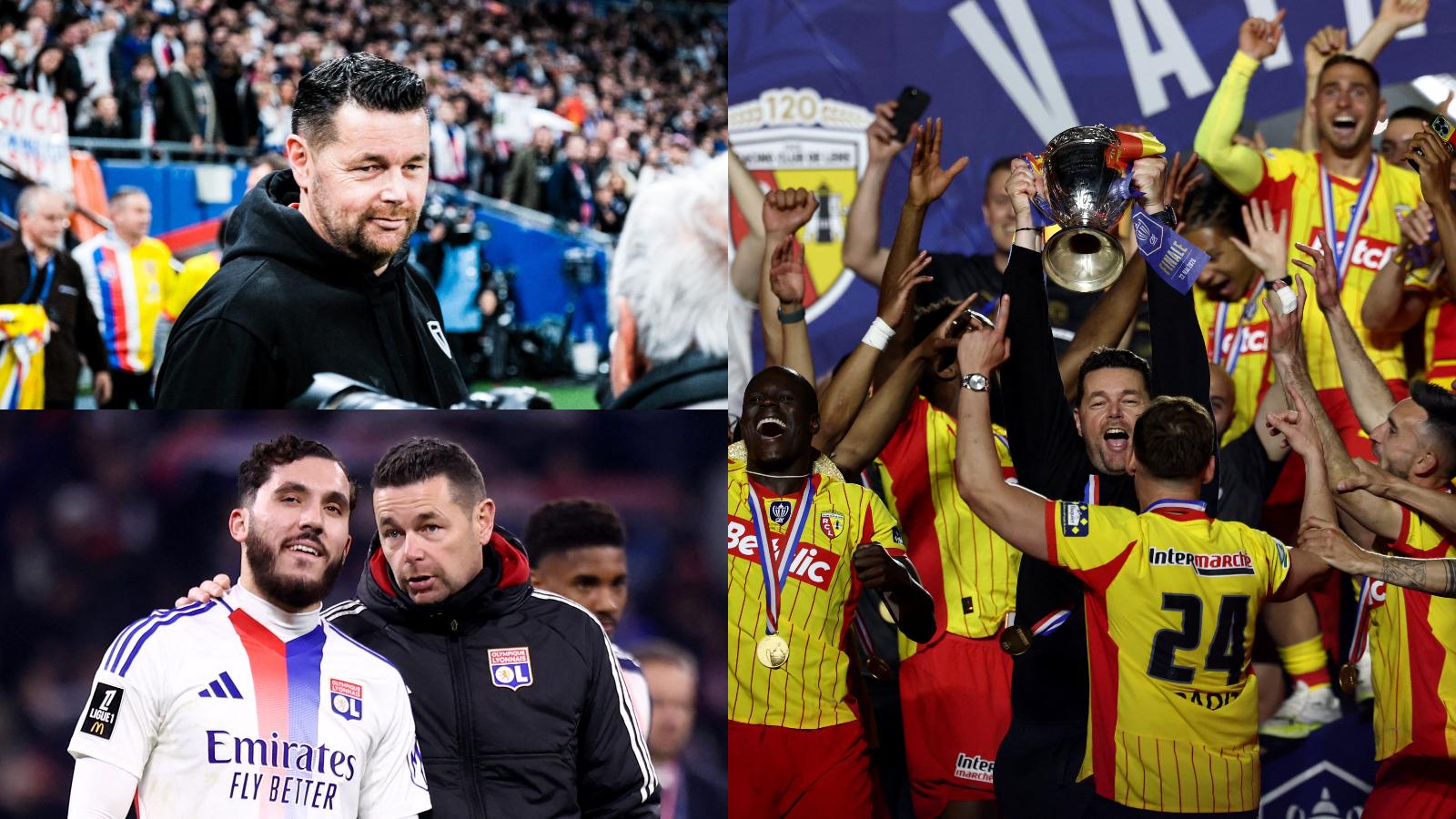
As Pierre Sage takes charge of Crystal Palace, French football expert James Eastham charts the 47-year-old's journey to Selhurst Park.Of all the managers that have worked in the Premier League, few have taken as unusual a route to the top as Pierre Sage.Crystal Palace's new head coach was one of Europe's most sought-after coaches, yet he has fewer than 100 professional matches on his managerial CV. He was named Ligue 1’s Manager of the Year last season but has spent much of the past two decades working in the amateur ranks of French football.Sage has arrived from RC Lens, where he bolstered his reputation thanks to a tremendous 2025/26 campaign. Recruited last summer, the 47-year-old led the Sang et Or (Blood and Golds) to the Ligue 1 runners-up spot behind champions Paris Saint-Germain, as well as securing the French Cup for the first time in the club's history, via a 3-1 victory over Nice in the final.Yet there was little indication of such successes to come when Sage worked at a number of lesser-known clubs in the 2000s and 2010s. There was nothing to suggest he would one day rise above hundreds of other well-qualified coaches who were anonymously, yet diligently, going about their business in France.In 2015/16, he was the Under-19s assistant coach at Annecy; in 2018/19, he performed in a similar supporting role for semi-professional team Lyon-Duchere, before taking up a position as a youth coach with Ligue 1 club Lyon.Sage got his big break at the end of November 2023. By then, he was the head of Lyon’s much-admired youth academy but he was still a surprise interim appointment when first-team manager Fabio Grosso was sacked.Though he was largely unknown to Lyon’s fans, let alone the wider public, Sage stepped up impressively. The team improved so much under his temporary tutelage, rising from the bottom of Ligue 1 to a sixth-place finish and UEFA Europa League qualification, that he was offered the permanent post.The partnership lasted only 14 months, until his dismissal in January 2025, yet by all metrics Sage did well. Lyon’s points-per-game tally of 1.85 under him would have earned a top-three finish in four of the past five seasons.He deftly handled media duties, speaking calmly in front of the cameras even though such responsibilities were new for him. He looked at ease on matchdays, making smart, in-game changes, exchanging frequently with players such as future Manchester City playmaker Rayan Cherki. Sage was unfazed by going toe-to-toe with more experienced adversaries on the touchline, including Jose Mourinho, then in charge of Fenerbahce in the Europa League.Five months after leaving Lyon, Sage was back in management, appointed by Lens last summer after Will Still departed for Southampton.From the outset, he implemented a 3-4-2-1 system, meaning Lens were tactically settled by the time the season kicked off. Laying on meticulously planned training sessions during the summer months, he won his players’ respect. It was clear such respect was mutual in the way he shook his players’ hands, one by one, as they took to the field ahead of one particular pre-season friendly.The groundwork paid off as Lens challenged PSG for the 2025/26 title, only to fall away during the run-in. Yet they finished ahead of more fancied clubs like Marseille and Monaco, as they collected 18 points more than they had garnered in 2024/25.Lens' French Cup victory at Stade de France — which came a fortnight after Sage won Ligue 1’s top manager award, ahead of PSG’s Luis Enrique, among others — was richly deserved.Sage receives the Ligue 1 Manager of the Year award from France head coach Didier DeschampsLens were popular among neutrals, not only for providing a title race, but also for the bold football they played. They looked to win emphatically and dominate games. At times, their 3-4-2-1 became a throwback 3-2-5, with wing-backs flying forward and attackers pinning defenders in their own penalty area.Lens’ dangerous front three — left-winger Wesley Said, former Palace striker Odsonne Edouard, and ex-Newcastle United right-winger Florian Thauvin — all got into double figures for goals."There are two types of teams: one with the ball, and the other chasing it," Sage said in an interview last year."I prefer to be the first of those teams. My three main principles are to play the ball out properly from the back so you have it in ideal circumstances in the opposition half; to look to get behind the opposition defence non-stop; and to press your opponents hard so you can win the ball back quickly."What also emerged at Lens was Sage’s ability to improve players. Malang Sarr, the almost-forgotten former Chelsea defender, enjoyed the finest season of his career as the left-sided centre-back; midfielder Adrien Thomasson, normally a steady performer, found another gear, finishing as Ligue 1’s top assister (10); and, at 33, Thauvin thrived, earning a place on Ligue 1’s five-man Player of the Year shortlist.It would be too simplistic to say the 3-4-2-1 Sage favoured maps exactly the tactics Oliver Glasner often used as Palace head coach last season.Yet there were similarities to the set-ups, suggesting the transition from one head coach to another may be smoother than would otherwise be the case when the players and staff convene for pre-season training next month.Sage’s rise is sudden and unexpected. He has earned the right to operate at this level. Having thrived at Lyon and Lens, now he gets the chance to show what he can do in the biggest league of them all.



Most Popular

Gohar bowls Middlesex to victory against Worcs
2 hours ago