Why no minnow beat a top-12 side at the T20 World Cup

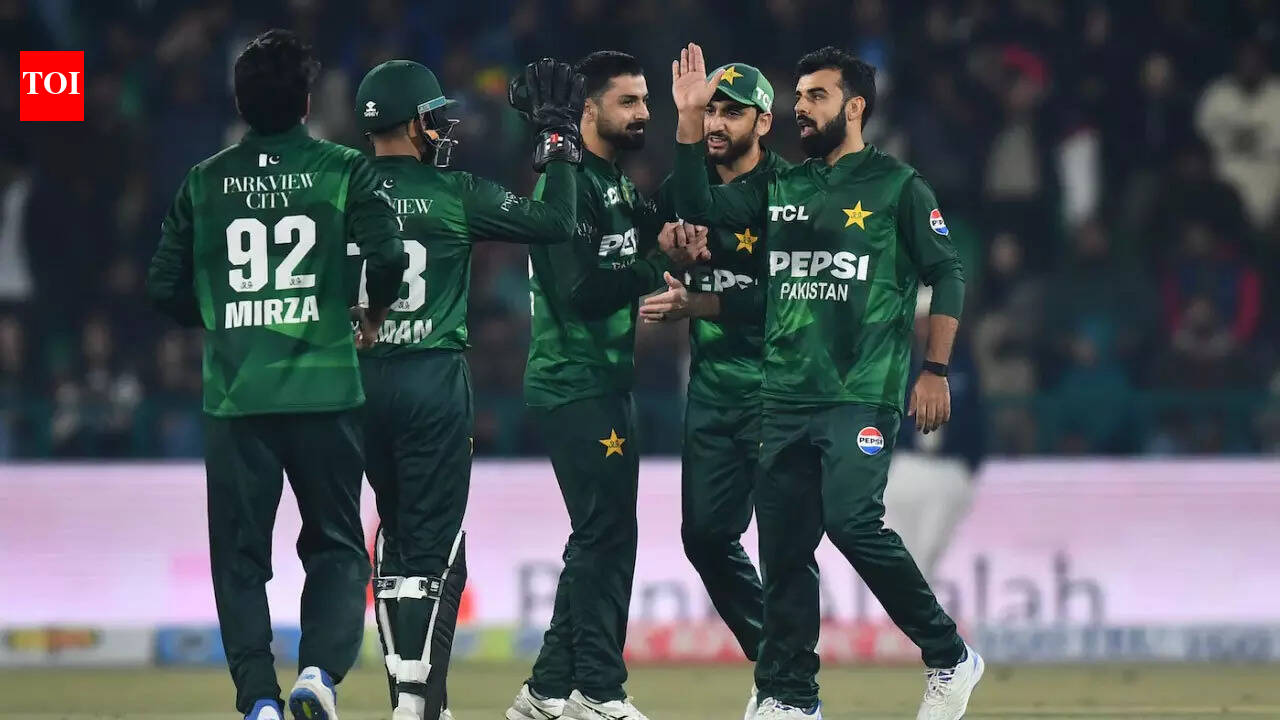
On February 7 in Colombo, the 2026 T20 World Cup began with Pakistan under strain. By the end of the 18th over they were 119 for seven, still needing 29 from the last 12 balls to beat the Netherlands. In the 19th over, Max O’Dowd dropped Faheem Ashraf at long-off. Ashraf made them pay, finishing 29 not out off 11 and taking apart the penultimate over with three sixes as Pakistan escaped by three wickets.Hours later in Mumbai, defending champions India were squeezed by another side from outside cricket’s traditional power base of long-established Test nations. The United States ripped through India’s top order, leaving them 77 for six by the 13th over. Captain and man-of-the-match Suryakumar Yadav, who survived a dropped catch on 15, refused to let the collapse decide the night. He carried India to 161 for nine with 84 not out off 49. India won by 29 runs.These were two strong performances from associate nations — cricket’s second tier in the ICC structure: national teams recognised by the governing body but without the same voting power, fixture lists or funding — on the opening day of the World Cup.These sides are close enough now to drag the likes of Pakistan and India — two of the 12 ‘Full Members’ of the ICC top table — to the edge, but none beat any of the big beasts nor qualified for the next round. Evidence of improvement is visible in passages of play, but it’s not enough to redraw the hierarchy. Cricket is a results-based business; until teams put points on the table, progress remains anecdotal.T20 cricket has democratised the sport. In a 20-over game, a single decisive intervention, whether a spell, a cameo or a catch, can flip the momentum (more evidence of this was shown as England survived a huge scare as they beat Nepal). The appeal of the format and the product has been there for years: associate teams generating the kind of moments that fill highlight reels, win hearts, sell broadcast windows and give tournaments their most unpredictable headlines.Yet the commercial logic remains circular. Those moments generate attention, attention drives broadcast value, and broadcast value produces revenue. Most of that revenue flows back to the traditional powers, who advance deepest in the tournaments and collect the largest shares of the prize. The teams that supply much of the tournament’s early drama see little of its financial reward.Under the International Cricket Council’s 2024-27 revenue distribution model, the 12 Full Members — Afghanistan, Australia, Bangladesh, England, India, Ireland, New Zealand, Pakistan, South Africa, Sri Lanka, West Indies, and Zimbabwe — are the national boards that control Test cricket and hold full voting rights. They share 88.8 per cent of an annual pool of roughly $600 million.The Board of Control for Cricket in India, which runs Indian cricket, takes 38.5 per cent, around $231m a year, the largest share of any member.The 96 associate nations split the remaining 11.2 per cent between them: roughly $67m, or about $700,000 each. A single associate board receives approximately one-sixtieth of what the BCCI earns. The financial asymmetry reflects and reinforces the competitive hierarchy.The ICC’s answer to this is its Development Funding Model. Associate support is routed through a ‘scorecard grant’, a complex tool which essentially rewards participation, infrastructure and governance. There is also a ‘competition’ grant linked to qualification for global events, a structure the ICC describes as meritocratic and aligned with its strategy to grow the game. Distributions to Full Members are justified on the grounds of commercial contribution and the need for scheduling certainty to protect the value of media rights, which is then presented as the pot from which everyone benefits.Associate representatives do not dispute who drives the broadcast market. They argue that the 2024-27 split still threatens the game’s growth because it leaves them without the money or the calendar to turn World Cup performances into sustainable programmes.Tournament access without calendar continuity produces spikes of growth, not trajectories. For example, an associate side can earn a result in February and the next scheduled fixture arrives months later, often against another associate in a qualification pathway for the next World Cup, not against the opposition that would accelerate development.The Netherlands’ schedule this year illustrates this. They lost their final group-stage match against India, by 23 runs, on February 18. They now have no international fixtures until summer. For players without contracts in other leagues or domestic competitions abroad, that gap is not downtime. It is a return to ordinary life and often part-time jobs.In 2024, the T20 World Cup expanded to 20 teams, up from 16. The expansion was framed as a step toward democratisation, and in terms of raw access it delivered: more nations played more games on the biggest stage. One critique of the format, however, is its use of pre-seeding. Super 8 groups — comprised of two pools made up from the top two teams from the initial stage of four five-team pools — and fixtures were effectively set in advance, with teams assigned to second-round slots based on rankings before a ball was bowled, a system the ICC said would help fans and broadcasters plan travel and schedules. An unseeded qualifier that upset a higher-ranked side in the first round did not change the shape of the Super 8; it simply inherited the position originally reserved for that seed, which is what happened when Zimbabwe took Australia’s place in this edition.In a five-team pool where the top two advance, an associate upset does not shift much. Had one managed it this year, a single win in a pool of five would rarely have been enough to alter the standings. In a four-team group, one upset can tilt the balance in their favour.That asymmetry runs through the second stage. Because Super 8 groups are drawn from pre-assigned seeds rather than from how teams finish, the second round reflects the rankings that shaped the tournament, not the results that unfolded in the groups. Pre-seeding has produced a Super 8 Group 1 featuring India, South Africa, West Indies, and Zimbabwe, with all four sides unbeaten group winners. A bracket designed to protect certainty has clustered group winners in one pool and left the other with runners-up, with no reward for how any side played in the first phase.The result is a tournament that settles early. Of the final 10 group-stage matches at this World Cup, only two carried consequences for qualification, and the deeper concern is that not a single group-stage fixture held direct stakes for both teams involved. That is not a quirk of this edition. It is what the format produces.Afghanistan remains the clearest case study of what sustained opportunity can achieve. The Afghan Cricket Board (and Cricket Ireland) were granted Full Membership in June 2017. With it came a seat at the ICC’s financial table, a national cricket academy in Kabul, a guaranteed place in the Future Tours Programme (a structured, multi-year schedule of international cricket matches) and regular access to top-level fixtures, plus a clear pathway into the IPL and other global T20 leagues.Cricket is the main sport in Afghanistan, which makes it easier to convert international success into domestic attention and participation. It has produced players who are highly valued in franchise cricket and, by 2024, a men’s team that reached the T20 World Cup semi-finals, though a functional women’s programme remains absent under a Taliban-led government.Replicating that trajectory for current associates is a different proposition. Nepal are the most obvious candidate to follow. They fill grounds in the tens of thousands, treat cricket as a major national sport, and are laying foundations for a stable domestic franchise league.The Netherlands offer a different model. At the 2023 ODI World Cup they beat South Africa and Bangladesh, and their cricket culture is built on meticulous preparation and innovation, from creative programmes to train and adapt to conditions, to tactical planning. Yet they lack the facilities and climate to play at home through winter, and without deeper infrastructure and investment they cannot turn that ingenuity into a full, year-round programme.Beyond them, the United States and Italy are emerging. Both have performed well in their first World Cups, drawing on players who grew up in established cricket systems and now represent new flags.Franchise cricket is one of the forces beginning to narrow the gap. Nepal, USA and UAE, all nations with their own domestic T20 leagues, have a different competitive edge to associates without them. Their players train and compete alongside some of the best in the world at home, and it shows in how quickly they adapt to tournament intensity. But those leagues are themselves products of infrastructure, investment and market size that most associates do not have. Without broader developmental access built into the ICC structure, the gap between those who have managed to build a league and those who have not simply becomes another layer of inequality.The gap between the Full Member core and the rest is not just a question of skill. The margins in this World Cup have confirmed that. It is a question of how many times those margins get tested, and by whom, and how often the calendar allows them to be tested again. What these sides lack most is repetition: the chance to see games out from good positions often enough that closing the gap stops feeling like a surprise and starts feeling like a habit.



Most Popular