
Hat-trick on debut, 87 wickets in a season; India pacer’s 156 kph bullet beat Allan Donald, but speed went unrecorded
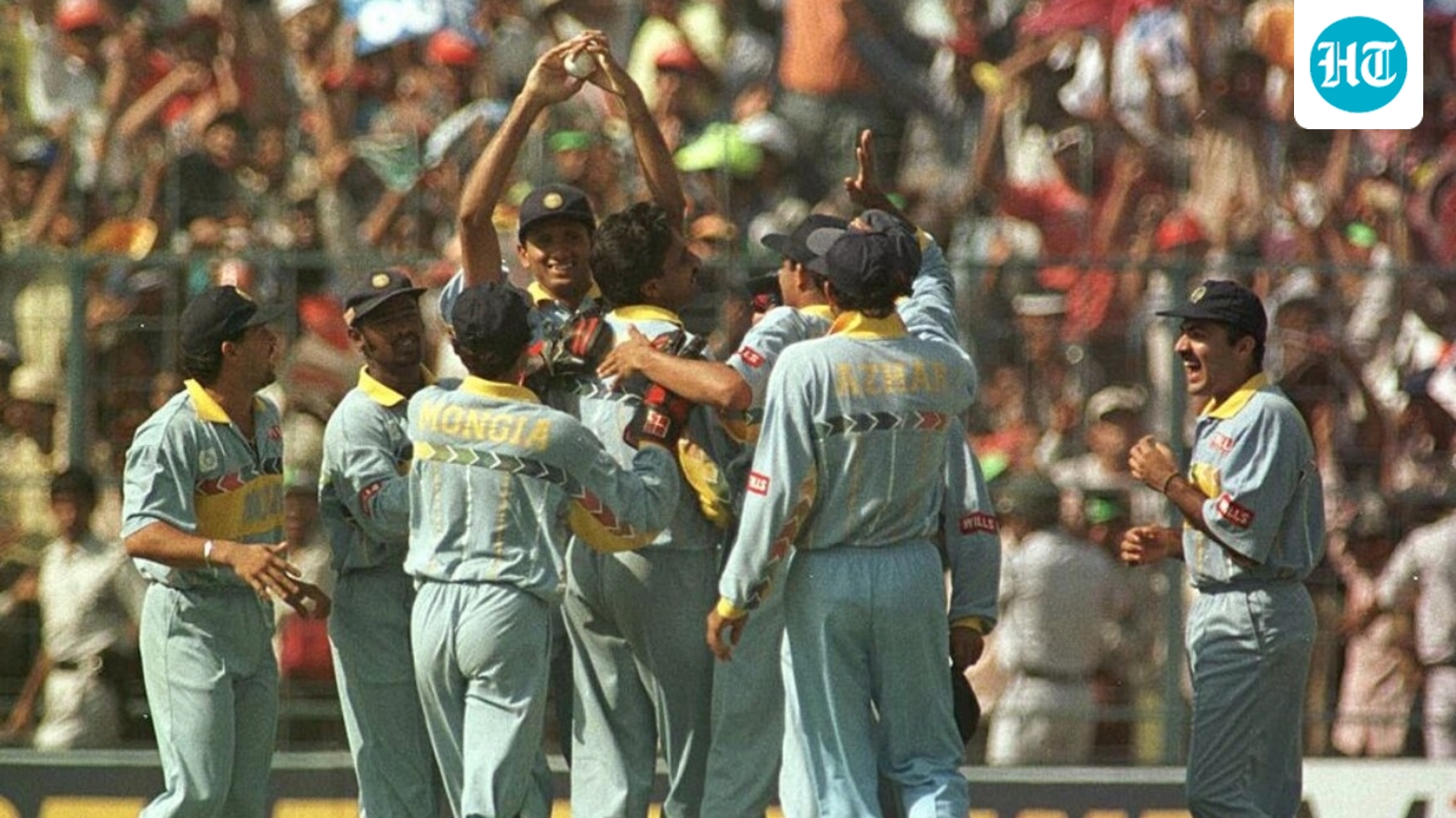
In 2026, the number of Indian pacers capable of frequently breaching the 150kph mark on the speedometer is considerable – Umran Malik, Mayank Yadav, Jasprit Bumrah, Mohammed Shami and Ashok Sharma. But the emergence of these pacers has been decades in the making. Long before the Zaheer Khan-Ashish Nehra era, when pacers began bowling consistently in the late 140s and early 150s, the revolution began in the early 1990s, when a tall, lanky pacer burst onto the scene in Australia. With just 10 wickets in five Tests Down Under, he had a quiet beginning, but as the years passed, he improved with every series. During India's 1992 tour of South Africa, his numbers improved to 12 wickets from three Tests. And by the mid-1990s, he had become frighteningly quick, to the extent that even on Indian pitches, which offered little assistance to pacers, he was a menace to visiting teams.In a career spanning 12 years, he featured in four World Cups for India, bowing out of international cricket with 16 wickets at an average of 23 in the 2003 edition in South Africa. Twenty-three years later, he still holds the record as India's most successful fast bowler in ODIs, with 315 wickets in the format – the only Indian quick to enter the 300-wicket club. He was India’s benchmark for pace before speed became a thing. While many cricketers took to broadcasting or coaching after retirement, he smoothly transitioned into becoming one of the most successful match referees of all time. Yesterday was his 57th birthday, coming days after he was spotted taking the Bengaluru Metro.Also Read: Mohsin Naqvi and ACC's administrative failure behind Asian Games accommodation row; cricketers to pay heavy priceJavagal Srinath was more than just the face of India’s fast bowling in the 1990s. Starting out as a back-up to Kapil Dev and Manoj Prabhakar, Srinath had to wait for his opportunity. But when the two faded, ‘The Mysore Express’ bullishly took over as India’s pace spearhead, first partnering Venkatesh Prasad and eventually passing the baton to Zaheer by the time his career wound up.Hat-trick on first-class debutSrinath announced himself for Karnataka in 1989-90 by taking a hat-trick on his first-class debut, en route to picking up 5/85. He began the second innings with wickets off the first two deliveries. Even though he finished with 25 wickets from six matches, once he started bowling in the India nets ahead of the tour of England, Srinath could not be ignored. Once established in the Indian Test setup, Srinath raced to 92 Test wickets in just 27 Tests. During this period, he tormented opposition batters with his pace and accuracy. A champion of inswingers and cutters, Srinath's strong shoulders and hit-the-deck approach brought him enormous success.In 1995, Srinath scalped 87 wickets in one season for Gloucestershire. Recommended by Courtney Walsh, the pacer transformed himself during his county stint, producing career-best first-class figures of 9/76.The record delivery that didn’t registerThe years 1996 and 1997 were memorable for Srinath. In a masterclass in Ahmedabad, with India defending just 170, Srinath ripped through South Africa as India bowled them out for 105. It was a performance that prompted then-captain Sachin Tendulkar to say, “It was one of the greatest exhibitions of fast bowling I have seen from an Indian for a long time.”Srinath finished that series with 18 wickets from three Tests, but it was during India's return tour that he etched his name into a record that, bizarrely enough, never made it into the history books. Srinath finished with 17 wickets as India crashed and burned, but amid the team's struggles, the pacer produced something spectacular. During that series, Srinath bowled what was then recorded as the fastest delivery ever by an Indian. In a column written for Cricinfo, it was revealed that the speed was never officially recorded. And even today, despite Umran Malik's 156kph delivery, it remains one of the fastest speeds ever attributed to an Indian bowler in international cricket.“Between December ‘96 and February ‘97 Srinath's speeds were timed in excess of 150kph and were comparable to those of both Allan Donald and South Africa's 'new' pace sensation Lance Klusener. Whilst Klusener's fastest ball came in at 154kph and he proved at the time to be faster than Donald, it has been brought to my attention on numerous occasions that Srinath pipped them both with one particular delivery measured at 156kph. This particular delivery was reported by a major Indian News service although the exact date and the match in question has not been confirmed,” the excerpt said.Retained pace despite a bad shoulderThat wasn’t all. A fast bowler’s greatest weapon is his shoulder, so when it troubled him in 1997, Srinath’s pace was significantly impacted. But despite undergoing surgery for a flared-up rotator cuff, Srinath frequently touched speeds of 148 kmph against Australia in the 1998 home series and outpaced Glenn McGrath in India’s World Cup match against Australia in 1999. In fact, at 149 kmph, Srinath was the second-fastest bowler at the World Cup, behind only Shoaib Akhtar’s 154.5 kmph.At 33, Srinath announced his retirement. He still had a couple more years left to give, but the constant struggle with injuries and his body's growing limitations convinced him it was time to go. The injuries were starting to catch up with him and, despite retiring from Test cricket in 2002, Srinath wanted to play the ODI leg of India’s 2003-04 tour of Australia but couldn’t regain fitness in time.

Most Popular