World Cup 2026: Why do Argentina sing about the England and the Falklands?
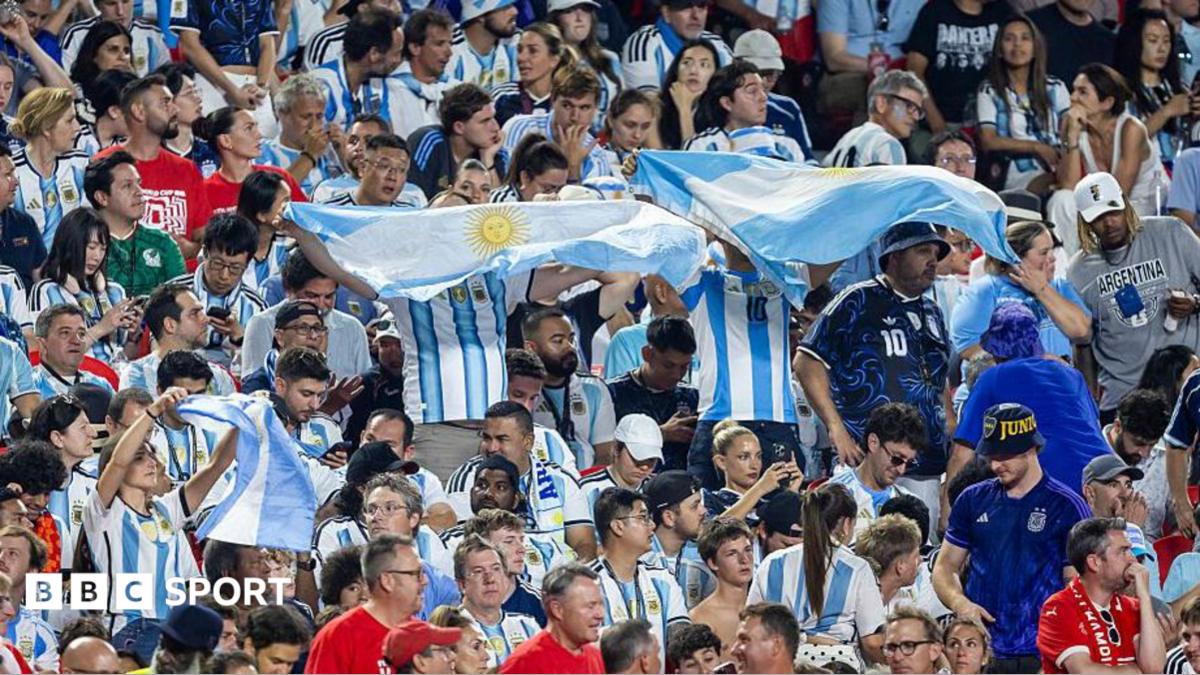
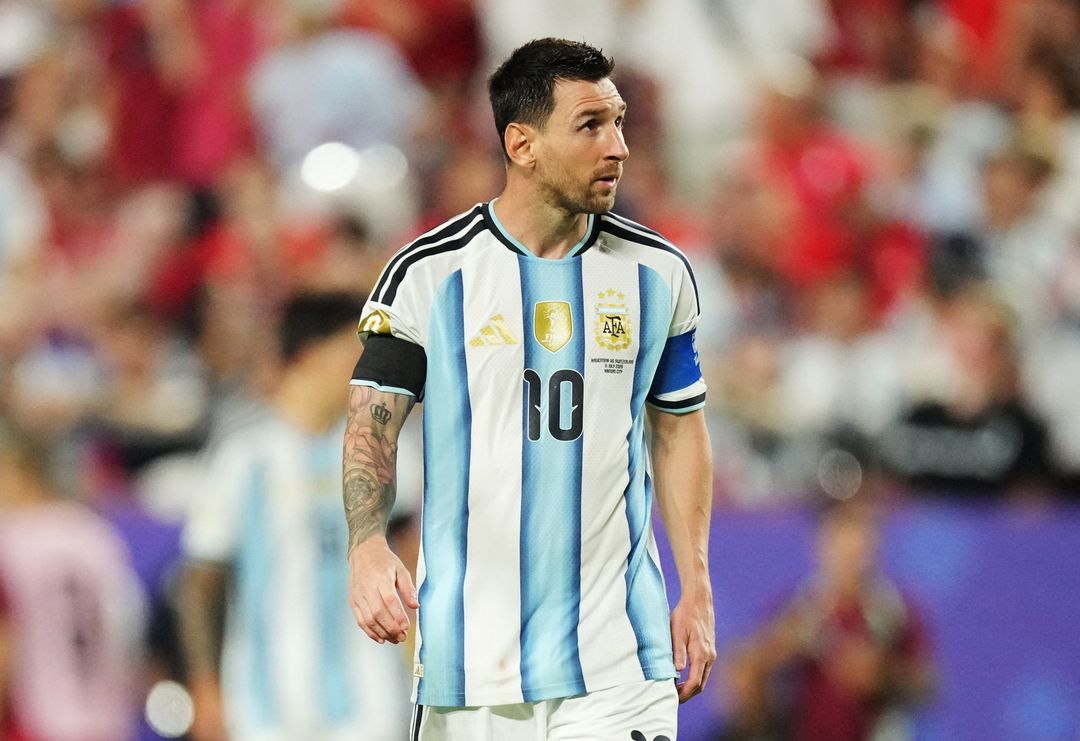
"For the Malvinas, for Diego, for Leo's last one," the Argentina players sang as they celebrated their 3-1 quarter-final win over Switzerland.Malvinas, Spanish for Falklands.Diego, for Maradona.Leo, for Messi and what is expected to be his final tournament.Up next, a World Cup semi-final meeting with England on Wednesday (21:00 BST).But the chant was not just a precursor to the game in Atlanta. Argentina sing about the Malvinas, and about England, all the time.Renewing the sporting hostility for a place in the World Cup final creates an extra edge.Yet while England see Argentina as football rivals, for Argentina it is so much more than that.The Falkland Islands, an archipelago in the South Atlantic Ocean, has been a British Overseas Territory since 1833.The group of islands is situated 300 miles off the east coast of Argentina, which believes it should have sovereignty.This came to a head in 1982 when Argentina invaded the Falkland Islands, but lost the war that resulted.The Falklands War lasted 74 days, and claimed the lives of 907 people: 649 Argentine military personnel, 255 from Britain and three Falkland Islanders.Remembering the soldiers lost in that defeat 44 years ago, and with the islands still being under British control, is important to Argentines - and enshrined in several other songs.Before a friendly against Zambia at La Bombonera stadium in Buenos Aires in March, veterans from the Falklands War joined the players on the pitch to sing the national anthem.One song in particular is regularly sung at football matches - and even rock concerts - in which Argentines bounce up and down, chanting: "And now you see, and now you see, whoever doesn't jump is English!"There will be increased security measures in place because of the historical tensions."It's part of the Argentine culture," Argentine journalist Nicolas Rotnitzsky told BBC Sport."It's like 'we are not them - we are us'. So we have to jump to prove that we are not one of them."Rotnitzsky says that, alongside Brazil, England are considered Argentina's greatest football rivals."It's not about hate, not at all," Rotnitzsky said."It's important, getting our identity around what happened with the Malvinas. It's about who we are."Argentina midfielder Rodrigo de Paul said the chants are "very much about our heroes" and not about politics."We have to understand that this is a football match and that the Malvinas issue needs to be discussed elsewhere," De Paul said.England goalkeeper Jordan Pickford said it's "just a game of football" and predicted "football will do its talking".Argentina's April 2 War Veterans Federation has insisted the game is "not an armed rematch nor historical compensation".But it is an inevitable clash between politics and sport.Argentina's foreign minister, Pablo Quirno, said this week that the population of the Falklands Islands was "artificially implanted by the occupying power".The UK government hit back, insisting Falkland Islanders are "British with a right to determine their own future".Even Fifa cannot ignore the politics.Premier League referee Anthony Taylor was a contender to officiate the 2022 World Cup final but was ruled out when Argentina reached it.It is unimaginable that the Football Association would put out videos of England players or fans singing about Germany or World War Two.England supporters are regularly criticised for singing 'Ten German Bombers' or 'Two World Wars and one World Cup', but that is despite appeals from the FA for it to stop.The Argentine FA, however, does put out those sort of videos.After the 3-2 victory over Egypt in the last 16, Argentina's official English language X account, external posted a video of the players singing "For the Malvinas, for Diego, for Leo's last one".Maradona will always have a place in the history of this fixture."[The game is] hugely significant and brings back a lot of memories because of what Diego did," De Paul said.Just four years after the Falklands conflict, Argentina and England met in Mexico's towering Azteca Stadium in the quarter-finals of the 1986 World Cup.Maradona scored both Argentina's goals in a 2-1 win. One moment of brilliance, and another from the dark arts playbook - the 'Hand of God'.Since then, the two countries have played each other three times, twice at World Cups.In 1998, David Beckham was sent off in a 2-2 draw, and England went on to lose 4-3 on penalties.Four years later, Beckham claimed retribution by scoring the only goal of the game from the penalty spot.In 2005, England won 3-2 in an international friendly which took place on neutral ground in Geneva, Switzerland. Michael Owen turned the game on its head with goals on 86 minutes and in the first minute of stoppage time.In the years immediately before the Falklands War, Argentina and England met three times in friendlies - twice in London and once in Buenos Aires.Today, either hosting such a game seems unlikely.Argentina v England can never be viewed as a friendly encounter.Compare this to England's games against Brazil. In the past 20 years the teams have met six times in friendlies - four times at Wembley, once at the Maracana in Rio de Janeiro, with the other match in Qatar.In 2014, Fifa fined the Argentine FA £20,000 after its players held up a banner which read "The Malvinas are Argentine" before a friendly against Sloven, but world football's governing body has shown little interest in getting involved in the chants.Yet it does not allow any military imagery on flags or banners.A group of England fans tried to take into the Ghana match a flag featuring the crest of Barrow AFC.The club's badge features the silhouette of a submarine, which is banned by Fifa. The supporters had to put tape over the vessel.Argentina have faced criticism in the past for other chants, too.After the World Cup win against France in December 2022, their players sang derogatory songs about France and Kylian Mbappe.Following Argentina's 2024 Copa America win, Chelsea midfielder Enzo Fernandez was forced to apologise for a video he posted. The French Football Federation said the song was a "racist and discriminatory" chant.It is a different matter for Uefa, European football's governing body.It issues charges to clubs and/or players for most political banners, symbols or chants.If a chant is deemed offensive and happens around a match between the two countries, charges usually follow.Take the aftermath of the final of Euro 2024, when Spain beat England 2-1.Spain captain Alvaro Morata and team-mate Rodri were banned for one game after they sang "Gibraltar is Spanish" during their side's victory celebrations.The chanting took place in front of tens of thousands of Spain fans in Cibeles Square, Madrid.Just like the Falkland Islands, Gibraltar is a British Overseas Territory.For this reason, BBC Sport understands that the context of the Malvinas chant would, under Uefa rules, be a breach of its regulations.Yet "Whoever doesn't jump is English!" will reverberate around the Atlanta Stadium."On Wednesday, you will hear it a lot," Rotnitzky said. "It will be loud. Absolutely."



Most Popular