Japan World Cup 2026 team guide
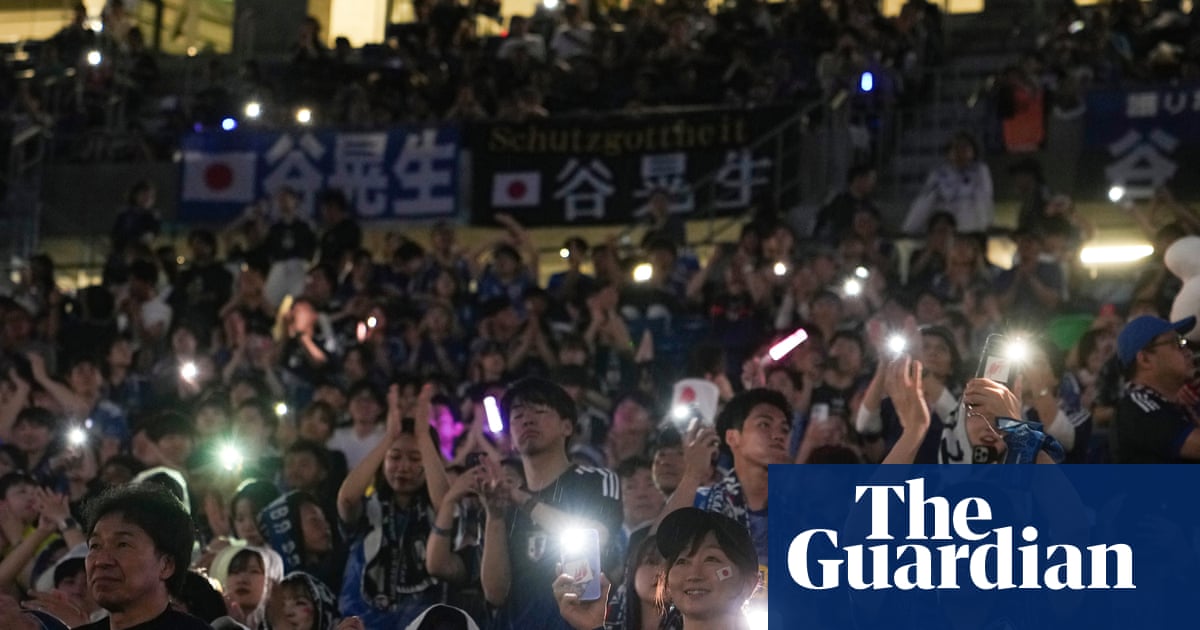
This article is part of the Guardian’s 2026 World Cup Experts’ Network, a cooperation between some of the best media organisations from the 48 countries who qualified. theguardian.com is running previews from three countries each day in the run-up to the tournament kicking off on 11 June.The planJapan are no longer at a stage where speaking openly about “winning the World Cup” invites ridicule. Their historic victories over Germany and Spain in 2022 proved that they are capable of producing much more than just a one-off upset. Over nearly eight years in charge the head coach, Hajime Moriyasu, has built a side capable not merely of surviving against the world’s elite, but of defeating them too. This was backed up by wins against Brazil in October and England – at Wembley – in March.The expected system is a 3-4-2-1, though Japan also experimented with a 3-1-4-2 against England, suggesting tactical flexibility depending on the oppostion. Pressing aggressively from the top is important, with players such as Takefusa Kubo, Ritsu Doan, Keito Nakamura and Junya Ito all excellent at putting pressure on opponents.Leading the line is Feyenoord’s Ayase Ueda, who won the Eredivisie Golden Boot in 2025-26, scoring an impressive 25 goals in 31 appearances. The spine is strong with Parma’s Zion Suzuki in goal and Hiroki Ito, Shogo Taniguchi and Tsuyoshi Watanabe as key defenders.Kaishu Sano is set to anchor the midfield and the fact that players such as Takehiro Tomiyasu and Wataru Endo have to settle for a place on the bench at times is evidence that Japan’s squad depth has never been stronger. Injuries to Takumi Minamino and Kaoru Mitoma are very unfortunate but, again, this team are not so fragile as to collapse because of the absence of one or two missing star players. Crystal Palace’s Daichi Kamada will play an important role.Still, Group F will be tough with the two European sides, the Netherlands and Sweden, having strong squads while Tunisia may in fact turn out to be the most difficult stylistic matchup of the three.Hopes are high back home, though, and the former Japan coach Akira Nishino, who led the side at the 2018 World Cup in Russia, says of the current squad: “It’s not about individuals acting like egoists. This group of players fight together and within that unity, individuality emerges. There is a strength in these ‘Japanised’ individuals.”This team genuinely believe they can win the World Cup.The coachAs a player, Hajime Moriyasu played as a defensive midfielder for Sanfrecce Hiroshima and the Japan national team. Since taking charge of Japan after the 2018 World Cup, he has built the squad step by step. He has respected experienced players while gradually integrating a new generation that now forms the core of the team. His methods – focused on harmony, discipline and continuity rather than radical change – can at times appear conservative, but there is no denying his ability to create a stable and highly competitive environment. With the World Cup in sight, Moriyasu continues to shape his blueprint for success. “By making use of Japan’s ability to steadily build and the qualities of Japanese people, I want football to change the belief that Japan cannot become the best in the world in a contact sport,” he says.Star playerThe player who brings the greatest spark to Japan’s attack is Takefusa Kubo. Receiving the ball on the right flank, he draws defenders in with delicate touches and his unique sense of timing, exploiting even the smallest openings to create chances. Having been labelled the “Japanese Messi” early on in his career, he signed for Real Madrid at the age of 18 in 2019. Several loan spells followed before he joined Real Sociedad in 2022. There he has become the focal point of the attack and he continues to play a decisive role for the national team as well. Against Bahrain, he provided the assist for the opening goal before scoring another that in effect sealed Japan’s qualification for the World Cup.One to watchThe man entrusted with keeping Japan’s goal safe is Zion Suzuki. Blessed with outstanding physical attributes, he also possesses every essential quality expected of a top-class goalkeeper. At the Asian Cup two years ago, his inconsistency drew criticism, exposing him to the harsh realities of being Japan’s No 1. Then, last November, he fractured his left hand, with his grip strength suffering as a result. Even so, he continued to gain experience at club level before returning to the national team’s goal. His potential is immense and he could be the face of Japan’s goalkeeping position for a decade.Unsung heroStanding at 1.88m (6ft 2in), left-footed and capable of playing centre-back and left-back, Hiroki Ito offers a rare combination of size, versatility and technical quality. Injuries have disrupted his progress at club level, but the very fact that a Japanese defender now plays for Bayern Munich speaks volumes about how much the landscape of the country’s football has changed. “In Germany I have had to learn how to defend smartly,” says the 27-year-old, who played a lot of futsal and spent some time with Santos in Brazil as a youngster.Probable starting XIWhat to expect from fans at games?Japan’s supporters are widely regarded as one of the most disciplined fan groups in world football. The stands are filled with the national team’s signature blue, while chants of “Nippon” echo in rhythm with the drums. Unlike the overwhelming intensity or flamboyance often associated with European or South American crowds, Japanese supporters are defined by their organisation, discipline and respect for opponents.Their habit of cleaning up trash in the stands after matches drew international attention at both the 2018 and 2022 World Cups, offering a glimpse into the sense of courtesy and responsibility often associated with Japanese culture. At this tournament, with more locally based fans expected to join them, the sea of blue inside stadiums will likely be even more visible than at the last World Cup.Relationship with the US/Trump?It is unlikely that the national team or the Japan Football Association will make any political statements regarding the United States or Donald Trump. Part of that stems from the longstanding relationship between Japan and the US, but it also reflects a broader Japanese tendency to avoid unnecessary controversy while showing respect toward the host nation. The feeling is mutual, with the US secretary of state, Marco Rubio, recently saying: “Under President Trump, we have ushered in a new golden age for US-Japan relations that upholds a free and open Indo-Pacific and brings peace and prosperity to the region.”


Most Popular


England Women's T20 World Cup 2026 squad
12 hours ago