
Ascot’s bold move in turf war leaves racing fighting to avoid constitutional crisis
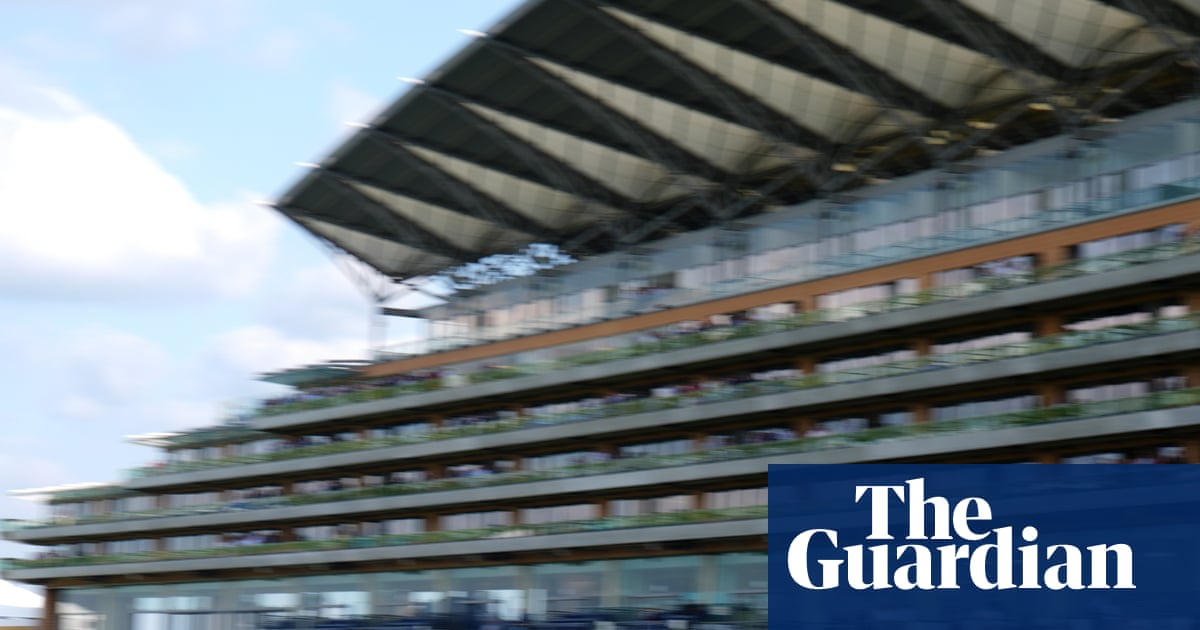
The racing industry is such a broad and varied collection of professions, venues and interests that at times it can feel like the Holy Roman empire: there is always a turf war or two going on somewhere, but never to such an extent that the whole thing falls apart.Ascot’s announcement on Monday that it will quit the Racecourse Association (RCA) at the end of the year, however, feels like more than just another localised dispute. The email dropped at 9am on a bank holiday, as if to underline that the king’s track means business, and where Ascot has led, others may follow, putting the future of a trade association that dates back to 1907 in serious doubt.The spark that lit the fuse, just two months ago, was Charles Allen’s departure as chair of the British Horseracing Authority (BHA), after a brief and ultimately fruitless attempt to impose a modern governance structure, including a fully independent board of directors, on Britain’s second-biggest spectator sport.Ascot, along with the Jockey Club, which operates major tracks including Cheltenham, Aintree, Epsom and Newmarket, and also three key “big independent” tracks – Newbury, York and Goodwood – subsequently wrote to the RCA calling for “a formal governance review” of the Association, to ensure “significant views from key racecourses can influence outcomes”.The source of the major racecourses’ anger was plain: a belief – or rather a conviction – that the RCA’s one-track, one-vote structure hands too much power to smaller venues, and in particular, the 16 courses operated by Arena Racing Company (ARC), which has a quantity-over-quality business model to service the off-course betting market.Since the RCA gets to nominate two members of the BHA’s current board, Ascot and its co-signatories felt their views – including support for Lord Allen’s fully independent board – were not getting a fair hearing at the top of the sport.The deadline set for an “acceptable proposal” for reform was the end of April, and Ascot wasted little time in submitting its resignation four days later. All eyes now are on the Jockey Club, British racing’s biggest commercial organisation, and while it has given the RCA an extension to its deadline, it is unlikely that an operator as sharp and well-connected as Felicity Barnard, Ascot’s CEO, would have led the charge without believing the Jockey Club would be next through the door.If or when the Jockey Club follow suit, the BHA will face a constitutional crisis, since the RCA’s two spots on the board depend on it being “the person most representative in Great Britain of the interests of owners of racecourses”. Without Ascot, the Jockey Club’s major tracks and the likes of Goodwood, York and Newbury, the RCA would not come close.It is possible that, when faced with what is potentially an existential crisis, the RCA will come up with proposals for change that meet with the Jockey Club’s approval, and Wilf Walsh, the RCA’s chair, can draw on a wealth of experience both within racing and in industry in trying to strike a balance. But that would still mean a major shift of power towards the biggest tracks, and less influence for those further down the pecking order.In terms of what this may mean for punters and racegoers, it is tempting draw a parallel with the formation of the Premier League in the early 1990s, when England’s biggest clubs broke away from the Football League, to grab a much bigger slice of the sport’s TV revenues. Tempting, but arguably misleading, as the two sports have different structures, fanbases and revenue streams, not least income from off-course betting that means ARC can stage hundreds of meetings each year that attract a few hundred spectators at best.It is not a straightforward division either between the major tracks, with significant income from ticket sales, hospitality and, more recently, the Hong Kong-based World Pool in addition to their off-course media rights, and ARC’s heavily betting-dependent model.There is also a cohort of smaller independent tracks, from Plumpton in the south to Kelso in the Scottish borders and dotted around in between. Chester, a member of the Large Independents group alongside Goodwood and York, stages its May festival this week, but also operates Bangor-on-Dee and Musselburgh. Nor is there any real scope for promotion or relegation.There is a more general argument, though, that while the formation of the Premier League was excellent news for the country’s most famous clubs, and made little difference to the old Division Three teams that were used to rubbing along with little cash and a loyal, local fanbase, the pinch was felt mostly keenly by some familiar names somewhere in between.Plumpton, in fact, quit the RCA two years ago, as Peter Savill, its owner and also a former chair of the British Horseracing Board, the BHA’s predecessor, felt the RCA’s representatives on the BHA board did not adequately represent the views of small independent tracks.If Ascot’s decision to quit the RCA ultimately leads to a governance structure for racing in which the major tracks hold more sway, my guess would be that the less productive tracks in ARC’s portfolio could be particularly vulnerable. Its all-weather courses efficiently deliver a consistent stream of “product” for the betting industry. The turf tracks, not so much.With Ascot, the country’s premier track, leading the charge, racing’s governance structure may finally be set for long overdue reform. It promises to be a messy and painful process, however, with possible casualties among the current muster of 59 tracks If you have a particular favourite, now might be a good time to visit.



Most Popular


Petition challenges fireworks at PSL final
3 hours ago
