People power forces U-turn on ‘Minions’ figure skating music ban
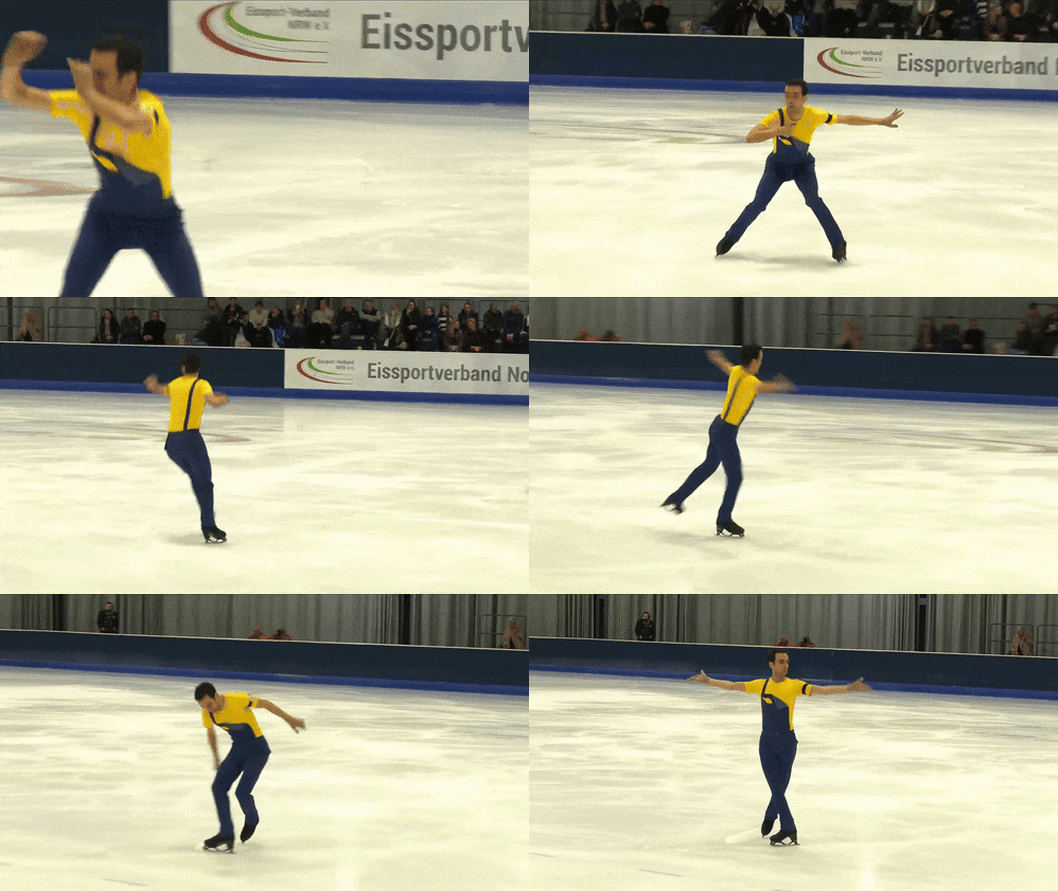
Livigno: The first breakout story of Milano Cortina 2026 is here - and it involves an animated movie franchise, a copyright dispute, a social media backlash and an expressive Spanish figure skater in a yellow T-shirt and denim overalls.Tomàs-Llorenç Guarino Sabaté, 26, has been skating to music from Minions – yes, the children’s film series with those weird little one-eyed yellow mischief-makers – since August, throughout the International Skating Union season, without issue.He even dresses up as one of them for his short routine.But last week, Sabaté received notification that Universal Pictures, the studio behind Minions, had flagged “copyright clearance issues” with his use of the music – forcing him into a dramatic change of plans ahead of his Winter Olympics debut, despite claiming to have made all the necessary clearances.“Finding this out last Friday, so close to the biggest competition of my life, was incredibly disappointing,” he wrote on Instagram. “Nevertheless, I will face this challenge head-on and do everything I can to make the best of the situation.”For a skater to have to suddenly come up with a different program, set to different music, is akin to a tennis player being told on the eve of a grand slam that they have to change their service motion; it is the movement they have shaped their entire game around, one that has been grooved into their muscle memory through tens of thousands of repetitions.Fortunately for Sabaté, the quirkiness of his routine and his apparent obsession with Minions, of all movies – coupled with the seemingly heavy-handed action from a huge Hollywood film studio – meant that news of his plight travelled far and wide, creating ripples that went far beyond the small but passionate figure skating community.Several days later, the outpouring of support for him on social media – mostly via the viral phrase “Let the minion skate” – appears to have resolved the issue.On Tuesday, Sabaté had good news for his Instagram followers: Universal had bowed to the pressure and allowed him to use the music.“Huge THANK YOU to everyone who reposted, shared and supported,” he wrote on his story.“Because of you, Universal Studios reconsidered and officially granted the rights for this one special occasion. I’m so happy to see that the minions hitting Olympic ice is becoming real again!”The situation has shone a light on the complications of using modern music in figure skating, and how competitors are subject to forces beyond the sport – although Sabaté’s Minions mishap is one of the most extreme examples of copyright enforcement ever seen.LoadingFor many years, skaters had no such issues because they worked with classical music, most of which was considered to be in the public domain, and therefore could be used without permission. Since 2014, the ISU has allowed music with lyrics to be used to modernise the sport – but the process of ticking the necessary boxes is opaque and confusing, and other skaters have encountered problems and, in some cases, lawsuits from artists for not receiving the required clearances.It’s unclear exactly what happened behind the scenes that enabled Sabaté to skate to his Minions soundtrack selection without issue for months, only to have the rug pulled from under him just before the biggest moment of his career.Australia’s figure skaters, according to team officials, will face no such issues when competition begins at the Forum di Milano in Milan from Friday. Australia has qualified four athletes – pairs skaters Anastasia Golubeva and Hektor Giotopoulos Moore, and ice dancers Holly Harris and Jason Chan – and they have all successfully submitted their chosen music through the ISU.The only time Australians have been caught up in music-related figure skating drama was at Sochi 2010, when Russian ice dancers Oksana Domnina and Maxim Shabalin were accused of demeaning Australian Indigenous people and appropriating their culture with a routine involving bodysuits with white markings and what appeared to be brown face make-up, sparking condemnation.


Most Popular

Norman Gifford obituary: England spinner
2 hours ago