Essendon’s president told me Brad Scott would be their next flag coach. Here’s what changed
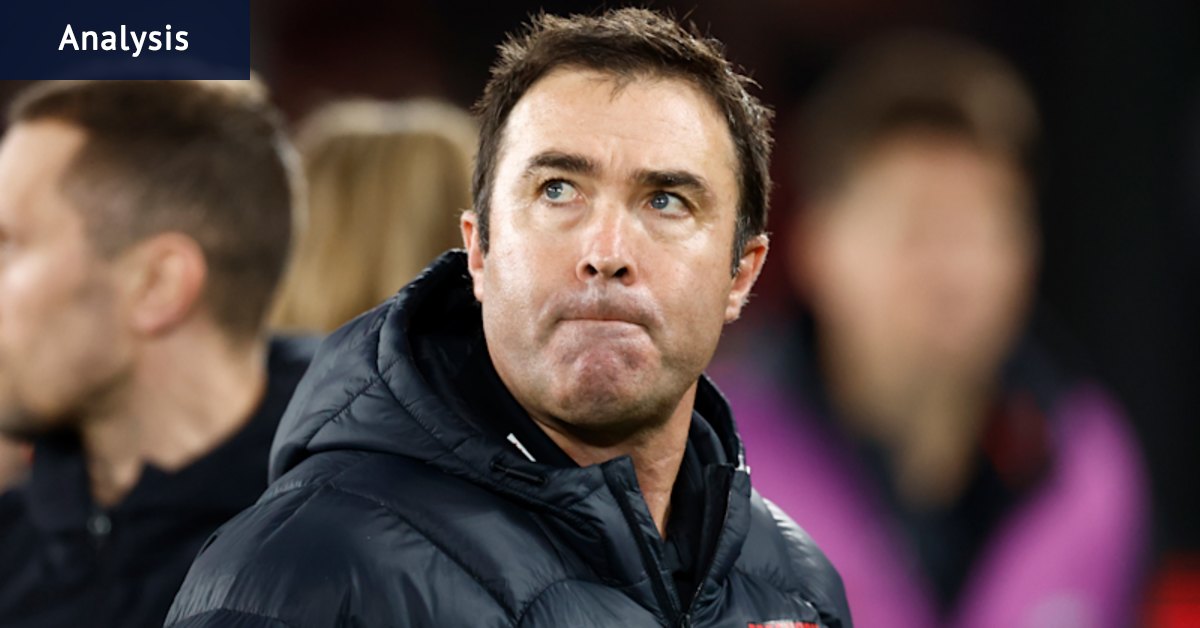
May 26, 2026 — 4:00pmYou have reached your maximum number of saved items.Remove items from your saved list to add more.Only six weeks ago, Andrew Welsh put on record the Essendon board’s view that Brad Scott was capable of being their next premiership coach.“We’re of absolute belief that Brad will be our next premiership coach,” Welsh told me, following a briefing on Essendon’s list profile and planning, in which the coach participated and which sold a vision of a club that would not deviate on its youth-led path.“There’s no reason to think otherwise,” Welsh added.The president’s comments came after Essendon’s solitary victory so far for 2026, over Melbourne in Gather Round, though it is notable that the club had organised the interviews with this masthead and the Herald Sun before that lonely triumph.AdvertisementThese comments endorsing the coach stand as a source of embarrassment for Essendon’s hierarchy today, as Scott becomes the latest coach to disappear down the Tullamarine trap door, and paid out his contract.But as with political leaders, any embarrassment about backflips will be overridden by how the change is perceived in the electorate. Essendon fans, as tired of losing as Nate Caddy, will gain some hope, and it is possible that the players, like Carlton’s, will play with more freedom, at least for a short while.The win-loss ratio for Scott was horrendous, but so were his circumstances.He took over a club in tumult, and no sooner had he been hired then Kevin Sheedy, appointed to the board to shore up the club politically, went public with his opposition to Scott and preference for the exiled prince James Hird.LoadingAdvertisementWhile Sheedy departed the board 12 months later, his breaking of ranks sent a message to sections of the broader Essendon family. Adrian Dodoro, who was not aligned to Scott either and represented the Old Essendon vanguard, would exit soon after Sheedy, as the club sought to shed the cultural dominance of the Sheedy era – the only epoch that has seen success at Essendon since 1968.Scott was given the task of rebuilding Essendon, not just a playing list that was had no A-grader outside of Zach Merrett, but also the standards, culture and leadership capability.On Tuesday, the day after Scott had been terminated by the board with a season and a half to run on his contract, Welsh and chief executive Tim Roberts were rightly questioned on what had changed between their statements of support for Scott and his abrupt exit following the disastrous Dreamtime at the G defeat to Richmond, which secured a 1-10 record.They didn’t exactly say it, but Scott was doomed by what didn’t change in the course of 2026. The KPIs didn’t move in the right direction, in corporate lingo.Here’s a translation into footy-speak: Essendon still didn’t defend the ground. They didn’t move the ball with confidence. They kept bumbling and turning the footy over.AdvertisementAnd they kept losing. Narrowly and honourably to Gold Coast and GWS, badly to Collingwood, Brisbane and Fremantle. The Dreamtime game was not an isolated result and while it was mitigated by awful mid-game injuries, the record of one win in 24 games was always likely to bring about his demise. They’ll be underdogs against the Eagles and Blues in their next two matches.Denis Pagan, a winning coach at North and losing one at Carlton, didn’t talk KPIs in the day, but liked to say of the AFL jungle, “there’s only the scoreboard son.”Scott deserved to finish the season, at the least, considering his willingness to play kids and put his job at risk. Welsh’s reasoning – as with Carlton “parting ways” with Michael Voss – was that once they had decided the coach wasn’t continuing in 2027, they owed it to him to let him know immediately.It is not surprising that the Essendon hierarchy, faced with a choice between honourably staying the course (at least until season’s end) and providing “a fresh voice” and a burst of sunshine for the disenchanted masses, chose the latter.AdvertisementIt is axiomatic that if the Bombers were justified in sacking Scott, then they erred in extending his contract at the end of 2024, when they knew – to some degree – that the worst results lay ahead as they entered an uncompromising list reconstruction.Unlike the knee versions, these take longer than 12 months.Scott’s prospects for the improvement that would keep him safe were hampered by the list’s injury epidemic in 2025.But Scott’s management style was arguably a factor in his demise.AdvertisementLike that of his brother Chris, Brad’s philosophy involves a greater distance from the players than many of his peers. This model works at Geelong, where there are exceptional leaders and senior players who can self-manage. Essendon, alas, have possibly the least-capable senior player leadership in the AFL, as Merrett’s ill-fated captaincy showed.The re-contracting of Scott until the end of 2027 was under the leadership of Welsh’s predecessor David Barham, and while Welsh and Roberts were part of that board that made that call, it was driven by Barham and his also-departed CEO Craig Vozzo.Did the competition for a senior coaches with Carlton and Tasmania play a part? The club insists not. Carlton’s bounce in results, under Josh Fraser, however, will not have gone unnoticed at Tullamarine.Merrett’s meeting with Sam Mitchell and pursuit of a trade to Hawthorn detonated in the path of Barham’s presidency, and did not help Scott’s cause, either, no matter what Merrett thinks. In effect, the then skipper was telling his teammates - and the world - that he did not see success at Essendon as likely in his playing lifetime.It was a devastating vote of no confidence.AdvertisementSo, the Essendon Football Club, one of the AFL’s most under-performing and strife-torn for two decades, now has two further critical decisions to make for their future.The first is the hiring of the next senior coach. The other is whether to retain Merrett or give him what longed for in 2025 and trade him to a team, such as Hawthorn or Gold Coast, in contention for finals and flags.The next coach (not the caretaker, unless Dean Solomon wins the gig) must and will have a major say in the retention or trading of Merrett. It will be easier to trade the ex-skipper this time than last October, even if the return is reduced, due to the lifting of the siege around Scott.It would be surprising, to put it mildly, if Essendon hired Hird after a dozen years in exile from AFL clubland – aside from a brief stint assisting his mate and GWS caretaker Mark McVeigh during 2022 – and would not enhance their standing in the footy ecosystem. Some fans would love it. Others would not.AdvertisementWhoever takes the Essendon job – a senior figure like Ken Hinkley, John Longmire, Nathan Buckley, Adam Simpson or the most attractive assistant coach – will have a much better chance of a turnaround, and even of winning finals, than Scott ever stood. Some of the scaffolding is already in place, via Essendon’s post-2023 drafting.Coaches charged with ground-zero rebuilds often fail to see them through.Keep up to date with the best AFL coverage in the country. Sign up for the Real Footy newsletter.You have reached your maximum number of saved items.Remove items from your saved list to add more.More:AFL 2026For subscribersEssendon BombersAnalysisJake Niall is a Walkley award-winning sports journalist and chief AFL writer for The Age.Connect via X or email.


Most Popular